Meaning at a glance
Offer a practical decision framework based on wear frequency, durability, setting, disclosure, personal meaning, and budget.
Direct answer (concise)
Choose birthstone jewelry by following a clear, practical checklist: decide how often the piece will be worn, select a gem whose durability matches that use, pick a protective setting if the stone is softer, confirm treatments or lab origin with the seller, prioritize any personal or cultural meaning for the recipient, and set a realistic budget that accounts for natural versus lab-grown or treated stones. This framework balances everyday practicality with respect for symbolic intent.
Historical evidence and where these traditions come from
The idea of assigning specific gems to months or astrological signs emerged and evolved across many places and eras; the Gemological Institute of America (GIA) documents those changing traditions and the variety of lists that have existed. Historical lists and practices were not uniform: different religious, regional, and commercial traditions produced different associations. The GIA’s museum and interpretive materials trace how gem lists and uses changed through time rather than presenting one single origin story or universal meaning.
Distinguishing documented historical meanings from modern personal interpretations
Documented historical meanings are the associations and uses recorded in texts, inventories, and museum collections. The GIA’s materials show that some gems were used in specific religious or decorative objects and that societies assigned symbolic value in context. Modern personal interpretations—what a wearer today feels a birthstone means—are often individual, familial, or contemporary cultural choices rather than direct continuations of a single historic belief. It is important to keep these categories separate: historical evidence establishes that certain stones were valued or used in particular ways, while modern symbolism can be adopted, adapted, or newly created by individuals and communities.
How motifs, gemstones, and traditions appear in jewelry
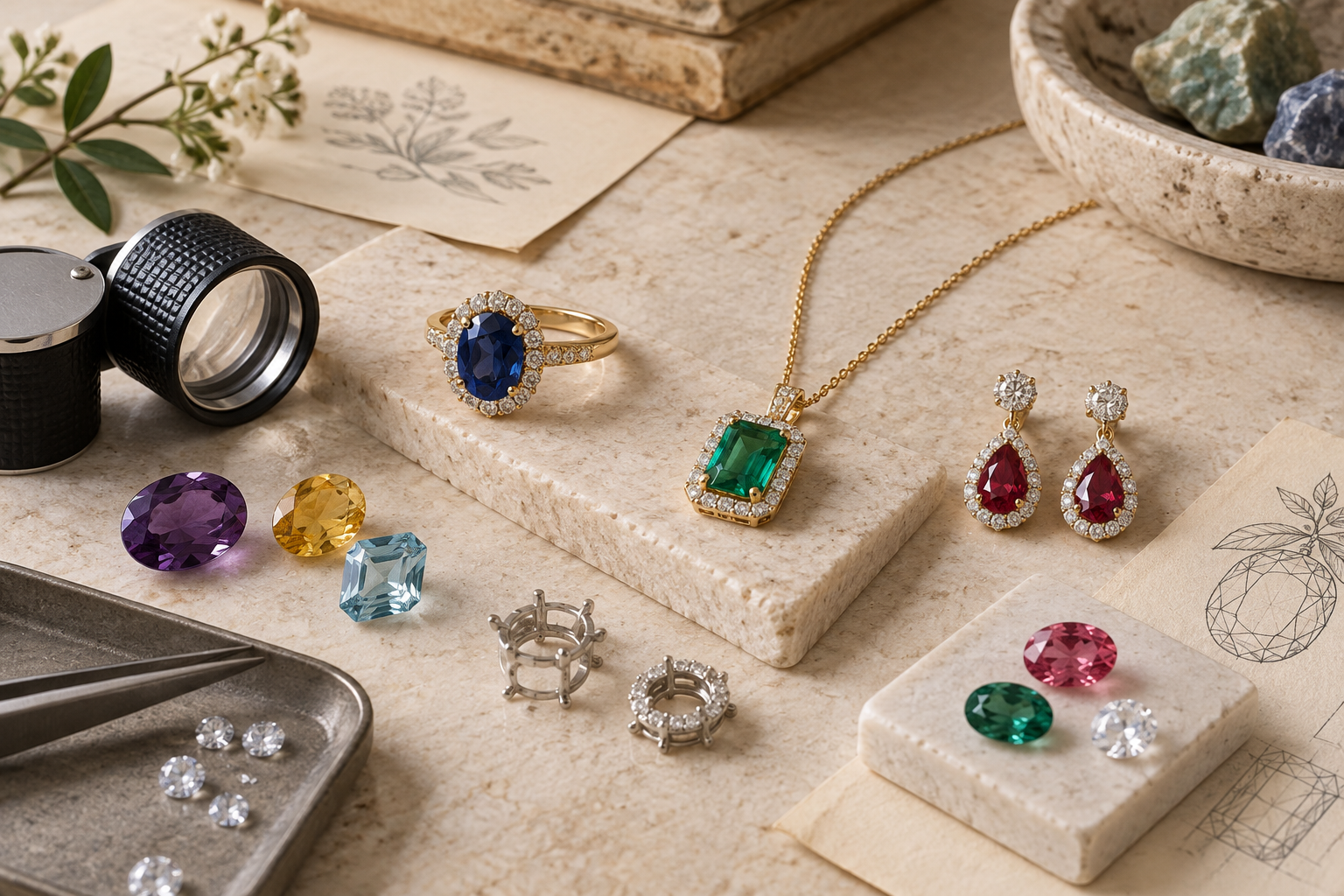
Birthstone themes appear in many jewelry formats: single-stone rings and solitaire pendants emphasize the gem itself; cluster settings and halo styles pair a birthstone with diamonds or other accents; charm bracelets or bezel-set pendants use small stones for everyday wear; and engraved lockets or signet-style pieces combine gem placement with motifs or initials. Jewelers of America’s buying guides describe common formats and settings and explain how metal, prong styles, and protective mounts influence appearance and wearability. Different settings present both aesthetic and functional choices: open prongs show more of the gem while bezels offer more protection, and channels or pavé settings are common when small birthstones are used as accents.
A practical decision framework to choose birthstone jewelry
1) Begin with intended wear frequency: Decide whether the piece is for daily wear, occasional wear, or purely ceremonial use. Daily-wear pieces should favor harder, more durable gems or protective settings. 2) Consider durability and gemstone characteristics: Consult gemological guidance about a stone’s toughness and susceptibility to scratching, chipping, or chemical damage. Use that information to match the stone to the intended use: a softer gem can be beautiful but is better suited to necklaces or earrings than a ring worn during manual work. The GIA provides context on gem properties and the modern month lists that help identify common birthstones. 3) Choose the right setting: If the gem is softer or has cleavage, choose protective settings such as bezels or low-profile prongs. Jewelers of America explains how setting type affects both look and long-term wear. 4) Ask about treatments and origins: Before purchase, ask the seller whether a stone has been heat-treated, fracture-filled, dyed, or is lab-grown. The Federal Trade Commission (FTC) requires truthful disclosure about treatments, imitation stones, and lab-grown material; insist on that clarity and written confirmation when possible. 5) Factor in personal meaning and disclosure: Decide whether the recipient (or you) prefers a traditional month-gem match, an alternative modern list, or a stone chosen for personal significance such as color, family history, or ethical sourcing. Be explicit about cultural or religious sensitivities—what is meaningful in one tradition is not necessarily so in another. 6) Set a realistic budget and compare options: Natural, untreated gemstones typically cost more than treated or lab-grown equivalents. Lab-grown gems often offer lower price points for similar visual qualities; treated stones may be more affordable but should be clearly disclosed. Use trade and consumer guides to understand how metal quality, setting complexity, and certification add to cost. 7) Seek documentation and aftercare: For higher-value purchases, request a gemological report or invoice that records treatments, origin claims, and metal content, and learn recommended cleaning and storage practices to protect the piece.
Gifting guidance: respectful and practical choices
When buying birthstone jewelry as a gift, prioritize the recipient’s lifestyle and values over strict month-to-stone orthodoxy. If the recipient is active and likely to wear the piece daily, select a durable stone and a protective setting. If the gift is intended to communicate family or cultural heritage, ask whether the recipient prefers a historically rooted list or a modern interpretation. When gifting in culturally sensitive contexts, do not assume a symbol’s meaning is universal—ask or research respectfully. Always disclose what you know about treatment, lab origin, and care instructions, and include a receipt or documentation that allows the recipient to learn more or exchange the piece if needed.
Budgeting, treatments, and ethical considerations
Budget choices influence whether you select a natural, untreated gem, a treated natural stone, or a lab-grown alternative. The FTC’s consumer resources explain that treatments and lab-grown origins should be disclosed and that some treatments affect value and care needs. If ethical sourcing is important to you or the recipient, ask sellers about origin, chain-of-custody statements, and responsible sourcing policies. Jewelers of America’s buying guides help explain how metal choices, setting complexity, and certification affect cost so you can prioritize what matters—stone quality, setting durability, or provenance—within your budget.
Care and long-term considerations
Match aftercare to the gem and setting: some stones are sensitive to heat, ultrasonic cleaners, or household chemicals, and softer gems can scratch or chip more easily. Request care instructions from the seller and plan for periodic professional checks of prongs and settings to prevent loss. Keeping documentation and any certification with the piece helps if you later insure, resell, or appraise the jewelry.
Frequently asked questions
How do I know if a birthstone has been treated or is lab-grown?
Ask the seller for written disclosure and any available certification. The Federal Trade Commission requires sellers to disclose treatments, imitations, and lab-grown origin; reputable retailers will provide this information and include it on invoices or gem reports.
Which birthstones are suitable for daily-wear rings?
Choose stones with higher durability for daily rings, or select a protective setting such as a bezel. Consult gemological guidance about a stone’s toughness and treatment sensitivity to match it to everyday activities; the Gemological Institute of America provides context on gem properties and modern month lists.
Is a lab-grown birthstone a good budget alternative?
Lab-grown gems often offer lower prices for similar visual qualities and are a legitimate alternative. Because the FTC requires disclosure, you should be able to compare treated natural stones, untreated naturals, and lab-grown options and decide which combination of cost, appearance, and provenance you prefer.
Should I follow traditional month-to-stone assignments when gifting?
Not necessarily. Traditions vary across cultures and time, and the GIA documents multiple historical lists. Prioritize the recipient’s personal meaning, lifestyle, and any cultural preferences. If unsure, ask discreetly or choose a versatile design that allows swapping or resizing later.
What setting protects a softer birthstone best?
A bezel or low-profile setting that surrounds the stone offers more protection than high prongs. Jewelers of America’s buying guides explain how setting types reduce exposure to knocks and daily wear, which is especially important for gems that are softer or have cleavage.
Do I need a gemological report for affordable birthstone jewelry?
For lower-cost purchases you may not need a formal lab report, but you should still receive clear written disclosure of treatments, origin claims, and metal content. For higher-value pieces or if provenance matters, request a professional gemological report and keep it with the purchase documentation.
Sources and further reading
- Birthstones — Gemological Institute of America
- Birthstones: Gems Through the Ages — Gemological Institute of America
- Buying Gemstones, Diamonds, and Pearls — Federal Trade Commission
- Jewelry Guides — Federal Trade Commission
- Jewelry Buying Guides — Jewelers of America