Meaning at a glance
Use small, versatile pieces and a few simple swaps to convert a minimalist daytime look into evening polish; this article explains documented historical uses of small-scale jewelry, separates history from modern interpretation, shows how motifs and gemstones appear in pared-back pieces, and gives practical selection and gifting guidance.
What history actually tells us
Museum research shows that jewelry’s scale, function, and social meaning have changed many times and in different places. The Victoria and Albert Museum (V&A) emphasizes that jewellery has been used for bodily decoration, status, identity, commemoration, and practical purposes across many cultures and periods. Objects in museum collections range from small personal items meant to be worn constantly to larger, ceremonial pieces reserved for public display, demonstrating that both restrained and ostentatious approaches have deep historical roots.
Examples in museum histories include compact personal items such as lockets, signet rings, and simple beads that traveled with their owners, as well as larger dress pieces created for display. The V&A’s histories and exhibitions repeatedly show that wearable objects were often designed to be easily carried, repaired, and adapted—qualities that closely match contemporary minimalist priorities of versatility and longevity. These documented production and use patterns are historical facts recorded in museum collections and catalogues.
Separating documented cultural meanings from modern interpretation
When interpreting jewelry today, it is important to separate what historical sources record from how people now personalize meaning. Museums such as the V&A document particular uses—for example, rings that marked legal or family status, lockets that held portraits or hair as a memory device, and certain gemstones that were prized for rarity or perceived properties. These are documented cultural practices and functions.
By contrast, modern interpretations—such as assigning a single universal meaning to a minimalist bar pendant or claiming that a particular stone guarantees emotional benefits—are personal or commercial readings that postdate those historical practices. Contemporary wearers frequently layer new meanings onto old forms, and that reinterpretation is valid as personal symbolism, but it should not be presented as the historical fact. Distinguishing the two helps you choose pieces that are aesthetically and ethically right for you while respecting cultural context.
How motifs, gemstones, and traditions appear in minimalist jewelry
Motifs: Historical motifs—initials, tiny lockets, geometric forms, coin settings, and small symbolic charms—appear in minimalist jewelry as small, simplified references rather than detailed replications. A signet’s historical function as a personal mark survives in modern slim signet rings, and tiny lockets echo older sentimental uses but in much smaller, lighter formats suited for everyday wear.
Gemstones and materials: The V&A’s A–Z of Gemstones describes many stones’ historical contexts and how they have been used in jewelry. In minimalist jewelry these gemstones often appear as small cabochons or tiny faceted accents set in bezels or flush settings to protect the stone and keep the silhouette low-profile. Pearls, diamonds, and sapphires—each documented by museum collections for long and varying uses—are commonly used in reduced scale to provide a refined sparkle without overwhelming a simple outfit.
Construction and technique: Techniques historically used to make durable, wearable pieces—bezel settings, closed-back mounts, fine chains, and secure clasps—are especially relevant to minimalist jewelry because minimal looks rely on a few pieces being worn often. The same historical emphasis on portability and repairability that museums document is echoed in contemporary choices for understated, well-made settings and finishes.
Day-to-night styling: simple, practical changes that work
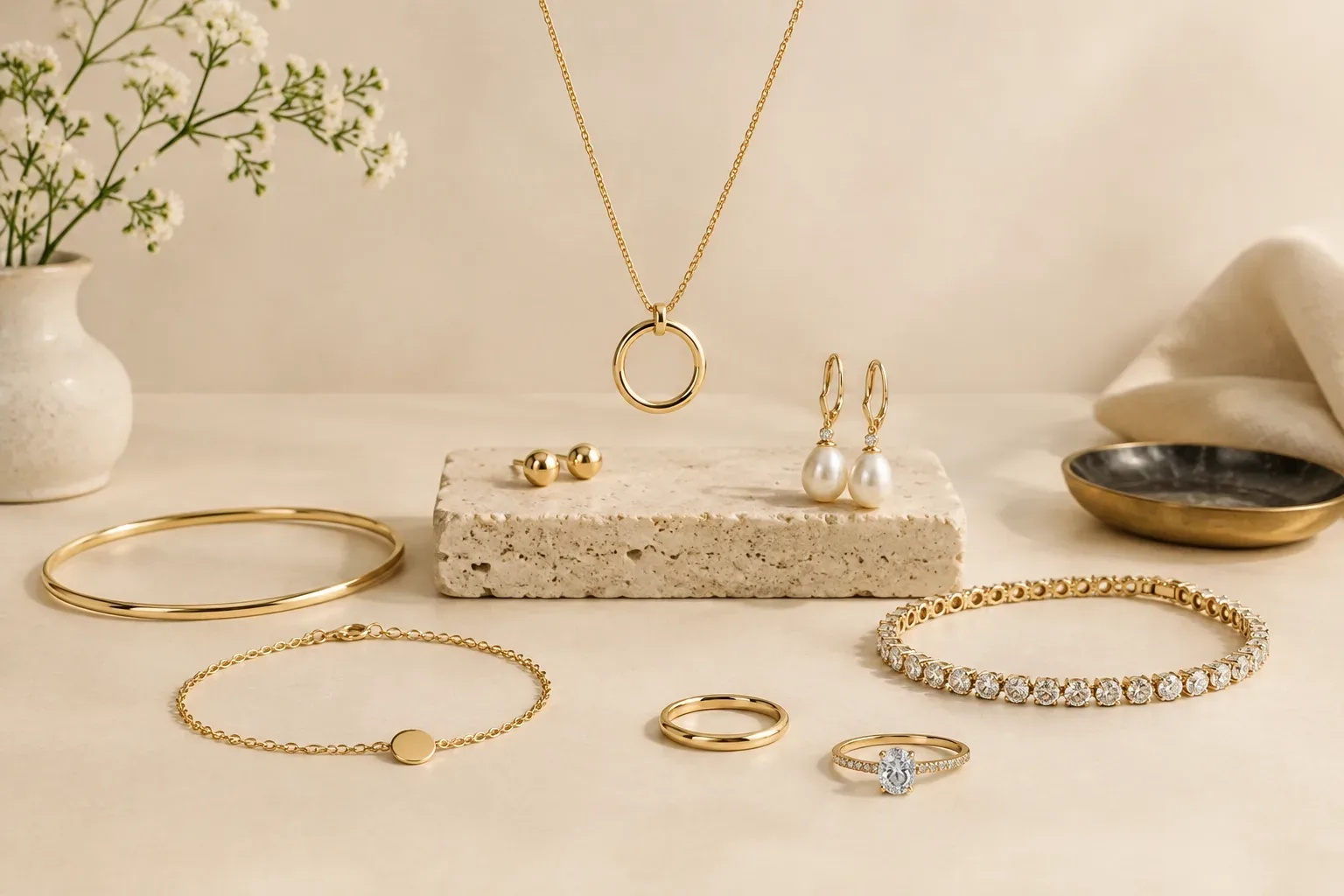
Start with a foundation of versatile, well-fitting basics: a fine chain with a small pendant, a pair of studs or thin hoops, a slim ring, and a simple bracelet or bangle. These pieces read as subtle during the day but provide a neutral base for evening additions.
Swap or add one focal element after work. Replacing studs with a single small statement earring or huggie, adding a short choker over a longer pendant chain, or clipping on a slightly bolder pendant to the same chain are quick methods that dramatically change the look without cluttering a minimalist wardrobe. Because minimalist styling favors restraint, choose a single additional element rather than several.
Use convertible or modular pieces for convenience. Many contemporary designs echo historical adaptability by offering removable pendants, adjustable chain lengths, and convertible hoops that turn into drop earrings with small attachments. These features let you transform a daytime piece quickly and without needing a large jewelry collection.
Consider scale and balance. Moving to evening generally means increasing visual weight in a single focal area—ear, neck, or wrist—while keeping other pieces quiet. A thin chain by day can carry a small pendant by night; a slim bangle can be paired with a cuff or a delicate watch to create contrast without abandoning minimalism.
Mind your fabrics and silhouettes. A minimalist evening look often benefits from one piece that contrasts with clean lines: a luminous single pearl stud against a black top, a short chain over a square neckline, or a low-profile signet with a suit jacket. Because these pairings are stylistic choices rather than inherited meanings, they work best when chosen to complement the wearer’s personal style and clothing.
Selection, care, and respectful gifting guidance
Select for versatility, durability, and proportion. Choose metals (gold, silver, platinum) and construction techniques that will withstand frequent wear. The V&A’s historical perspective supports choosing well-made pieces that can be repaired or resized rather than disposable fashion items. For minimalist wardrobes, prioritize easy-to-wear lengths and sizes—15–45 cm chains, small stud diameters, and slim ring profiles—so the piece integrates with multiple outfits.
Ask about materials and disclosure. The U.S. Federal Trade Commission (FTC) advises buyers to seek clear information on material treatments, enhancements, and imitations. When purchasing gemstones or precious metals, ask the seller whether stones have been heat-treated, dyed, coated, or synthesized and request any available certification or written disclosure. Clear information helps you evaluate value and care needs and avoids surprises later.
Consider allergies and wearer habits. If the recipient has sensitive skin, select hypoallergenic metals or plated pieces over a reliable base metal. Confirm clasp strength and avoid long, dangling pieces for highly active wearers. For minimalists who travel or commute, choose items that fasten securely and sit close to the body.
Be culturally respectful when choosing motifs. If you are selecting motifs or symbols that originate in particular cultural or religious traditions, buy from makers from that culture when possible and avoid using sacred symbols as mere decoration unless you are sure the wearer welcomes that reference. Respectful gifting also means being open to returns or exchanges if a symbol proves unsuitable to the recipient.
Prioritize provenance and maker information if ethics matter to you. If sustainability or fair sourcing is a priority, ask jewelers for provenance details and for information on recycled metals or responsibly sourced gems. Keep documentation and receipts so repair, resale, or insurance is possible later.
Care and maintenance: Minimalist pieces worn constantly need occasional servicing. Clean chains and settings gently according to the material, tighten loose settings promptly, and have valuable pieces checked by a reputable jeweler. Small investments in care will extend the usable life of a signature minimalist piece.
Final thoughts
Minimalist wardrobes and day-to-night jewelry styling are compatible because both prioritize thoughtful restraint, adaptability, and the value of a few well-chosen items. Museum evidence collected and interpreted by institutions such as the V&A shows that small, portable, and repairable jewelry has long been a practical and meaningful option. Modern styling choices and personal symbolism are valid evolutions of these traditions, but it remains useful to distinguish documented historical uses from contemporary reinterpretation.
Choose solid basics, look for convertible details, seek clear material disclosure as recommended by the FTC, and think carefully about cultural motifs when gifting. With that approach, a minimalist jewelry selection will serve practical daily needs and offer simple, elegant options for evening polish with only a few small, well-considered changes.
Frequently asked questions
What are the most versatile jewelry pieces for a minimalist wardrobe?
Versatile minimalist pieces include a fine chain with a small pendant, small hoop or stud earrings, a slim signet or plain band, and a narrow bangle or delicate bracelet. Choose well-made items in neutral metals and comfortable sizes so they can be worn every day and mixed for evening.
How can I change my look quickly from day to night without adding many pieces?
Make one change: swap studs for a slightly bolder earring, add or replace a pendant on an existing chain, layer a short choker over a longer necklace, or add a cuff over a thin bracelet. Keeping other pieces minimal preserves the understated aesthetic.
Are there historical rules I should know when choosing motifs or symbols?
Museum research shows that many motifs have specific cultural or historical meanings. If a symbol originates in a particular religious or cultural tradition, approach it respectfully: learn its context, consider buying from makers of that culture, and be mindful whether the recipient or wearer will welcome the reference.
What should I ask a jeweler about gemstones and treatments?
Ask whether stones have been heat-treated, dyed, coated, or synthesized and request written disclosure if possible. The FTC advises buyers to seek clear information about treatments and imitations so you can understand value and care requirements.
How can I ensure a minimalist piece will last with daily wear?
Choose durable metals and secure settings, check clasps and jump rings, avoid lengthy drop pieces if you are active, and have valuable items inspected and maintained by a professional jeweler. Proper care and occasional servicing significantly extend a piece’s life.
Sources and further reading
- Bedazzled: A History of Jewellery — Victoria and Albert Museum
- An A-Z of Gemstones — Victoria and Albert Museum
- Buying Gemstones, Diamonds, and Pearls — Federal Trade Commission