Meaning at a glance
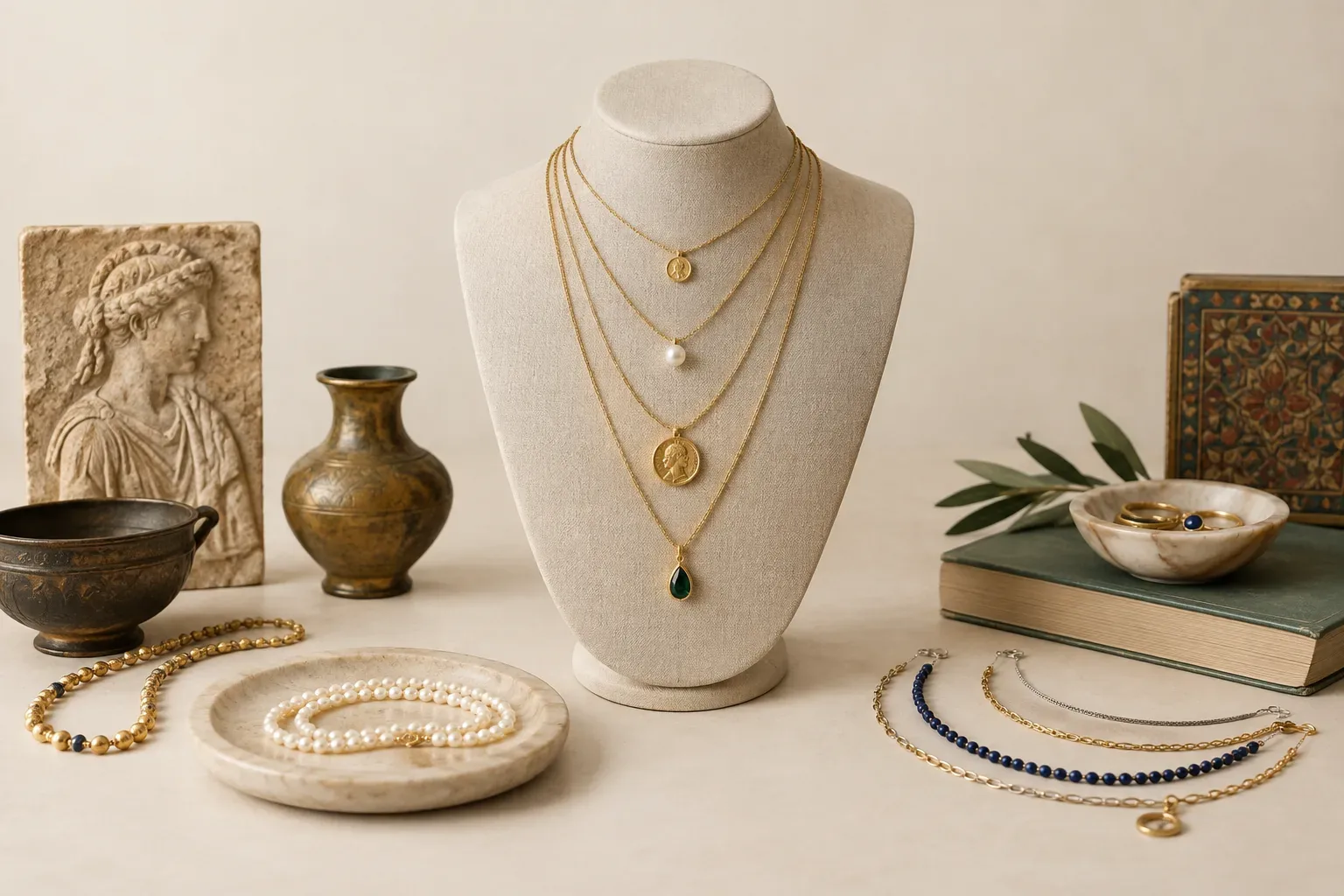
Layer necklaces for a crew neck by choosing a short piece that sits just above or at the neckline, adding one or two longer pieces to create vertical space, balancing scale and texture to avoid visual clutter, and using clasp and spacing strategies to reduce tangling. Historical practice of wearing multiple necklaces is documented by museum collections and should be distinguished from modern personal meanings; when gifting, prioritize cultural sensitivity and material disclosure.
Direct answer — what to do with necklaces and a crew neck
For a crew‑neck top, start with a short necklace that sits at or just above the neckline, then add one or two longer necklaces that create clear vertical steps. Keep scale and texture varied—thin chains with a small pendant, then a medium chain, then a longer single‑strand or pendant—to maintain balance and reduce tangling. Use clasp choices and slight length differences to prevent knots, and select motifs and materials with respect for documented histories and personal meaning.
Historical evidence and changing contexts
Museum collections and curators document that wearing multiple pieces and layering necklaces is not a new fashion trick but a recurring practice in many cultures and periods. The Victoria and Albert Museum describes how jewellery styles and social meanings have shifted over centuries, showing examples from ancient and historic collections through to modern uses that reflect changing social contexts.
Specifically, museum surveys in the V&A collections trace the presence of layered neck adornment in Ancient Egyptian and Near Eastern contexts, where multiple strings of beads and collars appear in burial and ceremonial objects. The V&A also documents European practices across the Georgian and Victorian periods, where combinations of chains, lockets, cameos, and gem settings were worn together for status, sentiment, and display. In the twentieth century, the museum records shifting uses of necklaces—from single statement pieces to the layered, mixed‑metal and mixed‑material looks that became common in late twentieth and early twenty‑first century fashion.
Documented historical meanings versus modern personal interpretations
Documented historical meanings come from the object context, commissioning records, and museum interpretation rather than from later popular commentary. For example, the Victoria and Albert Museum interprets many Victorian lockets and mourning pieces as having specific commemorative or sentimental functions. Similarly, in many premodern societies a particular bead type, amulet, or placement could have been tied to age, status, or ritual use.
Modern wearers often adopt the same forms for personal or aesthetic reasons that differ from those historical functions. A contemporary wearer who layers a locket with a chain may be drawing on the look for sentimentality, fashion, or a personal story rather than repeating an exact historic practice. It is important not to conflate the original, documented social or religious function of an object with every modern use or claimed universal symbolism.
How motifs, gemstones, and traditions appear in layered necklaces
Motifs: Lockets, talismans, religious symbols, and symbolic charms appear as focal pendants in layered necklaces but carried different functions historically. Museums like the V&A show lockets used for portraiture and memory in certain European contexts; when the locket appears in today’s layering it often functions as a personal centerpiece rather than an explicitly ceremonial object.
Gemstones: Gemstones have been used for ornament, status, and—at times—attributed properties. The V&A’s resources on gemstones explain how different stones were worked, set, and valued across periods. In modern layering, gemstones are commonly used as small accent stones or as a color anchor in a longer pendant chain. When gemstones are part of a layered look, clarity of scale and contrast (sparkle or color against fabric) helps them read well over a crew neck.
Traditions: The general tradition of combining chains of different weights and lengths appears in multiple traditions recorded by museum collections. Contemporary layering draws on that tradition but adapts it to modern materials and clasp technologies.
Practical guide: necklace lengths and crew‑neck balance
Know where the crew neck sits. A crew neck typically rests at the base of the throat, forming a horizontal line across the upper chest. A layered arrangement should relate to that line: either sit just above it or create graduated steps below it so necklaces do not fight the neckline.
Start with length steps. A reliable three‑piece layering strategy uses a short piece (a 14–16 inch choker or short chain that sits at or slightly above the neckline), a mid piece (an 18 inch “princess” length that sits just below the neck), and a longer piece (20–24 inches or longer) to add vertical movement. For a single necklace under a crew neck, a short chain that hugs the neckline or a pendant that sits just below it is usually most flattering.
Scale and proportion matter. Fine chains and small pendants read well against the flat plane of a crew neck; chunky or oversized pendants can compete with the shirt unless you keep them as the single focal piece. If the neck of the garment is thick or knitted, consider slimmer, longer chains to avoid crowding.
Solving tangles and construction tips
Stagger lengths by at least one inch between each chain to reduce contact points. When two chains are exactly the same length they are more likely to rub together and knot. Slight differences in length and weight let gravity separate the strands.
Vary chain types. Mixing a rope chain, a cable chain, and a fine box chain reduces identical contacts that can lead to tangles. Thicker chains resist knotting; very fine cable chains are most likely to twist and loop together.
Use practical hardware. Lobster clasps, flat spring rings, or removable connectors that let you secure multiple chains to a single point prevent relative movement. Some layered necklace designs include a single multi‑strand clasp that anchors the pieces so they move as one, reducing tangles. When assembling independent chains, place the largest pendant on the longest chain to keep pendants from colliding.
Storage and dressing technique. Lay necklaces flat before wearing and fasten clasps at the back, then adjust front‑facing position. If a knot forms, resist pulling; instead, lay the piece flat on a smooth surface, apply a drop of lubricant (baby oil or sewing machine oil) sparingly, and tease the knot out with two fine needles. Store necklaces separated or on hook cards to avoid overnight tangling.
Materials, color mixing, and visual balance
Mix metals intentionally. Modern layering typically tolerates mixed metals; the effect reads best if there is one unifying factor such as a repeated shape, a consistent chain texture, or a shared accent color in gemstones. If you prefer a cohesive look, match metals and keep texture variation subtle.
Consider fabric and contrast. A crew neck made from heavy knit will visually ‘compete’ with ornate necklaces. In that case, choose simpler pendants or longer chains to create distance. On smooth, fine fabrics, small sparkly stones or textured chains create a delicate contrast.
Weight and comfort. Heavier layered looks can strain the garment and the wearer’s neck. If you plan extended wear, prioritize comfortable chain widths and distribute heavier pendants onto longer chains so the weight is not concentrated at one point.
Respectful selection and gifting guidance
Research meanings before gifting culturally or religiously specific motifs. Because historical uses of symbols can be specific to a culture or faith, check reliable sources or ask specialists before giving items with explicit religious or ritual imagery. The V&A collection notes distinct historic functions for objects like lockets and amulets; those documented functions are not automatically the same as contemporary fashion use.
Ask about materials and treatments. When buying gemstones, diamonds, or pearls, follow the FTC’s guidance to confirm whether stones are natural, treated, synthetic, or imitation and to request disclosure of treatments. The Federal Trade Commission provides consumer guidance on transparency and labeling that protects buyers and recipients.
Prioritize craftsmanship and the recipient’s comfort. Consider allergies to metals (nickel is a common allergen) and the recipient’s lifestyle—active wearers may prefer sturdier, simpler pieces. If unsure about symbolism, choose neutral, high‑quality chains or birthstones chosen by the recipient rather than assuming a symbolic meaning.
Gift presentation and a short note. When gifting a layered set, include a brief note that clarifies your intention—whether sentimental, decorative, or respectful of a tradition—so the recipient understands the context you had in mind.
A closing note on context and personal style
Layering necklaces over a crew neck is at once a modern stylistic tool and a continuation of long historical practices. Use museum documentation to understand how objects were used in their original contexts, but allow modern personal meaning to be genuinely personal and explicitly chosen rather than assumed. With careful length choices, mindful balance, and simple anti‑tangle strategies, layered necklaces can complement a crew neck without overwhelming it.
Frequently asked questions
What necklace lengths work best with a crew neck?
A short necklace that sits at or just above the neckline (14–16 inches), a mid length around 18 inches, and a longer piece of 20–24 inches create flattering stepped layers over a crew neck. The short piece defines the neckline and longer pieces add vertical movement.
How can I prevent layered necklaces from tangling?
Stagger each necklace by at least an inch, vary chain types and thicknesses, anchor multiple chains with a single clasp or connector, and place the heaviest pendant on the longest chain. Store chains separately and fasten clasps before adjusting positions on the front of the neck.
Is it okay to mix metals when layering necklaces?
Yes. Mixed metals are a common contemporary choice; to keep the look intentional, repeat a shape or accent color across pieces or vary only one factor such as texture while keeping metal tones complementary.
Are there etiquette or cultural concerns when gifting symbolic jewelry?
Yes. Research any culturally or religiously specific motifs before gifting. Museum documentation shows that many symbols had particular functions historically, so confirm the meaning and whether the recipient would appreciate that symbolism.
How do I check whether a gemstone in a layered set is genuine or treated?
Ask the seller for disclosure about whether stones are natural, treated, synthetic, or imitations. The Federal Trade Commission recommends confirming treatment and origin details at purchase to ensure transparency.
Sources and further reading
- Bedazzled: A History of Jewellery — Victoria and Albert Museum
- An A-Z of Gemstones — Victoria and Albert Museum
- Buying Gemstones, Diamonds, and Pearls — Federal Trade Commission