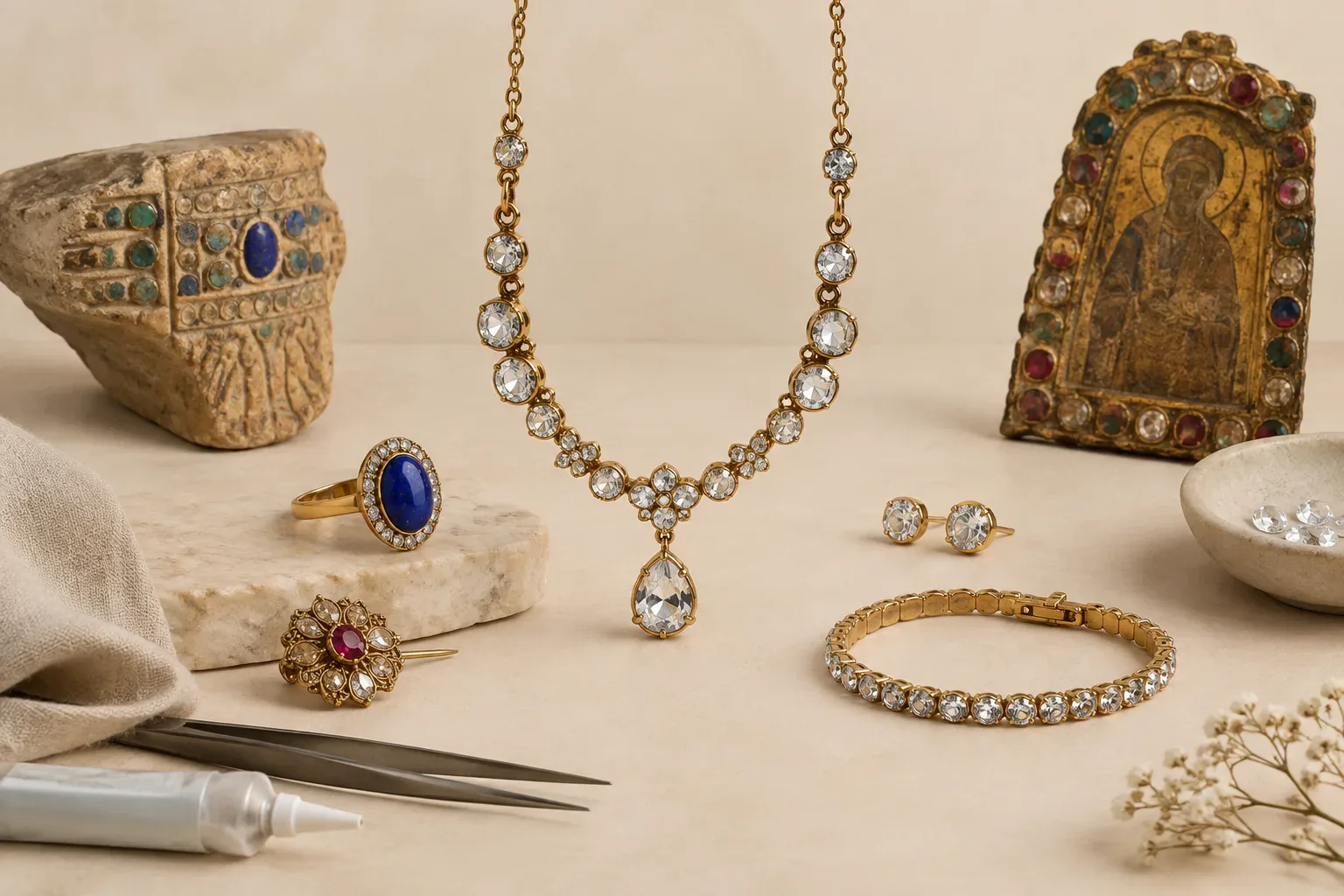
Meaning at a glance
Glue-set stones are common in costume and some vintage pieces; museum research shows their rise alongside mass-produced jewelry, while consumer-protection guidance covers disclosure and treatments. Inspect for loosening, residue, or damage; clean gently, avoid heat and ultrasonic cleaners, and consult a professional jeweler for valuables or complex repairs.
Quick answer
Glue-set stones are typically found in costume and some vintage jewellery where a stone or glass element is attached to a metal or base setting with an adhesive rather than mechanical prongs. The short answer is: inspect regularly for loosening and residue, clean gently, avoid heat and ultrasonic cleaners, and use a jeweller for valuable or historically significant pieces. Museum sources document the social history that led to glue-set methods, while consumer-protection guidance reminds buyers that material treatments and imitations should be disclosed.
Documented history and the contexts in which glued settings appear
The use of adhesives and setting alternatives appears in museum accounts of jewellery history as part of changing production methods and social contexts. The Victoria and Albert Museum’s materials on the history of jewellery describe how styles and manufacturing processes evolved as jewellery became more widely available and fashion became more rapidly changeable. Those shifts helped create categories of jewellery—such as paste, rhinestone, and other costume pieces—where non‑traditional methods, including gluing or cementing stones into settings, became common practice.
The V&A’s A–Z of Gemstones also provides context for how different materials have been used historically, including how glass, paste and lower‑cost materials were substituted for natural gemstones in popular jewellery. Museum treatment records and cataloguing often identify glued settings on items classified as costume or fashion jewellery rather than as fine or high‑value pieces. These are documented, contextual observations by a museum collection and research institution rather than universal prescriptions about value or meaning.
Separating documented historical meanings from modern personal interpretations
Museums and other historical sources can show why certain techniques were used and how jewellery functioned in a particular time and place. For example, museum curators note that as jewellery became affordable for a broader public, makers used economical methods and materials to achieve fashionable effects. That historical explanation is distinct from any later personal or popular interpretation that might assign spiritual or symbolic significance to glued stones themselves. There is no documented cultural or religious doctrine that treats the method of adhesion as inherently meaningful; documented meanings attached to particular motifs or gemstones come from the historical uses and contexts recorded by institutions such as the V&A.
Modern wearers and gift‑givers often add personal meaning—sentiment, style preferences, or symbolic readings—regardless of whether a stone is glued or set by prongs. Those personal interpretations are valid for the wearer but should be distinguished from the documented historical reasons for glued settings, which are primarily technical and economic as described by museum scholarship.
How glue-set stones and related materials appear in jewellery designs
Glue-set stones most often appear in costume and fashion jewellery: brooches, paste necklaces, chokers, clip earrings, and large statement pieces where the emphasis is on visual impact and affordability. Makers frequently used glass, paste, or imitation gems set into metal cups, bezels, or plated backings and secured with an adhesive rather than with individual prongs or bezels formed around the stone.
Glued settings are also found in some mid‑century and later vintage pieces where complex shapes or thin base metals made mechanical settings impractical or costly. The result is usually a flat or slightly cupped seat with visible adhesive residue when the stone is loose. The V&A’s publications on gemstones and jewellery history help explain why these materials and techniques were adopted by manufacturers and designers working outside the fine‑jewellery tradition.
Warning signs that a glued stone needs attention
Look for movement in the stone when you run a fingernail gently across its edge, gaps visible between the stone and its seat, discoloured or brittle adhesive residue, and any darkening or cloudiness beneath or around the setting. Stones that rattle when you gently tap the piece, or that sit crooked, are also indicators that the adhesive has failed or was applied unevenly.
Do not ignore discoloration or unusual smells; aged adhesives can discolour over time and in some cases can leave a tacky residue that attracts dirt and can degrade adjacent materials. If the backing metal is warped, corroded, or cracked, that structural issue often requires more than a simple reglue and should be examined by an experienced jeweller.
Safe cleaning and basic at‑home maintenance
Start with a soft, dry brush or a lint‑free cloth to remove surface dirt. If you must use liquid, a mixture of lukewarm water and a very mild soap applied with a soft brush can help; rinse briefly and dry thoroughly with a soft cloth. Avoid soaking pieces with glued stones, because water can infiltrate the adhesive layer and weaken the bond.
Never use an ultrasonic cleaner or steam cleaning on glue‑set stones unless you have confirmation from a conservator or jeweller that the adhesive and the stone are compatible with those methods. Ultrasonic and steam can dislodge stones and sometimes react with adhesives or backing metals. Also avoid high heat and household solvents like acetone unless a professional explicitly instructs their use; solvents can dissolve or soften many adhesives and damage stones or plating.
When and how to attempt a DIY reglue
For low‑value fashion pieces you wear occasionally, a careful DIY reglue can extend usable life. Remove old visible residue gently with a soft tool and solvent recommended for the adhesive type, taking care not to scratch the stone or metal. Use a clear, jeweller‑grade adhesive designed for gemstones and metals, apply sparingly to the seat, position the stone accurately, and allow full cure under recommended conditions. Work in a dust‑free, well‑ventilated area and follow the adhesive manufacturer’s health and safety guidelines.
However, do not attempt DIY glue repairs on valuable, sentimental, or historically significant pieces. In those cases, an amateur re‑adhesive can obscure or remove original materials, cause irreversible damage to stones or metal, and reduce the item’s museum or resale value. If you are unsure of the piece’s value or construction, consult a reputable jeweller or conservator first.
Professional repair options and what to tell a jeweller
A professional jeweller can clean old adhesive from the seat without harming the stone, select a compatible adhesive, and perform a secure reattachment. For higher‑value pieces, a jeweller might recommend replacing a glued setting with a mechanical setting (for example, re‑bezeling or adding prongs) to improve durability. Conservators working on historically important items may use specialized reversible adhesives and documentation practices.
When you take a piece for repair, tell the jeweller what you know about the jewel: whether you suspect the stones are glass, paste, or natural gems; any history of prior repairs; how often the piece is worn; and photographs of the item. Also mention if the item has sentimental or collector value so the jeweller can offer an appropriate conservation approach rather than a quick cosmetic fix.
Buying, gifting, and selection guidance
If you are buying or gifting jewellery and want longevity, choose pieces with mechanical settings—prongs, bezels, or channel settings—when the intention is frequent wear or investment. For costume pieces intended for occasional wear or fashion statements, glued settings are acceptable and can be beautiful and appropriate, but disclose that the item is costume jewellery and consider including care notes with the gift.
When acquiring vintage pieces, consult reputable sellers and ask about the piece’s construction and any previous conservation work. The Federal Trade Commission advises consumers to ask about treatments and imitations when buying gemstones and pearls; sellers should disclose relevant treatments and whether gems are natural, treated, or imitations. Clear, honest disclosure helps recipients and owners make informed decisions about care and repair.
Conserving sentimental or historically important pieces
If the item has family or historical significance, err on the side of professional conservation. Museums and conservation labs typically document treatments and use reversible adhesives that are compatible with long‑term preservation. A professional approach both preserves the object and retains its provenance and value for future generations.
When in doubt, seek an appraisal or conservation consultation before attempting any invasive repair. A well‑documented conservation treatment maintains more of the item’s story than an undocumented home repair.
Final notes
Glue‑set stones are a technical solution born of changing fashions and production methods; museum research helps explain why makers adopted these methods, while consumer guidance underscores the need for disclosure and caution. Regular inspection, gentle cleaning, and using professional services for valuable or fragile pieces will keep glue‑set jewellery wearable and protect its historical or sentimental value.
Frequently asked questions
Can I reglue a loose stone myself?
You can reglue low‑value costume pieces if you are careful and use a jeweller‑grade adhesive, working in a clean, ventilated area and avoiding excess glue. Do not attempt DIY re‑adhesion on valuable, sentimental, or historically important items; improper cleaning or adhesives can cause irreversible damage and reduce value.
How will I know if a glued stone is valuable or an imitation?
Visual signs are not always reliable. The Victoria and Albert Museum’s resources explain how glass, paste, and imitation materials have historically been used in fashion jewellery. When value matters, ask the seller for disclosure and documentation or seek a professional appraisal; the Federal Trade Commission recommends asking about treatments and imitations prior to purchase.
Is it safe to use an ultrasonic cleaner on glue‑set stones?
No—ultrasonic cleaning can dislodge glued stones and may react with adhesives or backing materials. Use a soft brush and mild soapy water for surface cleaning and consult a jeweller for any deeper cleaning needs.
How long do glue repairs last?
Lifespan varies with adhesive type, wear frequency, exposure to heat or moisture, and how well the seat is prepared. A well‑executed professional repair will last significantly longer than a quick DIY fix, but glued repairs are generally less durable than mechanical settings.
When should I see a professional jeweller or conservator?
Take the piece to a professional if it has monetary or family value, if the backing metal is damaged, if multiple stones are loose, or if you are unsure of the materials. Conservators are the right choice for historically significant items; a jeweller can advise on converting glue settings to mechanical ones for greater durability.
Sources and further reading
- Bedazzled: A History of Jewellery — Victoria and Albert Museum
- An A-Z of Gemstones — Victoria and Albert Museum
- Buying Gemstones, Diamonds, and Pearls — Federal Trade Commission