Meaning at a glance
Treat brooches as both jewellery and small metalwork: learn the documented historical uses and changing contexts, look for wear to pins, catches and settings, protect gemstones and enamel, and consult a trained jeweller or conservator for structural or historically important pieces.
Why history matters for repair and maintenance
Brooches have served as functional fastenings, status markers and personal decoration in many societies. The Victoria and Albert Museum frames jewellery as an evolving material practice tied to social context and technology, which matters when you decide how to care for or repair a piece. A nineteenth‑century mourning brooch framed and fixed differently from a Roman fibula; those differences affect appropriate repair methods and the value of original components.
Because brooches can be both wearable objects and museum‑relevant artefacts, assessing age, manufacture method and previous repairs helps determine whether to pursue conservative conservation or more invasive restoration. The V&A’s material on jewellery history can help identify when a device or technique is typical of a particular period and therefore worth preserving in its original state rather than replacing for convenience.
Documented historical meanings versus modern interpretations
Documented historical meanings of brooches tend to be functional or social and are described in museum interpretive material rather than as universal symbolic rules. For example, museums record that many brooches indicated rank, family affiliation or served as practical fasteners; those are historical contexts rather than fixed symbolic prescriptions.
Modern personal interpretations — such as assigning romantic or metaphysical meanings to a motif or to a repair itself — are legitimate personal responses but are not the same as documented cultural usage. Distinguish what a reputable source like a museum records about a brooch’s role or motif from private or popular claims that developed later. The V&A emphasises changing social context in jewellery, which means meanings can shift over time and between cultures.
How motifs, gemstones and traditions appear in brooches
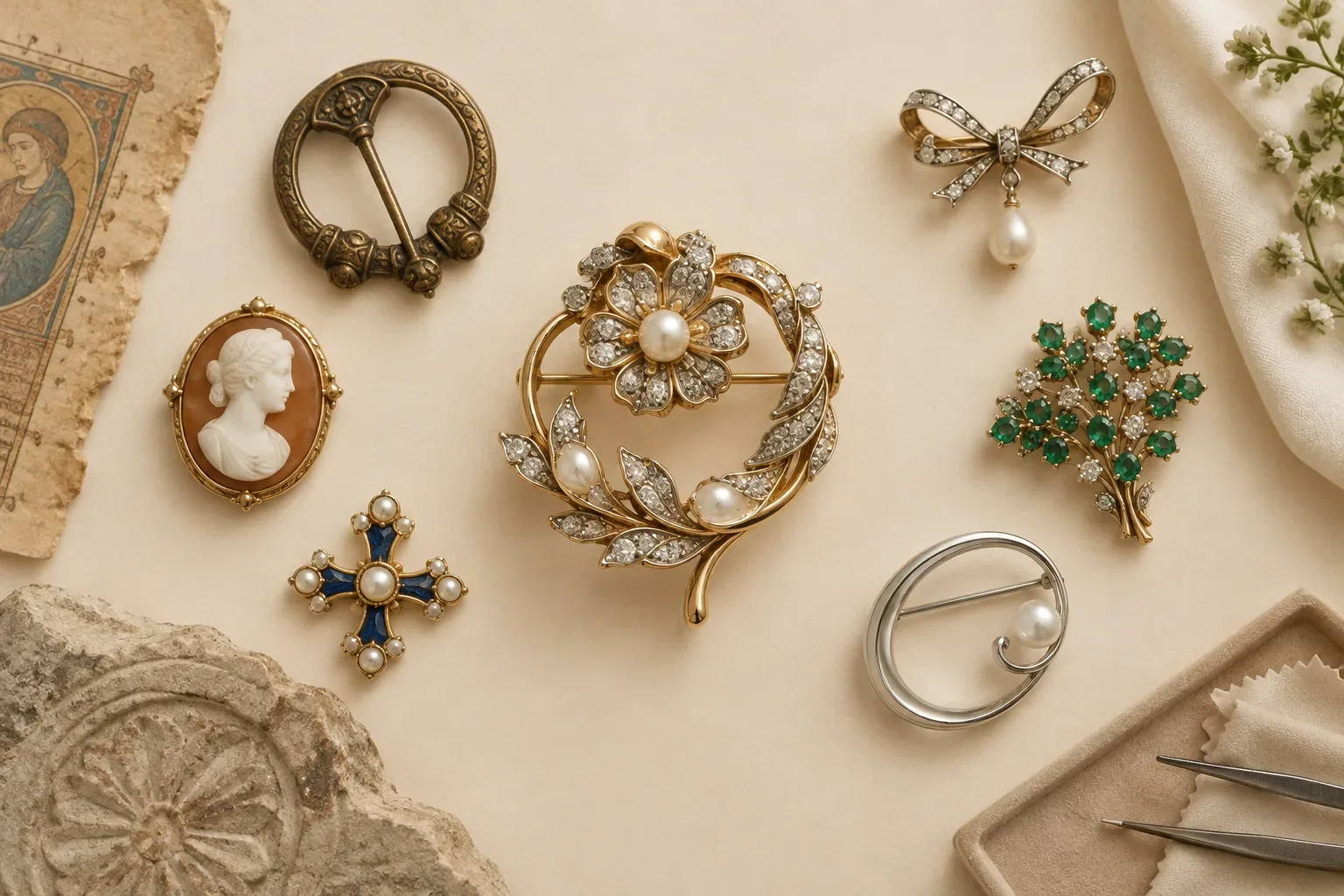
Motifs and stylistic language appear in brooch design as engraved decoration, applied elements, cutwork metal, enamel panels and stone settings. Some periods favour portrait miniatures, others favour floral or geometric forms. Identifying a motif’s appearance and typical materials helps with correct repair: for example, enamel work requires a different approach than plain metal repoussé.
Gemstones are commonly mounted in brooches by bezel, claw or collet settings. The Victoria and Albert Museum’s A–Z of Gemstones is a useful reference for identifying common materials and their historical uses. Knowing whether a stone is a softer gem, an assembled gem, a composite or a heat‑treated example affects how you clean and whether a setting needs reinforcement.
Traditional construction choices — wire pins, C‑clasps, trombone or safety catches, riveted brooch backs — are clues to period and function. Those mechanical elements determine what is repairable at low cost and what requires specialist intervention to preserve authenticity.
Common warning signs that a brooch needs repair
A bent or fractured pin, a slipping or missing catch, and visible gaps between a stone and its seat are immediate signs that professional attention is advisable. Pins that no longer secure can cause loss of the brooch or damage to clothing.
Loose stones, rattling settings, recurring solder marks, corrosion on metal surfaces, significant enamel cracking, and seams where metal components are separating are all indicators that the structural integrity of the piece is compromised and that a jeweller should assess it.
If a brooch has high historic, sentimental, or market value, any alteration can reduce its value. For such items, finding a conservator or a jeweller experienced in period repair is particularly important.
Basic maintenance you can safely do at home
Regular, gentle maintenance prolongs a brooch’s life. Use a soft brush and mild, pH‑neutral soap with lukewarm water for non‑porous stones and plain metals, rinsing thoroughly and drying fully before storing. Avoid steam or ultrasonic cleaners for fragile settings, porous gems, or assembled pieces unless you know the materials and prior treatments.
Store brooches flat in soft fabric or individual compartments to prevent pins catching and to limit abrasion between pieces. Keep them away from chemicals, household cleaners, and extreme humidity. For pieces with delicate enamel or glued components, limit handling and avoid soaking.
When to seek professional repair and what to expect
Seek a professional jeweller when a pin or catch is bent, fractured, or missing; when stones are loose; when solder joins have failed; when enamel is cracked or flaking; or when corrosion has undermined structure. For antique or archaeologically important pieces, contact a conservator with museum experience before any intervention so that repairs are reversible or documented.
Ask a repair professional to explain options clearly: conservative tightening of settings, stabilising fragile enamel, sympathetically replacing a missing catch, or, when necessary, remaking a pin in a style that matches the original. Expect a written estimate and a description of materials and techniques to be used. If the piece contains gemstones, the Federal Trade Commission’s guidance reminds buyers to ask about treatments and imitations so you can make informed decisions when stones are replaced.
Choosing a jeweller or conservator
Choose a jeweller with experience in the appropriate period or technique for high‑value or antique brooches. For historically significant items, seek a trained conservator or a jeweller who works with museums. Ask for references, examples of past restorations, and whether the repair will be documented in writing.
For routine repairs on modern costume or readily replaceable vintage brooches, a skilled local jeweller will often be sufficient. For small repairs, confirm whether the shop offers non‑abrasive polishing, soldering to match original joins, and secure pin replacement without unnecessary alteration.
Practical and respectful selection and gifting guidance
When choosing a brooch as a gift, consider the wearer’s comfort and lifestyle: a secure catch is essential for active wearers, while very large or heavy brooches may be better as wardrobe or display pieces. If the brooch is antique, disclose its age, documented repairs, and any known provenance to the recipient; transparency preserves both sentiment and value.
If you select a piece with a visible motif tied to a specific culture or tradition, do some research or consult reliable sources about that motif’s historical meaning and contemporary cultural sensitivities. The Victoria and Albert Museum encourages reading jewellery within its social context; gifting respectfully means acknowledging that context rather than assuming a single, universal meaning.
When buying gemstones, follow the Federal Trade Commission’s recommendations: ask whether gems have been treated, assembled, or are imitations, and request clear disclosure. That information affects both care and future repair decisions.
Documentation, insurance and long‑term care
Keep a record of repairs, photographs of the brooch before and after work, and receipts. For valuable or sentimental pieces, photographs and written descriptions help insurers and conservators, and make future repair decisions clearer.
Consider insurance for high‑value items and ask your repairer for certificates of work carried out. Regular checks by a qualified jeweller — for example annually for frequent wearers — catch small issues before they become structural problems.
Frequently asked questions
What immediate steps should I take if the pin on my brooch breaks?
Secure the brooch in a soft cloth and avoid wearing it. Photograph the break, keep all fragments, and take it to a jeweller for assessment. Do not attempt to solder or glue antique or enamelled pieces yourself; a trained professional can advise whether a conservative repair or a full replacement of the pin is appropriate.
Can I clean all brooches with the same method?
No. Plain metal brooches and hard, non‑porous gemstones tolerate gentle soap and water, while porous gems, assembled stones, glued elements, and delicate enamels require specialist care or dry cleaning. When in doubt, consult a jeweller or conservator rather than risk damage.
How can I tell if a brooch is worth professional conservation?
Consider historical importance, provenance, sentiment and market value. If the brooch is an identifiable antique, has museum‑level craftsmanship, or has sentimental value you would not want altered, seek a conservator or an experienced period jewellery restorer for an assessment.
Will repairing a brooch always lower its value?
Not always. Well‑documented, sympathetic repairs by qualified restorers can preserve function and value, but careless or historically inappropriate alterations can reduce market and historical value. Transparency and documentation are key.
What questions should I ask a jeweller before repair?
Ask whether they have experience with the brooch’s style or period, what materials and techniques they will use, whether repairs are reversible or documented, an estimate of cost and time, and for before‑and‑after photographs and receipts for insurance.
Sources and further reading
- Bedazzled: A History of Jewellery — Victoria and Albert Museum
- An A-Z of Gemstones — Victoria and Albert Museum
- Buying Gemstones, Diamonds, and Pearls — Federal Trade Commission