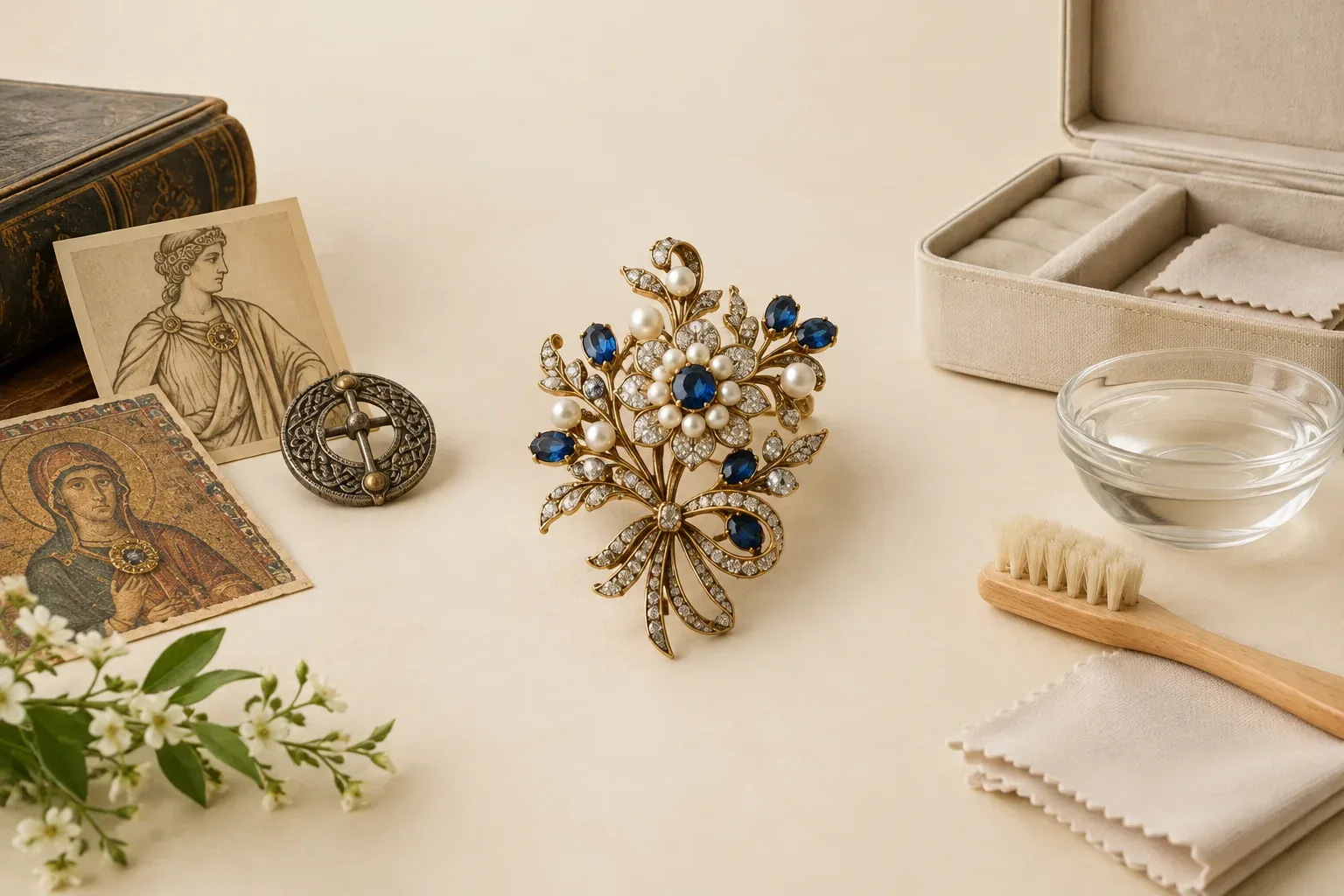
Meaning at a glance
This article explains the documented history and changing contexts of brooch care, separates historical meanings from modern interpretations, describes how motifs and gemstones affect cleaning and storage, and gives practical cleaning, storage, and gifting advice.
Quick answer
Treat cleaning and storage as part conservation and part prevention: clean only with methods appropriate to the brooch's materials, avoid harsh chemicals or ultrasonic cleaners on delicate stones, and store brooches in dry, padded, low-friction conditions to prevent tarnish, abrasion, and stress to pins and settings. These practices preserve both the object and any historical or sentimental value it carries.
Why care about cleaning and storage?
Jewelry is both wearable and collectible, and brooches combine small mechanical parts, varied metals, and a wide range of decorative materials. Proper care keeps fastenings working, prevents surface damage, and limits long-term chemical change such as corrosion or discolouration.
Museums and curators treat jewellery care as part of its story because how an object is stored and maintained affects how it survives and how future owners can interpret it. The Victoria and Albert Museum frames jewellery within changing social contexts and collection care, showing that cleaning and storage choices influence both appearance and historical integrity (Victoria and Albert Museum).
Historical evidence: documented practices and changing contexts
Documentation held and interpreted by the Victoria and Albert Museum shows that brooches and pins have circulated in many social roles — practical fasteners, status markers and sentimental objects — and that attitudes toward their care have changed with fashion and technology (Victoria and Albert Museum). Museums record examples of brooches from archaeological finds, the medieval period, Georgian and Victorian eras, through to 20th-century costume jewellery, demonstrating variation in materials and construction over time (Victoria and Albert Museum).
What is documented is general: earlier periods relied on hand-polishing and conservative repair, while the industrial and chemical advances of the 19th and 20th centuries introduced new materials and cleaning products, which in turn changed how owners maintained jewelry. The V&A catalogues pieces and exhibitions that illustrate those broader shifts rather than prescribing a single historic cleaning recipe (Victoria and Albert Museum).
Separate documented historical meanings from modern personal interpretations
Documented historical meanings for brooches are tied to their social role and materials: for example, some brooch shapes or motifs were favored in particular eras or regions, while gemstones had evolving associations or trade histories, all described in museum collections and scholarship (Victoria and Albert Museum; Victoria and Albert Museum—An A-Z of Gemstones).
Modern owners often layer personal symbolism or revived fashion meanings onto brooches. These contemporary interpretations are legitimate personal meanings but are not the same as the historically documented uses or beliefs recorded by museums. Keep the distinction clear when caring for an object: conservation choices aim to preserve the physical piece and its documented context, while personal cleaning or alterations can reflect present-day tastes.
How motifs, gemstones and traditions appear in brooches
Brooches have displayed a wide range of motifs—heraldic emblems, botanical forms, animals, cameos and abstract designs—executed in metalwork, enamel, stones, glass and organic materials. The choice of motif often reflects fashion, patronage or symbolic language current when the piece was made (Victoria and Albert Museum).
Gemstones in brooches range from hard stones like diamonds and sapphires to softer or porous materials such as pearls, opals and some organic inlays. The Victoria and Albert Museum’s A–Z of Gemstones explains how different gems have distinct physical properties and historical contexts that affect both their appearance and how they should be handled (Victoria and Albert Museum—An A-Z of Gemstones).
Traditions around brooch wearing—pin placement, use as mourning jewellery, or decorative fastening—appear across cultures and periods. Those traditions influence how often a brooch is handled, which in turn affects recommended cleaning and storage routines (Victoria and Albert Museum).
Safe cleaning methods, by material
General principle: start with the gentlest method that will do the job. Use a soft, lint-free cloth to remove dust and surface oils; this simple step prevents abrasion and reduces the need for more invasive cleaning.
Unplated gold and platinum: these metals are stable. Clean gently with a mild soap and warm water, rinse thoroughly, and dry with a soft cloth. Avoid strong abrasives that can change finish or remove intentional surface treatments.
Silver and silver-plated items: silver tarnishes from sulfur compounds in the air. Light tarnish can be removed using a soft cloth and a non-abrasive silver cleaner, but avoid soaking plated brooches because prolonged chemical contact can expose base metals and damage plating.
Gemstones and inlays: consult the stone’s properties before cleaning. Hard stones like diamonds and sapphires tolerate gentle soapy water; porous or treated stones such as opal, turquoise, emeralds with fractures, and many pearls are sensitive to heat, solvents and ultrasonic cleaners. The Victoria and Albert Museum’s gemstone guidance highlights how gem properties determine safe handling (Victoria and Albert Museum—An A-Z of Gemstones).
Enamel, painted surfaces and glued assemblies: these are fragile. Clean with a soft brush or cloth only; avoid submersion and chemical cleaners which can lift paint or dissolve adhesives.
Costume jewellery and glued stones: many modern or vintage pieces use adhesives that can fail with moisture or heat. Use a dry dusting and minimal handling. If professional repair is needed, consult a conservator rather than attempting household fixes.
Common mistakes to avoid
Using household chemicals, toothpaste or abrasive cleaners without knowing the piece’s materials risks permanent damage—abrasion, loss of plating, or chemical attack on mounts and stones. These methods are common but unsafe.
Ultrasonic cleaners are popular, but they can dislodge stones, damage fractures, and destroy delicate inlays or glued elements. Do not use ultrasonic cleaning on porous stones, antique settings with weakened glue, or brooches with fragile enamels or painted surfaces.
Soaking plated or mixed-metal brooches in solutions can encourage corrosion at joints and expose base metals. Avoid long soaks; brief rinses only when material-safe and followed by immediate drying.
Keeping brooches loose together in a single box leads to scratches and tangling. Pins and fastenings can bend or break if pressed against other items.
Storage best practices
Store brooches individually in padded compartments or wrapped in acid-free tissue to prevent scratches and contact damage. Low humidity, stable temperature and darkness reduce corrosion and fading.
For silver, short-term anti-tarnish strips or cloths can slow discoloration. For pearls and organic materials, keep a little humidity to prevent drying and cracking, but avoid storing in damp or poorly ventilated places that encourage mould or metal corrosion.
Keep pins closed or secured to prevent accidental injury and reduce stress on catch mechanisms. For long-term storage consider archival boxes and consult a conservator for high-value or historically important pieces. Museums use controlled conditions to preserve metal, stone and organic components, and private owners can apply those same principles at a simpler scale (Victoria and Albert Museum).
Material disclosure and buying considerations
When acquiring a brooch—especially an antique—you should ask about materials, treatments and repairs. The U.S. Federal Trade Commission advises buyers to seek disclosure about treatments, imitations and the nature of the stone so that cleaning and care can be appropriate (Federal Trade Commission).
If a piece has been re‑plated, repaired, or contains composite stones, those treatments change how it responds to cleaning and storage. A professional appraisal or a jeweller experienced with vintage pieces can identify sensitive features before you take cleaning steps.
Practical and respectful selection or gifting guidance
When choosing a brooch as a gift, think about the recipient’s lifestyle and willingness to care for the piece. A daily-wear person may prefer hard stones and sturdy mounts; someone who collects historical pieces may appreciate a delicate, documented example with clear care instructions.
Respect cultural and personal meanings. If a brooch motif is associated with a particular culture, period or ceremony, learn its background and avoid assumptions about meaning. Use museum resources or the related guidance on researching symbols to check interpretations before gifting (Victoria and Albert Museum; see "How to Research the Meaning of a Jewelry Symbol" for related advice).
Include care instructions with the gift: note any stones or finishes that are delicate, recommended cleaning methods, and whether professional conservation is advised for future repairs. This practical gesture preserves the object’s integrity and shows respect for its material and meaning.
Final takeaway
Brooches cleaning and storage choices protect both the physical object and the stories it carries. Use gentle, material-appropriate cleaning; avoid abrasive or chemical shortcuts; store pieces individually in stable, padded conditions; and seek professional advice for high-value or complex items. These steps reflect both conservation best practice and respect for the historical and personal value of brooches.
Frequently asked questions
Can I use silver dip on an antique brooch?
Use caution: silver dips remove tarnish but can strip plating and attack adhesives. If the brooch is plated, has fragile enamel or glued stones, avoid dips and instead use a soft cloth or seek professional advice.
Is it safe to clean all brooches in ultrasonic cleaners?
No. Ultrasonic cleaners can dislodge stones, worsen fractures and damage enamel or glued components. Only use ultrasonics for pieces known to be mechanically secure and composed of hard, stable materials, and check with a jeweller first.
How should I store a brooch with pearls or opal?
Store pearls and opals away from extremes of heat and dryness, in padded, breathable wrapping. Avoid airtight plastic for pearls long-term; a slightly humid, dark environment helps prevent drying and crazing.
What cleaning method is safest to start with?
Start with the gentlest option: a soft, lint-free cloth and gentle brushing with a soft brush. Move to mild soapy water only after confirming the materials are water-safe.
How do I know if a brooch has been treated or repaired?
Ask the seller for disclosure and documentation. The Federal Trade Commission recommends buyers request information about treatments, re-plating, or repairs because these affect care and value (Federal Trade Commission). A reputable jeweller or conservator can also inspect the piece.
Should I include care instructions when gifting a brooch?
Yes. Note any delicate materials, recommended cleaning methods, and whether professional servicing is advised. Including care guidance shows respect for the object and helps the recipient preserve it.
Sources and further reading
- Bedazzled: A History of Jewellery — Victoria and Albert Museum
- An A-Z of Gemstones — Victoria and Albert Museum
- Buying Gemstones, Diamonds, and Pearls — Federal Trade Commission