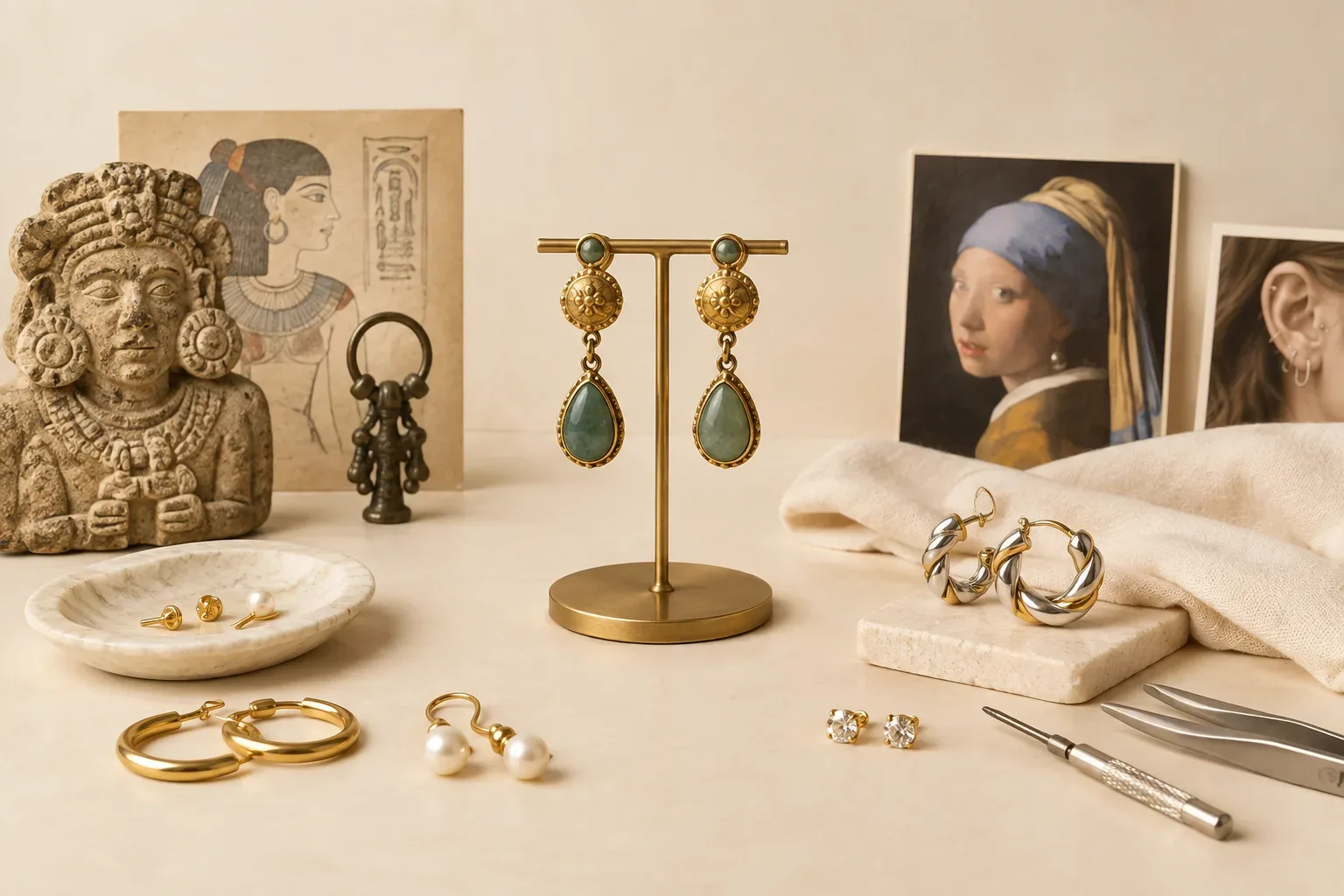
Meaning at a glance
Earrings repair and maintenance are best understood as practical tasks informed by the long history of changing jewelry materials and uses; know the common warning signs—loose settings, worn posts, tarnish, damaged clasps, and loose stones—use cautious home care suited to the metal and gemstone, and seek a trained jeweler for structural repairs, stone resetting, or when an item has cultural or material sensitivity.
Quick answer
Earrings repair and maintenance means routinely checking fastenings and settings, cleaning in ways appropriate to the metal and gemstone, and getting professional help for structural damage, loose stones, or pieces with cultural or material value. Historically, jewellery forms and their social roles have changed across cultures and periods; that history helps explain why certain techniques and materials require specific care today (Victoria and Albert Museum).
Historical evidence and changing contexts
Museum collections and curatorial research show that earrings and other jewellery have shifted form, function, and social meaning across time and between cultures. The Victoria and Albert Museum describes jewellery not as a static set of meanings but as objects whose designs, materials, and social uses evolve with fashion, technology, and social structure. That documented record explains why older techniques (hand-forged ear wires, beaded settings, early gem cuts) survive in some cultures while modern mass-produced systems (pressed metal parts, machine-made posts and clasps) dominate others.
Those shifts have practical consequences for repair and maintenance. Historic pieces may use soldering methods, fragile hand-cut stones, or organic materials that need specialised conservation, while contemporary commercial earrings often use alloys and machine fittings that behave differently when repaired. Because the V&A frames jewellery in its changing social and technological contexts, conservation and repair approaches depend on both material and historical origin.
Documented historical meanings versus modern personal interpretations
The historical record in museum scholarship documents how jewellery functioned: as status display, a marker of trade connections, or a personal ornament whose materials reflected available technology and taste (Victoria and Albert Museum). These are documented social and material facts rather than universal symbolic prescriptions.
Modern wearers often layer personal meanings—family heirloom status, symbolic motifs, or fashion statements—onto historic or reproduced forms. Those modern interpretations are valid personal or cultural meanings, but they are different in kind from the documented historical uses reported by museums. When planning repair or conservation, treating the object’s documented material and historical aspects separately from the owner’s contemporary meaning helps avoid irreversible changes to an item valued for its age, maker, or cultural origin.
How motifs, gemstones, and traditions appear in earrings
Motifs—floral shapes, geometric patterns, religious symbols—appear in earrings as surface decoration, structural elements, or as settings for stones. Whether a motif is cast, engraved, or hand‑worked changes how it responds to repair techniques.
Gemstones commonly used in earrings have long, varied histories. The Victoria and Albert Museum’s A–Z of Gemstones explains that different gems have distinct material properties and historical contexts. Stones that look similar may have very different hardnesses, cleavage, and sensitivity to heat or chemicals, and those properties affect cleaning and repair decisions. For example, organic materials such as pearls or coral have different vulnerabilities compared with crystalline stones discussed in the museum’s gemstone overview.
Traditions—such as specific earring shapes associated with regional styles—also influence construction: some traditions favor wire hooks, others use screw-backs or posts with friction backs. Recognizing the construction style helps determine appropriate maintenance and whether modern replacements will preserve cultural authenticity or alter the piece’s character.
Practical repair and maintenance: common warning signs
Several recurring signs indicate an earring needs maintenance or repair: visible loosening of stones in their settings, wobbling posts or bent ear wires, worn or broken clasps, visible pits or deep scratches in the metal, persistent tarnish that won’t come off with gentle cleaning, and discoloration or degradation of organic components such as pearls or fabric elements.
Another warning sign is repeated skin irritation in the pierced area around a particular earring; that can indicate metal sensitivity, surface corrosion, or accumulated debris in the finding. If an earring rattles or the stone moves when you gently tap it, the stone requires attention; a loose mount risks loss during wear.
Safe home maintenance (what to do yourself)
Gentle, regular care reduces the need for repairs. Remove earrings before swimming, strenuous activity, or contact with household chemicals. Wipe metal surfaces with a soft, lint-free cloth after wear to remove oils and sweat; for many modern metals this simple step prevents buildup and slows tarnish.
Use mild soap and water only when you know the stone and mounting tolerate moisture. For many hard, non-porous gemstones and precious metals, a brief soak and soft brush can remove grime, but porous or heat-sensitive stones and organic materials should not be immersed. Because stones and settings vary, check a trusted reference—such as a museum gemstone guide—if you are unsure about a specific material. If cleaning does not remove buildup or if you see structural damage, stop and consult a professional.
When to seek professional help
Seek a trained jeweler for any structural repair: replacing or re-soldering broken posts, tightening prongs and settings, resetting loose stones, and repairing or replacing worn clasps and mechanisms. Jewelry repair work that involves flame, solder, or pressure can easily damage a piece if performed without proper tools and training. For items with historical, cultural, or high monetary value, consult a conservator or a jeweler experienced with period pieces; museum practice treats conservation choices differently from routine repair to preserve original materials and methods (Victoria and Albert Museum).
If a gemstone might have been treated, is unusually delicate, or is of uncertain identity, ask a professional before using ultrasonic cleaners or heat. The U.S. Federal Trade Commission advises consumers that treatments and imitations exist and should be disclosed when buying gemstones; this same caution applies to repairs: some treatments can be altered or worsened by heat, chemicals, or harsh cleaning (Federal Trade Commission).
Choosing and gifting earrings with respect
When selecting earrings to buy, repair, or gift consider material durability, cultural sensitivity, and wearer preferences. For daily wear choose practical settings with secure backs and robust posts; for delicate or heirloom pieces, look for professional assessments to confirm long-term wearability. If the earrings carry cultural or familial meaning, ask the owner about any traditions, taboos, or preferred conservation approaches before altering them.
Gifting advice: choose an item appropriate to the recipient’s lifestyle and consider maintenance needs. A highly ornate or antique pair may require professional upkeep that the recipient might not want to manage. When in doubt, pair a more delicate or culturally specific earring with offering a repair or maintenance voucher from a reputable jeweler so the recipient can decide how to care for or adapt the piece.
Finding the right professional
Look for a jeweler or conservator with documented experience in the relevant material and style. Ask about training, whether they carry insurance, and request references or before-and-after examples. For historic or culturally specific pieces, a conservator affiliated with a museum or trained in conservation ethics can advise on treatments that preserve original fabric and provenance. For everyday repairs—soldering a post, re-tipping a prong, replacing a clasp—many reputable local jewelers can complete the work safely and provide aftercare guidance.
Request clear estimates and timelines and ask whether replacement parts (backs, posts, catches) will be modern substitutes or period-appropriate materials. Good professionals will explain tradeoffs: a modern reinforcement may extend wearability but could change the piece’s appearance or historical integrity.
Conclusion
Earrings repair and maintenance combine practical care with respect for material and cultural history. Museum scholarship shows that earrings’ forms and meanings change over time, and that history affects how pieces should be treated and conserved (Victoria and Albert Museum). Use cautious home care tailored to the metal and gemstone, watch for clear warning signs, and consult trained professionals for structural work or when a piece has historical or cultural significance. When buying or gifting, consider durability and care needs, and where appropriate, include professional maintenance in the plan.
Frequently asked questions
How often should I inspect my earrings for problems?
Inspect frequently worn earrings every few weeks for loose stones, bent posts, or worn clasps; check less-worn or storage pieces before wearing. Regular visual checks and gentle tests—such as lightly wiggling a stone to detect movement—help catch issues early.
Can I clean all earrings at home safely?
You can safely wipe most metal earrings with a soft cloth after wear. For more intensive cleaning, only use soap and water or mild cleaners on pieces you know are water‑safe; porous or heat‑sensitive gems and organic materials require specialist care. If you are uncertain about the material, consult a professional before soaking or using ultrasonic cleaners.
When is a jeweler necessary rather than a DIY fix?
Bring earrings to a jeweler for structural repairs such as re-soldering posts, tightening prongs, resetting loose stones, or replacing broken clasps. Also seek professional advice for antique or culturally significant pieces so preservation, not just functionality, guides the work.
Are ultrasonic cleaners safe for earrings?
Ultrasonic cleaning can be effective for some hard gemstones and solid metal items, but it can damage softer, fractured, or treated stones and delicate settings. When in doubt, ask a professional; the U.S. Federal Trade Commission recommends disclosure of treatments and cautions buyers and owners to be aware of a gemstone’s vulnerability before exposing it to heat or vibration.
What should I consider when gifting earrings that might need maintenance?
Consider the recipient’s lifestyle and willingness to care for delicate items. If gifting antique or culturally specific earrings, discuss conservation preferences with the recipient or include a maintenance voucher so they can choose how to care for or adapt the piece.
Sources and further reading
- Bedazzled: A History of Jewellery — Victoria and Albert Museum
- An A-Z of Gemstones — Victoria and Albert Museum
- Buying Gemstones, Diamonds, and Pearls — Federal Trade Commission