Meaning at a glance
This article explains documented historical context for jewelry that incorporates natural materials, separates museum-backed history from modern personal meanings, lists warning signs of damage, gives step-by-step maintenance advice, and explains how to choose a qualified professional for fossil jewelry repair.
What the documented history shows — precise attributions
Surveys by the Victoria and Albert Museum describe how jewellery materials and meanings have changed over long periods and across cultures, reflecting technology, trade, and social context. The V&A’s exhibition overview and resources emphasize that jewel-craft adapts to available materials and shifting fashions rather than remaining fixed to a single purpose or symbolism.
Museum overviews such as the V&A’s A–Z of gemstones explain identification and historical context for many traditional gem materials, and the V&A’s broader history of jewellery documents how makers and wearers repurposed and treated natural materials as tastes and techniques evolved. Those museum sources do not present any single, universal practice for caring for every natural material; instead they show a long history of varied practice tied to specific technologies and periods.
Separating documented history from modern interpretations
Documented history, as represented in the V&A’s material, records broad patterns: jewelers historically used both mineral gems and organic materials when technology and belief allowed, and meanings shifted with social context. The V&A sources provide evidence of changing social contexts and gemstone identification rather than detailed, culture-specific rituals tied to fossil motifs.
By contrast, modern personal interpretations of fossil jewelry — for example treating ammonites, fossilized wood, or mammoth ivory as symbols of longevity, deep time, or environmental interest — are contemporary meanings adopted by wearers and makers. These modern interpretations are valid as personal or design choices but are not presented as longstanding, universal cultural symbols in the museum sources.
How fossil motifs and materials appear in jewellery
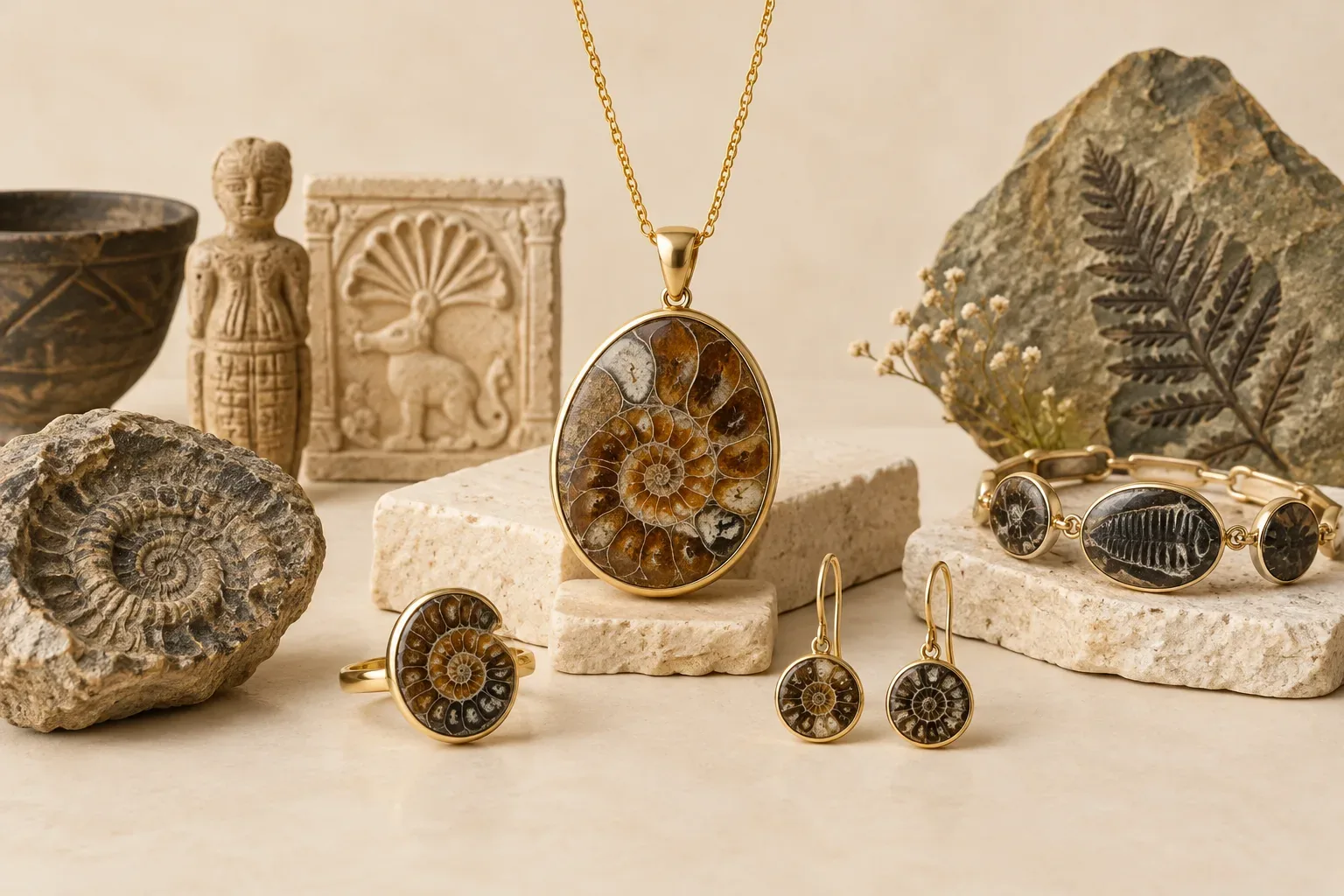
Fossil-derived elements appear in jewellery in several ways: whole fossil specimens can be set as cabochons or pendants; slices of fossilized wood or agatized material may be cut and polished like gemstones; and worked fossil ivory or bone has been carved into beads and intaglios. The V&A’s A–Z of gemstones and related museum material describe how jewelers classify and work diverse natural materials, but they treat fossils alongside other non-precious organic and mineral materials under the broader umbrella of material history and technique.
Because fossils are often porous, layered, or composite, their use in jewellery commonly requires stabilizing mounts, adhesives, or backing materials. These treatments affect both appearance and long-term durability, which is why disclosure and documentation of treatments matter when buying or repairing such pieces.
Warning signs that a fossil-set piece needs repair or professional attention
Loose setting: If the fossil element shifts, rattles, or moves within its mount, the setting is compromised and the piece risks loss or abrasion.
Visible cracks, flaking, or powdery surfaces: Porous fossil material can develop surface degradation that appears as white powder, flaking layers, or hairline fractures.
Discoloration or softening: Changes in color (beyond normal patina) or a softened surface when touched may indicate exposure to inappropriate chemicals, moisture, or biological activity.
Damaged metalwork: Bent prongs, split bezels, or weakened solder joints can expose the fossil element to direct impact and should be repaired before further wear.
Adhesive failure: If an element is held with adhesive and the bond loosens, the adhesive may appear gummy, discolored, or absent. Do not attempt to re-glue with household products.
Safe maintenance and at-home care
Inspect regularly: Look for the warning signs above, and check settings and clasps before and after use. A brief inspection before wearing can prevent loss.
Keep away from water and chemicals: Avoid soaking fossil-set jewellery. Hot water, steam, household cleaners, perfumes, and chlorine can stain, soften, or delaminate many fossil materials and their backing glues.
Gentle cleaning only: Use a soft, dry brush or a barely damp lint-free cloth for surface dust. If deeper cleaning is needed, consult a professional. Never use ultrasonic cleaners, steamers, or abrasive polishes on fossil materials unless a conservator or experienced jeweler has confirmed the treatment is safe for that specific specimen.
Stable storage: Store fossil pieces flat in a padded box or wrapped in a soft cloth, separated from other hard gemstones or metals that could scratch them. Keep them in a stable, moderate-humidity environment away from direct sunlight to reduce cracking and fading.
Record provenance and treatments: Keep any paperwork about the piece’s materials and past repairs. That information helps future conservators or jewelers choose appropriate methods.
When to seek professional help and how to choose the right conservator or jeweler
If you see any warning sign beyond surface dust, consult a professional rather than attempting aggressive home repair. Repairs that involve setting work, adhesive re-bonding, consolidation of porous material, or cleaning of degraded surfaces should be done by someone with experience in organic or unusual materials.
Look for experience and transparency: Ask potential repairers whether they have worked with fossil, bone, ivory, or stabilized organic materials before. Request examples, references, or photos of similar work. A reputable jeweler or conservator will explain options, risks, and likely outcomes rather than promising complete restoration.
Ask about disclosure and treatment records: The Federal Trade Commission advises full disclosure of material treatments, imitations, and enhancements for gemstones and similar materials. For fossil jewelry, ask whether any prior consolidants, backing, dyes, or stabilizers were applied and whether the repairer will provide a written record of interventions.
Consider a conservator for high-value, historically significant, or delicate specimens: When the piece has museum-grade age, provenance, or fragility, a trained conservator (often affiliated with cultural institutions or conservation laboratories) may be a better choice than a general jeweler.
Professional repair options and what to expect
Stabilization and consolidation: Conservators or specialized jewelers may use reversible consolidants to strengthen porous fossils. Expect discussion of materials, reversibility, and long-term monitoring.
Custom setting work: A damaged bezel or prong can be re-made to cradle the fossil with more support and protective bezel geometry. Jewelers may recommend adding a supportive back or a non-abrasive gasket to cushion the specimen.
Re-bonding and adhesive work: Professional adhesives chosen for long-term stability will be used in controlled conditions. Avoid re-gluing with consumer glues, which can fail or discolor.
Cosmetic—but documented—interventions: Gentle surface cleaning, minor in-painting, or dyeing can improve appearance but should be documented because they affect future conservation and value. Professionals should describe permanence, risks, and disclosure requirements.
Practical and respectful guidance for choosing or gifting fossil jewellery
Check provenance and legality: Ask about the ethical sourcing and legality of the fossil material. Laws and cultural sensitivities vary by material and origin; sellers should be able to explain sourcing. When in doubt, choose pieces with clear documentation.
Match the recipient and the piece: Fossil jewelry makes a thoughtful gift for someone who appreciates natural history, geology, or tactile, unusual materials. Choose designs that protect the specimen if the recipient intends to wear it often, or a pendant or brooch that can be removed for safe keeping.
Consider long-term care: If you are buying a fossil-set piece for someone who prefers low-maintenance jewelry, select a design with protective settings and clear care instructions. Include a note with maintenance tips and the seller’s treatment disclosures.
Respect cultural contexts: Some fossil materials (for example, fossilized human bone or culturally sensitive remains) require ethical consideration or may be inappropriate as personal ornament. Sellers should disclose cultural context, and buyers should select respectfully.
Final thoughts
Fossil jewelry sits at the intersection of geology, craft, and fashion. Museum resources make clear that material choices and meanings change over time and that responsible care and disclosure matter. Treat fossil-set pieces as fragile, document their treatments, and consult professionals experienced with organic or porous materials for significant repairs. That approach preserves both the jewellery and the history or personal meaning it carries.
Frequently asked questions
Can I clean fossil jewelry with ultrasonic or steam cleaners?
No. Ultrasonic and steam cleaners can damage porous or composite fossil materials and any adhesives used in setting them. Use a soft dry brush or a barely damp lint-free cloth for light cleaning, and consult a professional for deeper cleaning.
How can I tell if a fossil element has been stabilized or treated?
Look for a glossy or plastic-like surface, unusual color uniformity, or documented paperwork from the seller. Ask the seller or a conservator for disclosure. The FTC recommends transparency about treatments and enhancements for gemstones and similar materials, and the same principle applies to fossils used in jewellery.
Is it safe to wear fossil jewelry every day?
It depends on the material and setting. Wear fossil pieces with protective mounts and avoid exposing them to water, chemicals, or impact. If you want a low-maintenance daily piece, choose designs that minimize exposed fossil surfaces and confirm any stabilizing treatments with the seller.
Who should I choose for repairs: a jeweler or a conservator?
For routine setting repairs, an experienced jeweler who has worked with organic or porous materials may be appropriate. For historically significant, fragile, or high-value fossils, a trained conservator is often the safer choice. Ask about experience, examples of similar work, and whether they will document interventions.
What should I ask the seller when buying fossil jewelry as a gift?
Ask about material origin and legality, any treatments or stabilizers used, recommended care, and whether the piece has provenance documentation. Choose a piece whose design and care requirements match the recipient’s lifestyle and values.
Sources and further reading
- Bedazzled: A History of Jewellery — Victoria and Albert Museum
- An A-Z of Gemstones — Victoria and Albert Museum
- Buying Gemstones, Diamonds, and Pearls — Federal Trade Commission