Meaning at a glance
Explain the documented history and changing contexts of the fossil jewelry cleaning and storage motif, separate cultural or religious evidence from later popular interpretations, and give practical guidance for choosing and wearing the motif in modern jewelry.
What the historical record shows
Museum scholarship places jewellery within changing social and technological contexts. The Victoria and Albert Museum describes jewellery history as shaped by materials, techniques, fashions, and changing social meanings; objects that served as status markers, personal memory, or decorative costume in one period could carry different connotations in another. Use of natural curiosities, including fossilized materials, appears in different times and places as part of broader collecting and decorative trends rather than as a single, continuous symbolic program.
Which cultures and periods used fossil or fossil-like motifs?
Collectors and jewellers in the 18th and 19th centuries often incorporated natural curiosities—shells, petrified wood, agates, and fossilized materials—into personal ornaments as part of the era's interest in natural history and cabinets of curiosity. The Victoria and Albert Museum notes that jewellery has long reflected contemporary scientific interests and the availability of new materials. In the Victorian period, for example, natural history specimens and fossil-like forms influenced jewellery design as part of broader tastes for the natural world and sentimental keepsakes.
Earlier periods used materials that are now recognized as fossils in practical and decorative ways without the modern scientific framing. For instance, beads or inlays made from fossilized shells or bone appear in archaeological assemblages; however, museum literature emphasizes that uses and meanings must be tied to specific contexts rather than assumed to match contemporary interpretations.
Documented meanings versus modern personal interpretations
When museums and historical records discuss jewellery, they emphasize provenance, fashion, social function, and material availability. The Victoria and Albert Museum provides evidence-based descriptions of how jewellery functioned socially and aesthetically in different periods. Those documentary meanings—status, commemoration, fashion, imitation of rare stones—are grounded in surviving objects and records.
Modern readings frequently layer personal symbolism onto fossil jewellery: fossil motifs may be seen as symbols of deep time, continuity, transformation, or environmental concern. These contemporary interpretations reflect current values and tastes rather than universal historical meanings. Treat modern symbolic uses as personal or contemporary cultural expressions, and avoid asserting them as historically universal.
How fossil materials and motifs appear in jewelry
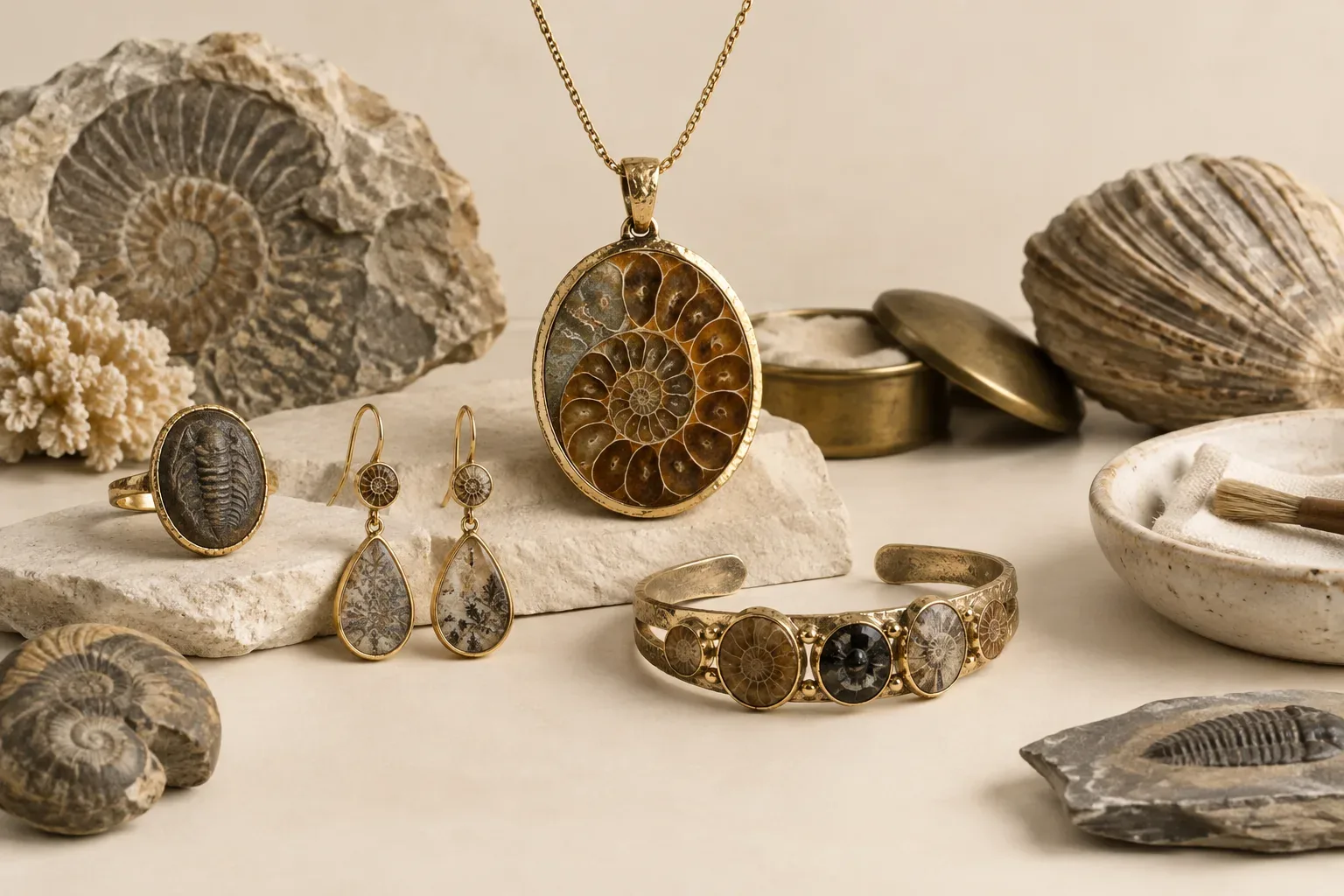
Fossil materials appear in jewellery in several ways: as set stones or cabochons cut from fossilized amber, ammonite, or orthoceras; as inlays of fossilized wood or shell; or as cast and carved motifs inspired by fossil shapes. Gemstone guides maintained by institutions such as the Victoria and Albert Museum discuss how particular materials are identified, described, and historically contextualized within jewellery collections rather than treating all organic or fossilized materials the same.
Manufacture techniques vary with material: amber is often polished and set as a translucent bead or cabochon; mineralized fossils may be stabilized and cut for use as decorative stones; motifs based on fossil shapes may be cast in metal. Understanding what you own or are buying—whether it is original fossil material, a reconstituted or stabilized composite, or a purely decorative cast—is key to proper care and to setting reasonable expectations for durability and cleaning.
Safe cleaning methods
Adopt the least invasive cleaning approach first. For many fossil-based pieces, begin with dry, mechanical cleaning: a soft, natural-bristle brush or a microfiber cloth can remove loose dust and surface dirt without introducing moisture or chemicals. Work gently and avoid scrubbing across fragile surfaces or joins.
If a mild wet cleaning is necessary, use the gentlest option: a barely dampened cloth with plain water applied only to the jewellery surface, avoiding prolonged soaking. Do not use ammonia, acetone, alcohol, or household detergents on unknown fossil materials; solvents can dissolve or dull organic fossil resins and damage stabilizing adhesives or treatments.
Avoid ultrasonic cleaners, steam cleaners, and aggressive mechanical polishing for fossil pieces unless a conservator has verified the piece can withstand those treatments. Ultrasonic vibration can break internal fractures and dislodge fragile inlays. Polishing with abrasives risks removing original surface patina that may be historically important or integral to the material.
Safe storage practices
Store fossil jewellery in a stable environment away from direct sunlight, heat sources, and rapid temperature changes. Excessive heat can deform or discolor organic fossil materials and can accelerate deterioration of adhesives and resins used in assembled pieces. Aim for a cool, dry place with moderate humidity; very dry or very humid conditions both raise risks.
Keep pieces separated and cushioned to prevent scratching and chafing. Use soft pouches or acid-free tissue within a padded box and avoid storing fossil jewellery with harder gemstones or metals that could abrade surfaces. For long-term storage of valuable or historically important pieces, consider archival-quality boxes and periodic condition checks.
Common mistakes to avoid
Do not assume all fossil materials respond the same way. Treat unknown pieces conservatively rather than applying a one-size-fits-all cleaning or polishing regimen. Avoid soaking pieces, applying household cleaners, or using steam and ultrasonic cleaners on fossil-based jewellery.
Do not store fossil jewellery in sealed plastic bags with volatile materials or in direct contact with rubber or newspaper, which can emit chemicals that harm certain organic materials. Do not attempt major repairs yourself on valuable or breakable fossil components; improper adhesives and clumsy techniques can cause irreversible damage.
Selecting and gifting fossil jewelry—practical and respectful guidance
When selecting fossil jewellery for yourself or as a gift, prioritize provenance and material disclosure. The U.S. Federal Trade Commission advises buyers to ask sellers about treatments, imitations, and the nature of the material. Requesting clear information about whether a stone is original fossil material, stabilized, reconstituted, or a cast replica helps set realistic expectations for care and durability.
Be mindful of cultural and personal sensitivities. Some designs or materials may have particular significance in specific communities; if a piece references a traditional motif or an archaeological form, inquire about its origins and whether it is appropriate to wear or gift. For heirlooms, ask about the history and previous care to preserve provenance information.
Choose a reputable seller or jeweller and, for more valuable pieces, request a condition report or written care recommendations. Provide a simple, conservative care note with a gift—brief instructions for cleaning and storage can prevent accidental damage and show respect for the piece’s material integrity.
When to consult a professional conservator
If a fossil jewellery piece is rare, carries historical value, or shows active deterioration—such as flaking, powdering, visible fractures, or loose settings—seek advice from a qualified conservator rather than attempting repairs. Conservators can assess material composition, advise on safe stabilization, and perform treatments using techniques and materials chosen for long-term preservation.
For purchases of higher value, a pre-sale condition assessment or post-purchase conservation plan can be a worthwhile investment to keep the piece stable and maintain provenance.
Frequently asked questions
Can I clean fossil jewelry with warm soapy water?
You can sometimes use a barely damp cloth with plain water to remove surface dirt, but prolonged soaking—even in mild soapy water—is not recommended for unknown fossil materials. Use the gentlest method first and avoid solvents, and consult a conservator for valuable or fragile pieces.
Are ultrasonic and steam cleaners safe for fossil-based pieces?
No. Ultrasonic and steam cleaners can damage internal structures, adhesives, and fragile surfaces in fossil jewellery. Avoid these methods unless a qualified conservator or jeweller has confirmed they are safe for that specific material.
How should I store fossil jewelry long-term?
Store fossil jewellery in a cool, stable, and shaded place with moderate humidity. Keep items separated and cushioned in soft pouches or acid-free tissue inside a padded box. Check condition periodically and avoid extreme heat, sunlight, or contact with volatile materials.
How can I tell if a fossil in jewelry is original or a reproduction?
Ask the seller for provenance and written disclosure of treatments. The Federal Trade Commission recommends requesting clear information about whether a material is natural, treated, stabilized, reconstituted, or a replica. For notable pieces, a professional appraisal or lab report can provide authoritative identification.
What should I include when gifting fossil jewelry?
Provide provenance or purchase information, and include a simple care note that recommends gentle cleaning, conservative storage, and professional assessment for repairs. Consider cultural and personal sensitivities and choose reputable sellers who disclose material treatments.
Sources and further reading
- Bedazzled: A History of Jewellery — Victoria and Albert Museum
- An A-Z of Gemstones — Victoria and Albert Museum
- Buying Gemstones, Diamonds, and Pearls — Federal Trade Commission