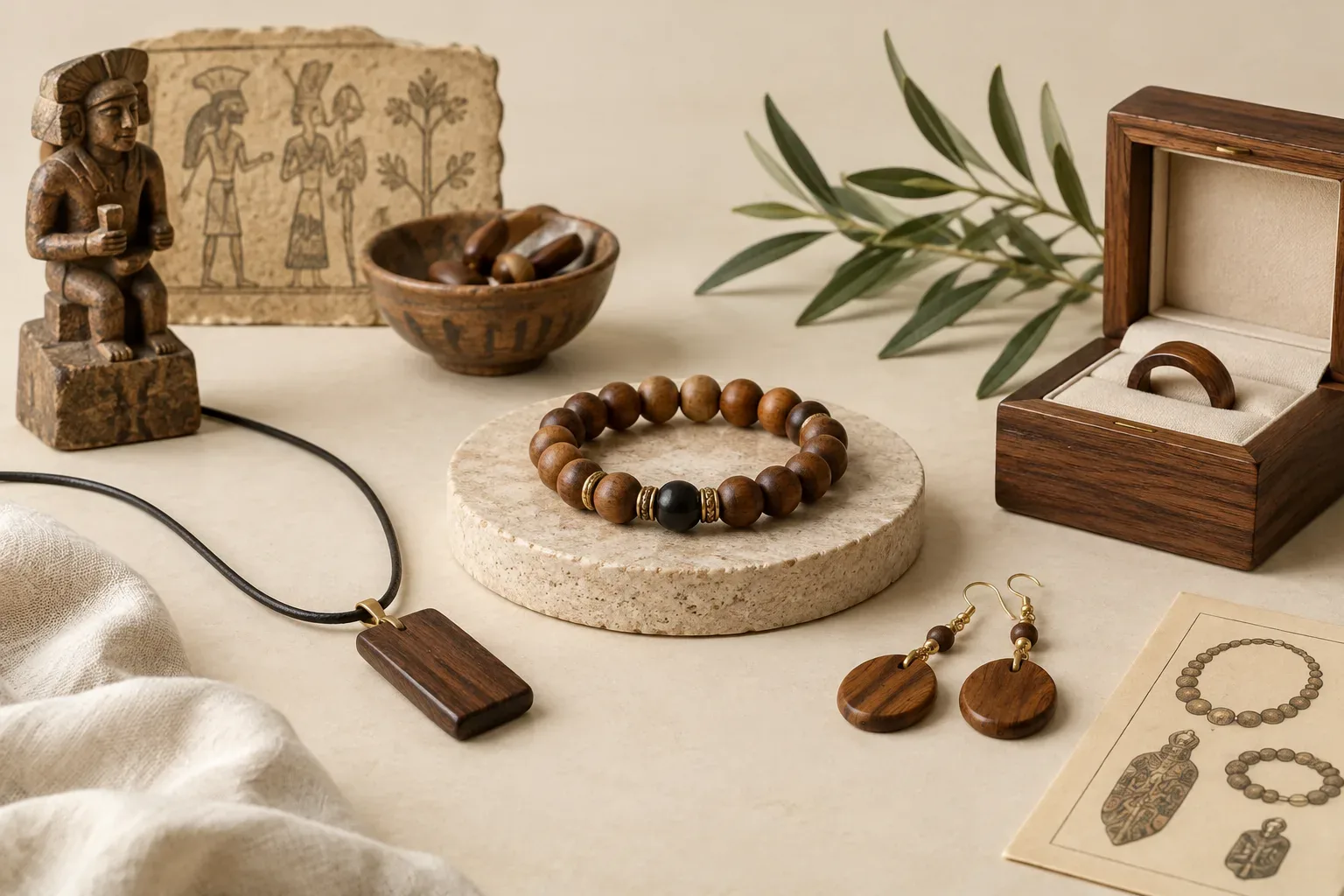
Meaning at a glance
This guide explains the documented history and changing contexts of wood in jewelry, separates historical uses from modern interpretations, and gives practical cleaning and storage methods plus selection and gifting advice.
Why this matters: documented history and changing contexts
The Victoria and Albert Museum emphasizes that jewellery's materials and meanings have changed dramatically over time as social uses, technologies, and trade routes evolved. The museum’s work charts jewellery from antiquity through later historic periods up to contemporary design, and notes that modest or locally available materials have often carried important social and symbolic roles alongside precious metals and gems (Victoria and Albert Museum).
Across many periods, makers used locally available organic materials, including wood, for beads, pendants, inlays and ritual objects. The V&A places these shifts in the larger context of jewellery history and changing social uses rather than assigning a single universal meaning to wood as a material. Where wood appears in religious or ritual objects, those meanings are specific to the culture and era that produced them, and the V&A’s surveys make clear that context is essential for interpretation.
Separate documented historical meanings from modern personal interpretations
Documented historical meanings derive from specific cultural practices, makers’ records, museum collections, and contemporary commentaries. The Victoria and Albert Museum’s accounts are useful when you want evidence of how materials were used or valued in a given period or place. Use those sources to trace provenance, technique, or documented ceremonial uses.
Modern personal or commercial interpretations often layer new meanings onto older objects or motifs. For example, a contemporary designer may present a wooden bead necklace as a sign of eco-consciousness or simplicity. That modern symbolism can be meaningful to the wearer, but it is not the same as a documented historical function or sacred status in a particular culture. Keep those two levels—historical documentation and contemporary meaning—separate when you research, buy, or gift wood jewellery.
How wood appears in jewellery and what to look for
Wood appears in jewellery in several common forms: carved pendants, bead strings, inlaid elements in rings or brooches, small carved charms, and composite pieces where wood is combined with metals, enamel or gemstones. Designers may leave the wood raw, oil-finish it, stain it, varnish it, or encase it in resin. Each finish gives different visual properties and different care needs.
In museum and maker descriptions, wooden beads and pendants are often documented alongside other materials, which helps identify whether an item is primarily decorative, functional, or ritual. When a maker has combined wood with gemstones or metal, the care required may depend on the most fragile component; for example, delicate stringing or adhesive joins need gentler handling than a solid carved pendant.
Practical, safe cleaning methods
Start by identifying the finish. If the piece has a clearly glossy varnish or resin coat, it will tolerate gentle damp cleaning better than raw porous wood. If the maker’s notes or seller’s description list an oil finish, wax, resin, or varnish, follow instructions from the maker and test any cleaner on an inconspicuous spot first.
For most wooden jewellery that is unfinished or oil-finished, dry cleaning is safest. Wipe gently with a clean, soft, lint-free cloth to remove dust. For carved or textured pieces, use a soft-bristled brush (an unused toothbrush or a small paintbrush) to dislodge debris from crevices, working gently so you do not damage any stringing or joinery.
If a piece with a sealed finish needs deeper cleaning, use a slightly damp cloth dampened with plain water only, wrung nearly dry. Wipe and then immediately dry with a soft cloth. Avoid soaking or prolonged exposure to water, because excess moisture can swell or warp porous woods and can loosen adhesives and stringing.
Do not use ultrasonic cleaners, steam cleaning, bleach, ammonia, acetone or household solvents on wood jewellery. These agents can strip finishes, discolor wood, damage adhesives, or remove applied pigments. Likewise, avoid polishing compounds designed for metal or hard gemstones; they can leave residues and change the appearance of wood.
When considering oiling or waxing: oils (for example, certain mineral or plant oils) and waxes are sometimes used to restore luster to wooden surfaces, but they can darken color and affect later finishes. Ask the maker about recommended products and test any treatment on an unseen area first. If you do not have reliable provenance or instructions, it is safer to leave the piece untreated or to consult a conservator for heirloom items.
Safe storage to prevent damage and preserve finish
Store wood jewellery in a stable, cool environment away from direct sunlight and heat sources. Sunlight and UV exposure can fade surface pigments and finishes, while heat and humidity fluctuations can cause cracking, warping or loosening of adhesives and stringing.
Use breathable materials such as cotton pouches or unglazed boxes lined with soft fabric to avoid trapping moisture. Avoid long-term storage in fully sealed plastic bags without moisture control, which can encourage mold if humidity is present or cause condensation. Silica gel packets can be used if humidity is a known local problem, but they should be monitored and replaced as needed.
Store pieces flat where possible to prevent stretching of stringing. Keep wooden items separate from harder materials (metals, gemstones) that can scratch or dent the wood. For bead strands, unclasp them and store them loosely to reduce stress on the thread. For pendants with metal fittings, ensure fastenings are closed so edges won’t snag fabrics or other pieces.
Common mistakes to avoid
Soaking wood jewellery in water or chemical cleaners is a common cause of damage. Even a short bath can lift finishes, swell fibres, or dissolve adhesives.
Applying random oils, polishes, or furniture waxes without testing is risky. Some household products contain solvents or dyes that will stain, attract dirt, or react with a finish. If an item is valuable or has contested provenance, seek professional conservation advice.
Storing wooden pieces in high-humidity areas like bathrooms or basements risks mold and metal corrosion on clasps. Likewise, leaving jewellery in direct sunlight or on car dashboards can cause color change and cracking.
Selection and respectful gifting guidance
When choosing wood jewellery as a gift, ask about provenance, materials, and maker recommendations for care. If the piece is described as ritual or culturally specific—for example, prayer beads, talismans, or items with explicit religious function—learn how that object is used and whether gifting it would be respectful in the recipient’s cultural or religious context.
The Federal Trade Commission advises buyers to ask sellers about treatments, stabilizers, or surface coatings for materials and gems. Use that same practice for wood: request written care instructions and a description of finishes or stabilizing treatments before purchase so you and the recipient can care for the piece properly (Federal Trade Commission).
Consider the recipient’s lifestyle. Raw or porous wood may be beautiful but will need more careful handling than sealed wood. If the recipient swims frequently or prefers low-maintenance pieces, select sealed finishes or composite pieces made for everyday wear. For heirloom or symbolic pieces, include a note about the cultural context and recommended care to preserve meaning as well as material condition.
When to consult a professional
If a wooden piece is an antique, carries significant sentimental value, or shows active damage such as splitting, loose inlays, or degraded adhesives, consult a professional conservator rather than attempting aggressive DIY repairs. Conservators can recommend appropriate stabilizers, reversible treatments, and storage solutions designed for long-term preservation.
For modern commercially produced pieces, the maker or retailer is usually the best first contact for care instructions and warranties. If you suspect a finish includes chemicals or treatments not disclosed in the item description, ask the seller for documentation and consider involving a qualified appraiser or conservator before applying cleaning agents.
Frequently asked questions
Can I clean wooden jewelry with water?
Only sparingly and only on sealed or resin-coated pieces. Use a cloth barely dampened with plain water, wipe immediately, and dry fully. Do not soak raw or porous wood because prolonged moisture can swell, warp, or loosen adhesives.
Is it safe to oil or wax wooden jewellery?
Some oils and waxes are used to refresh wooden surfaces, but they can darken color or affect later finishes. Ask the maker for recommended products and test on an inconspicuous spot. If the item is antique or valuable, consult a conservator.
How should I store wooden bead necklaces long-term?
Store flat and loosely to avoid stretching the string. Use a breathable cotton pouch or a lined box stored in a cool, stable, low-light place. Keep wooden pieces separate from harder items to prevent scratches.
Can I wear wooden jewellery in the shower or while swimming?
Avoid wearing wood jewellery during swimming or showering. Repeated exposure to water, chlorine, and sweat can damage finishes, swell porous wood, or corrode metal fittings.
What should I ask the seller before buying wood jewellery?
Request information about the type of wood, finish or stabilizing treatments, recommended care, and any cultural or ceremonial significance. The Federal Trade Commission advises buyers to ask about treatments and disclosure of material modifications for jewellery materials.
Sources and further reading
- Bedazzled: A History of Jewellery — Victoria and Albert Museum
- An A-Z of Gemstones — Victoria and Albert Museum
- Buying Gemstones, Diamonds, and Pearls — Federal Trade Commission