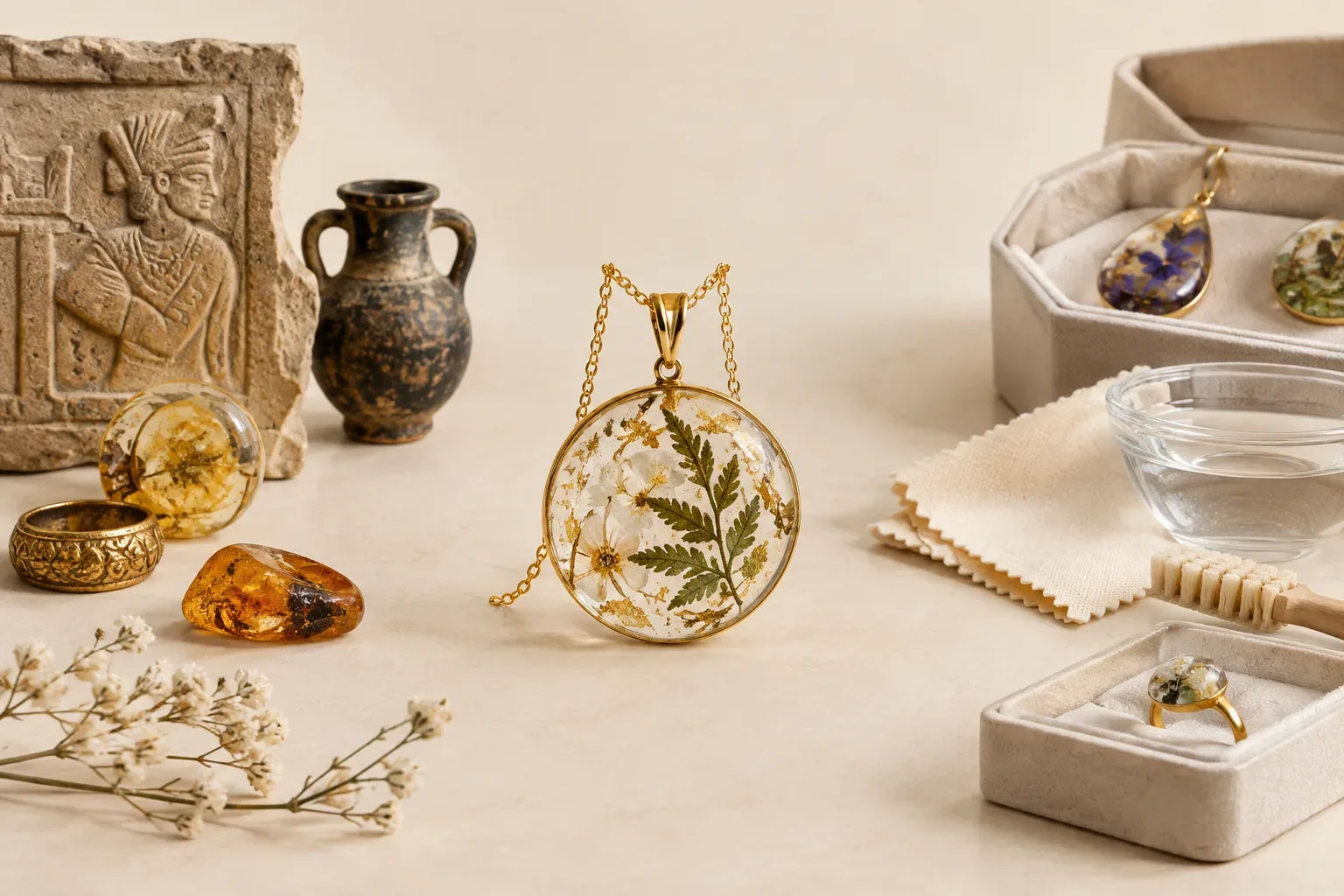
Meaning at a glance
Follow gentle cleaning with a soft cloth and mild soap, avoid solvents and heat, store resin pieces separately in a cool, dry place, and be aware of historical uses and modern treatments as noted by museum and consumer authorities.
Documented history: what the record actually shows
Museums and reference works document that resins—most notably fossilized tree resin known as amber—have been used as a decorative material for many centuries. The Victoria and Albert Museum describes the long history of jewellery and notes the changing social contexts that give materials different meanings in different times and places, and its resources on gemstones discuss materials like amber alongside traditional gem materials.
Those museum resources show change over time rather than a single, uniform story. Historical uses of natural resins appear in archaeological and curatorial records from antiquity through later European periods and into the nineteenth century, where such materials were worn, traded and curated as part of broader jewellery practices. The V&A's coverage places resin materials within broader trends in jewellery-making and collecting rather than ascribing a single, universal symbolic meaning.
Separate from fossilized resins are modern synthetic resins, developed and widely used in the 20th and 21st centuries. The commercial and consumer issues that attend modern synthetic materials and treated or imitation gems are the kind of concerns the Federal Trade Commission addresses when it explains the requirement to disclose treatments, imitations and material substitutions in jewellery sales.
Separating documented meanings from modern interpretation
What is documented in museum and trade records is the use and value placed on resin materials in particular contexts: amber and other natural resins were prized for their colour, warm feel and the rarity of some pieces, and they appear in historic collections as examples of material choice and taste. The Victoria and Albert Museum frames these facts within changing social contexts, showing how value and meaning shift with fashion, technology and trade.
Modern personal or symbolic meanings that people attach to resin jewellery—such as beliefs about healing, memory-capture, or spiritual protection—are contemporary interpretations unless they are explicitly recorded in historical sources. These personal meanings are valid as individual or community practices, but they should not be presented as universal or historically continuous without clear documentary evidence. Separate what curators and trade authorities record from what makers and wearers now feel or claim.
How resin and resin-like motifs appear in jewellery
Resin appears in jewellery in several ways. Natural fossilized resin like amber is used as beads, cabochons and carved ornaments; pieces sometimes contain visible organic inclusions that were trapped before fossilization and are shown and interpreted in museum displays. Contemporary synthetic resins are used to cast beads, pendants, inlays and to encase objects and pigments for a stable, lightweight finish.
Design motifs using resin range from polished, translucent stones set in metal to creative modern pieces that embed flowers, photographs or tiny objects. Because resins can be clear or coloured and can be cast in many shapes, makers use them for novelty pieces, bespoke keepsakes and fashion jewellery as well as for designs that reference older forms such as lockets or intaglios; museums catalogue examples to illustrate both continuity and change in material use.
Cleaning resin jewelry: safe methods
Begin with the gentlest option: a soft, dry, lint-free cloth rubbed across the surface will remove fingerprints and light dust without risk. For slightly more stubborn surface dirt, use warm water with a single drop of mild, pH-neutral soap on the cloth; rub gently and rinse quickly under a gentle stream of lukewarm water, then dry immediately with a soft cloth to avoid water spots.
For pieces with metal settings, clean the resin first as above, then separately clean the metal with a method appropriate to its alloy and finish, taking care that any metal cleaner does not contact the resin. If a resin piece has embedded organic inclusions or paper items, avoid soaking or prolonged moisture—the embedding material can be sensitive to water and may delaminate or discolour.
Always avoid household solvents such as acetone, nail polish remover, alcohol, peroxide, or commercial jewellery cleaners not explicitly marked safe for resins. These chemicals can soften, craze (fine cracking), or cloud many synthetic resins and damage the surface finish of natural resins. Likewise, do not use abrasive cloths or polishing pastes; they remove surface layers and leave the piece looking dull or uneven.
Common cleaning mistakes to avoid
Do not use ultrasonic or steam cleaners on resin jewellery. The intense vibrations and heat can fracture or loosen resin components and damage embedded objects. Do not expose resin pieces to high heat or prolonged sunlight; synthetic resins can soften and distort, while natural resins can darken or become brittle over time with excessive heat or UV exposure.
Avoid mixing cleaning tasks: do not place resin beads together with harder gemstones or metals in the same bowl for cleaning, because the harder materials can scratch the softer resin. Do not apply commercial metal polishes or aggressive jewelry dips that can run onto resin components and leave residues or cause chemical reactions.
Storage: best practices and pitfalls
Store resin jewellery flat if possible, and keep pieces separate to prevent abrasive contact. Use soft pouches or individual compartments in a jewellery box lined with fabric to reduce friction and scratching. For long-term storage, keep items in a cool, dry environment away from direct sunlight and heat sources, because temperature extremes and UV light accelerate degradation and colour changes.
Avoid storing resin pieces in sealed plastic bags for extremely long periods if the pieces have been recently polished or emit volatile compounds; some modern resins and finishes may continue to off-gas and trapping those vapours in a hermetic bag can affect finishes. If you must bag a piece for travel or short-term storage, choose clean, acid-free materials and add a small fabric buffer between items.
Keep resin jewellery away from household chemicals, perfume sprays, sunscreen and hairspray. Those products contain solvents and oils that can alter finishes or leave residues that attract dirt. As a routine habit, remove resin jewellery before applying lotions or cosmetics and before swimming or showering.
Selecting and gifting resin jewellery: practical and respectful guidance
When choosing resin jewellery for yourself or as a gift, consider material transparency and provenance. If a piece is presented as a natural resin such as amber, ask for documentation or clear disclosure of the material. The Federal Trade Commission advises that sellers should disclose treatments, imitations and substitutions, which helps buyers make informed choices about value and care.
Think about the recipient's lifestyle: choose robust, low-profile settings for everyday wear and reserve delicate embedded or transparent keepsakes for occasional wear. If the piece contains embedded items such as florals, paper or photographs, consider whether the recipient would value the ephemeral quality of those inclusions or if they would prefer a more durable, traditional gem.
Respect cultural meanings and contexts. If a design references a specific cultural symbol or tradition, research or ask the maker about its origins and use. Presenting the piece with background information about its materials, maker and meaning is a considerate approach that acknowledges history and avoids assuming universal significance.
Conservation and professional help
If a valuable or historically important resin object needs repair or conservation, seek a professional conservator rather than attempting aggressive home treatments. Museums such as the Victoria and Albert Museum document specialist conservation approaches and the importance of professional care for historic pieces, where treatments are chosen to preserve original materials and documented context.
For commercial jewellery that may involve treated or imitation materials, consult the seller or a qualified appraiser when you have questions about long-term care, repairs or restoration. The FTC guidance on buying gemstones, diamonds and pearls underlines the importance of disclosure and consumer information when materials are treated or substituted.
Quick care checklist
Clean with a soft cloth; use warm water and mild soap only when necessary and rinse and dry immediately. Avoid solvents, ultrasonic or steam cleaners, abrasive polishes and prolonged sunlight or heat. Store pieces separately in cool, dry, lightly padded spaces away from chemicals and cosmetics. Ask sellers about material disclosure when buying and choose pieces appropriate to the recipient’s wear habits when gifting.
Frequently asked questions
Can I use commercial jewellery cleaners on resin?
No. Many commercial jewellery cleaners contain solvents or abrasives that can cloud, soften or otherwise damage both synthetic resins and natural resins. Use a soft cloth and, if necessary, a quick wipe with warm water and mild soap, then dry immediately. For valuable or historic pieces, consult a professional conservator.
Is amber the same as modern resin jewelry?
No. Amber is a natural, fossilized tree resin with a long history of use in jewellery, whereas modern resin jewellery is usually made from synthetic polymers. Museums such as the Victoria and Albert Museum document historic uses of amber while modern resins are a later technological development. Material and care differ between them.
How should I store resin pieces long term?
Store resin jewellery flat in a cool, dry place away from direct sunlight and heat. Keep items separate in soft pouches or lined compartments to prevent scratching, and avoid prolonged sealed storage with non-breathable plastics if the piece has fresh finishes that might off-gas.
Can perfume and sunscreen damage resin jewellery?
Yes. Perfume, sunscreen, hairspray and some cosmetics contain solvents and oils that can alter finishes or leave residues on resin surfaces. Remove resin jewellery before applying these products and avoid wearing resin pieces while swimming or showering.
What should I ask a seller when buying resin jewellery as a gift?
Ask whether the piece is natural resin (for example, amber) or synthetic resin, whether any treatments or coatings have been applied, and for guidance on care. The Federal Trade Commission advises that sellers should disclose treatments, imitations and substitutions so buyers can make informed choices.
Sources and further reading
- Bedazzled: A History of Jewellery — Victoria and Albert Museum
- An A-Z of Gemstones — Victoria and Albert Museum
- Buying Gemstones, Diamonds, and Pearls — Federal Trade Commission