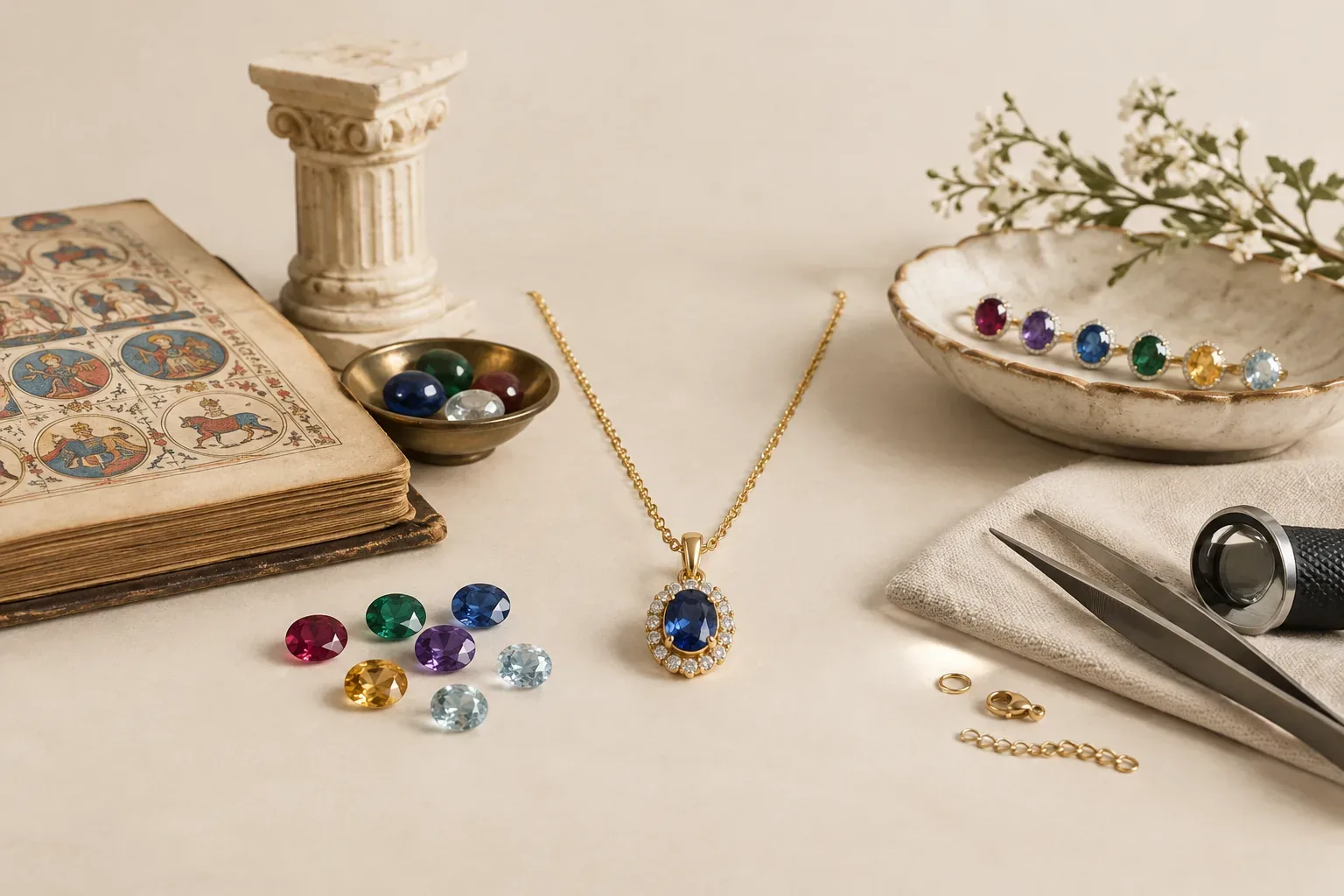
Meaning at a glance
Understand the documented history and changing contexts of birthstone jewelry, learn to tell historical evidence from modern interpretation, spot repair warning signs, and choose professional care tailored to your gemstone's material and meaning.
Quick answer
Treat birthstone jewelry as you would any fine gem and metal object: know the specific gemstone and setting, follow material-appropriate cleaning and storage, inspect regularly for loose settings or damage, and seek a qualified jeweler for repairs if you see chips, cracks, persistent discoloration, missing stones, or unstable mountings. Understanding the documented history and changing cultural meaning of birthstone motifs helps you make informed choices about repair, conservation, and respectful gifting.
What the historical record actually shows
Museum research shows that people have long attached significance to specific gems and used them in personal adornment, but that the specific lists we call “birthstones” are a comparatively recent popular arrangement rather than a single continuous tradition. The Victoria and Albert Museum (V&A) provides an overview of jewellery’s long social role across cultures and periods and explains how gemstones have been identified, valued, and worn in different contexts rather than being tied to a single universal system.
The V&A’s guidance on gemstones describes how particular stones appear in different periods and places because of their material properties, availability, and cultural status. Historical uses include amuletic or commemorative functions, indicators of rank, and fashionable ornament. The V&A’s material points are useful for understanding documented evidence: when museums attribute a gemstone meaning in a historical object, they do so by tying that object to the culture and period it came from rather than asserting a single, global symbolism.
Separating documented historical meanings from modern personal interpretations
Documented meanings come from the specific contexts recorded by collectors, curators, and primary sources. For example, museum catalogues and exhibitions treat gem use as evidence of social practice, craft, trade and taste in a named culture and period. The V&A encourages reading jewellery as social history rather than assuming fixed spiritual or emotional meanings across all times and places.
Modern personal interpretations—such as assigning a single psychological or mystical quality to a birthstone for everyone born in a month—are contemporary practices that build on but do not replicate historical evidence. These meanings are valid as personal or cultural expressions today, but they should not be conflated with what a given gemstone meant in a particular place and time as documented by museums and historians.
How the birthstone motif appears in jewelry
The motif of a birthstone typically appears as a single, identifiable gem set into rings, pendants, brooches, bracelets, and cufflinks. Historically, the choice of stone for an object depended on availability, cutting and setting technology, and the wearer’s resources—factors the V&A describes when tracing the technical and stylistic changes in jewellery over centuries.
In modern commercial and bespoke jewellery, the birthstone motif is often simplified into a single centrally set gem or a small cluster representing family members. The physical form matters for repair and maintenance: bezel and prong settings provide different protections, cabochon cuts handle impacts differently than faceted stones, and soft stones like opal or pearls require gentler care than hard stones such as sapphire and ruby.
Common warning signs that a birthstone piece needs professional attention
Visible cracks, chips, or sudden cloudiness within a gem are clear indicators that a stone needs professional evaluation. Loose stones or movement in their settings, worn or thinning prongs, and gaps where a stone sits are immediate reasons to stop wearing the item and consult a jeweler.
Other warning signs include persistent tarnishing or discoloration that cleaning does not remove, metal fatigue (bends or cracks in a ring shank, clasp failures), and changes after a home repair or harsh cleaning attempt. If the piece has historical or sentimental value, or if you suspect the stone may have been treated or is a fragile variety, seek professional assessment rather than attempting aggressive cleaning or repair at home.
Practical, material-aware maintenance routines
Identify the gemstone and metal before any cleaning or repair. The V&A’s articles on gemstones emphasize that different gems have different hardness, cleavage, and sensitivity to heat and chemicals. These material properties determine suitable cleaning methods and whether a stone can tolerate ultrasonic cleaning, steam, or household detergents.
For everyday care, remove birthstone rings during heavy tasks, avoid exposing sensitive stones to sudden temperature changes, and store pieces separately to prevent abrasion. Light cleaning with a soft brush, mild soap, and lukewarm water is safe for many durable gems; for softer stones and porous materials avoid soaking and seek specialist advice. Maintain routine inspections every few months to check settings and clasps.
Understanding treatments, imitations, and disclosure
Modern gemstones are frequently treated to enhance color or clarity, and imitations exist for most popular stones. The U.S. Federal Trade Commission (FTC) provides consumer guidance that sellers should disclose treatments, enhancements, and whether a gem is a laboratory-created or imitation material. Disclosure affects care: a heat-treated or fracture-filled stone requires different handling than an untouched natural specimen.
Before repair or costly conservation, ask the jeweler to document the stone’s identity and any known treatments. If you are buying or being gifted a piece, ask the seller about treatments and request written information when available. For historically important pieces, consult a conservator experienced with historic gems and metals to avoid damaging irreplaceable materials.
When to seek professional repair and how to choose the right help
Seek professional repair when you observe structural problems, when a stone is damaged, or when the piece has significant monetary or sentimental value. Choose a jeweler or conservator who can demonstrate relevant experience with the specific gemstone and metal involved and who follows professional standards for documentation and ethical disclosure.
Ask potential repairers about their training, whether they provide written condition reports, insurance for in-shop work, and whether they use appropriate techniques for sensitive stones. For historically significant or family heirlooms, consider a conservator linked to a museum or a recognized jewellery conservation body rather than a general repair shop.
Practical and respectful selection or gifting guidance
When choosing a birthstone gift, be explicit about cultural context and personal meaning. If the recipient values historical accuracy—such as an interest in historical jewellery—select pieces that reflect documented uses and materials rather than relying solely on modern marketing lists. The V&A’s resources can help you understand how particular gems were used in different periods and cultures so you can choose with respect for that history.
Consider durability and lifestyle when selecting a birthstone: harder stones and secure settings suit daily wear, while softer gems or delicate settings may be better for occasional wear. If the recipient values sustainability or traceability, ask about the gem’s origin and any treatments. Finally, present repair and maintenance information with the gift so the recipient can care for the piece responsibly.
Conservation, insurance, and long-term care
For high-value or heirloom birthstone jewellery, document the piece with photographs, purchase or appraisal records, and any known treatment disclosures before repair. Regular professional cleanings and checks help prevent small issues from becoming major problems. If the piece is especially old or fragile, a museum-affiliated conservator can advise on appropriate storage, exhibition, and handling practices.
Insure valuable pieces and update appraisals after significant repairs or alterations. Work only with repairers who provide condition reports and keep a clear record of materials and methods used. These steps preserve both the object and its documented context for future owners.
Summary
Birthstone jewellery repair and maintenance combine practical care for materials with respect for documented cultural histories and individual meaning. Use museum resources to understand historical context, follow consumer-protection guidance about treatments and disclosure, maintain material-appropriate routines, and seek professional help for structural damage, treated stones, or historically important items.
Frequently asked questions
How often should I have my birthstone jewelry inspected?
Have routine inspections every three to six months for pieces worn frequently, and ask a professional jeweler for a condition report annually for valuable or sentimental items.
Can I clean all birthstones at home?
No. Many durable gems can be cleaned with a soft brush, mild soap, and lukewarm water, but softer or treated stones, porous gems, and historic pieces may require specialist care—when in doubt, consult a professional.
How do treatments affect care and value?
Treatments such as heating or fracture filling change how a stone should be handled and can affect market value; sellers should disclose treatments, and you should inform repairers of any known enhancements before work begins.
When should I choose a conservator instead of a jeweler?
Choose a conservator for historically significant, fragile, or museum-quality pieces, or when the item’s provenance and original materials must be preserved rather than replaced or heavily altered.
How can I find a trustworthy jeweler for repairs?
Look for documented experience with the relevant gemstones and metals, ask for references and condition reports, confirm they carry insurance for in-shop work, and request written estimates and treatment disclosures before work begins.
Sources and further reading
- Bedazzled: A History of Jewellery — Victoria and Albert Museum
- An A-Z of Gemstones — Victoria and Albert Museum
- Buying Gemstones, Diamonds, and Pearls — Federal Trade Commission