Meaning at a glance
Provide historically grounded context for copper and non-precious metals in jewelry, separate documented historical uses from modern personal interpretations, and give clear, practical cleaning, storage, and gifting guidance to preserve copper pieces and respect cultural meanings.
What historical evidence shows (and which periods are relevant)
Museum scholarship traces jewelry’s social roles and material uses across many well-defined periods and cultures rather than attributing one single meaning to any metal. The Victoria and Albert Museum frames that long sweep in its exhibition and curatorial material, which traces jewellery from antiquity through medieval, early modern and modern eras and highlights changing social and material contexts.
That scholarly picture means copper and copper alloys appear at many points in history. From ancient to medieval and into later periods, makers have used non-precious metals for practical ornaments, dress accessories, and local status signs as well as for purely decorative reasons. The V&A’s overview of jewellery history shows how meaning, technique and material choice shifted between different cultures and times—for example between antiquity, the Byzantine and medieval periods, Mughal and other South Asian traditions, and Victorian Britain—without presenting a single, universal symbolism for copper.
Documented historical meanings versus modern personal interpretations
Documented historical meanings recorded by museum curators and historians tend to focus on social function, technology and aesthetics: who wore a piece, how it was made, and what it signaled in its original context. The Victoria and Albert Museum emphasizes these documented contexts—status, fashion, workshop practice and trade networks—rather than one-size-fits-all symbolic claims about materials.
By contrast, many contemporary claims about copper—for example that wearing copper will “detoxify” or cure medical conditions or that a green patina always signals spiritual protection—are modern personal or commercial interpretations unless supported by historical, ethnographic or medical evidence. Treat such modern statements as beliefs or marketing claims rather than as universally documented historical functions.
How copper appears in jewelry (forms, settings and pairings)
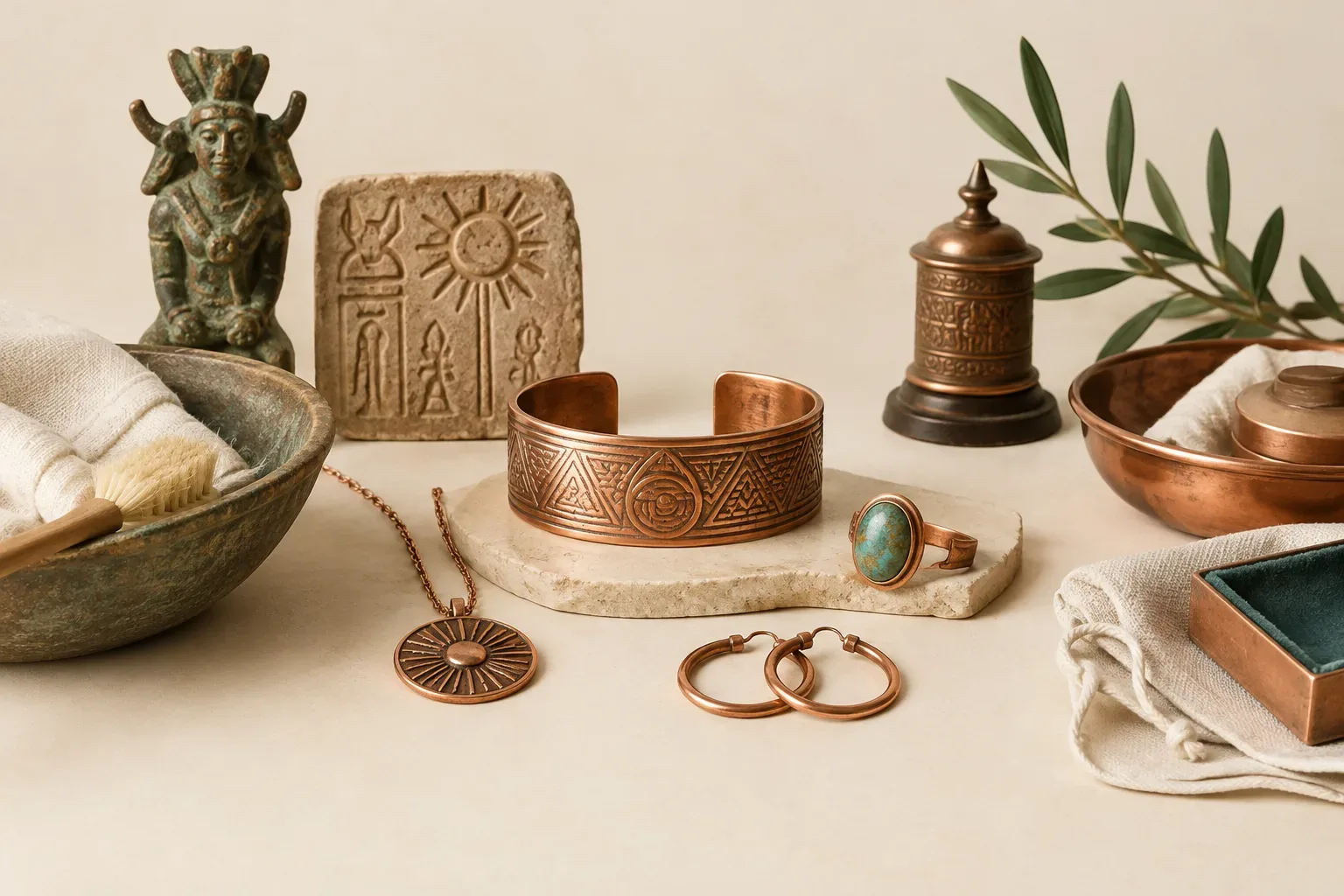
Copper appears in jewelry in several practical ways: as the primary metal for rings, bracelets, beads and cuffs; as a base metal for gilding or plating; and as an alloy component (for example in various bronzes and brasses). Makers also use copper as a visible, decorative surface—either polished bright, hammered to show texture, or intentionally left to form a greenish or brown patina.
Gemstones and other materials often appear with copper in settings chosen for color contrast or cost. Curators who compile gemstone guides note that makers across eras paired metals and stones for aesthetic and technical reasons: softer metals like copper can be easier to work with for certain bezel settings and can create warm color contrasts with many gems. For more on gemstones and how they have been used historically, see the Victoria and Albert Museum’s A–Z of Gemstones.
Daily care: simple, safe cleaning methods
Start with the gentlest approach: wipe copper jewelry after wearing with a soft, dry, lint-free cloth to remove oils, sweat and cosmetics. Regular gentle wiping reduces the need for deeper cleaning and helps prevent corrosive residues from building up.
If a deeper clean is needed, use a mild soap (a drop of gentle dish soap) and warm water. Work carefully with a soft cloth or a very soft toothbrush for textured surfaces, then rinse in clean water and dry thoroughly with a soft towel. Always dry completely; trapped moisture accelerates tarnish and verdigris.
Be cautious with homemade acidic cleaners (lemon, vinegar, or baking-soda pastes). These can remove tarnish quickly but may also strip deliberate patina, remove plating, or damage soft settings or porous stones. Test any stronger method on an inconspicuous surface first and avoid prolonged soaking.
When to avoid at-home cleaning and common mistakes
Do not use harsh abrasives, steel wool, or coarse polishing compounds on copper jewelry with intentional texture, plating, or antique finishes; these will remove surface details and can thin plated layers. Avoid household bleach, ammonia, or concentrated acids, which can discolor metal and damage settings or stones.
Remove copper jewelry before swimming, showering, exercising, or applying lotions and perfumes. Chlorinated water, saltwater and perspiration speed discoloration. Also avoid ultrasonic cleaners when pieces contain glued elements, delicate stones, or certain composite materials, because vibration and fluid can loosen or damage those components.
A common mistake is over-polishing. Many collectors and makers intentionally preserve a slight patina as part of the piece’s aesthetic or historical character. If the item is an antique or has a deliberate patina, consult a professional conservator before attempting aggressive cleaning.
Best storage practices to slow tarnish and protect pieces
Store copper jewelry in a cool, dry place away from direct sunlight and humidity. Humidity accelerates corrosion, so avoid bathrooms or damp basements. Use a lined jewelry box, soft cloth pouches or individual compartments to prevent scratches and metal-on-metal contact.
Include humidity-control materials such as silica gel packets or commercially available anti-tarnish strips in storage containers. Anti-tarnish papers and pouches are chemically designed to slow oxidation and are a practical option for long-term storage. Avoid storing copper in contact with rubber or newspaper, as those materials can off-gas or transfer acids that accelerate discoloration.
Practical and respectful selection or gifting guidance
When choosing copper jewelry as a gift, ask about metal sensitivities or allergies. Some people react to copper or to nickel or other alloys that may be present. If you do not know the recipient’s sensitivities, choose a design with a protective inner lining or suggest wearing it over a fabric layer until they can confirm it suits their skin.
Be transparent about the piece’s composition and any surface treatments. The Federal Trade Commission advises sellers to disclose treatments, plating or imitations of gemstones and metals; clear information helps recipients understand care needs and value. If the piece has an intentional antique finish or patina, include care notes so the wearer understands that over-polishing will change the look.
Respect cultural meanings. If a design draws on a particular culture’s motifs or traditional techniques, disclose that provenance and avoid treating cultural symbols as generic fashion. The Victoria and Albert Museum’s work on jewelry history demonstrates that meanings and techniques are specific to time and place; when in doubt, research a symbol’s origin or choose a neutral design.
When to use professional services
Seek a professional jeweler or conservator for valuable, fragile or antique copper items, or when a piece contains fragile settings, soft or porous stones, or historical finishes you want to preserve. Professionals can evaluate metal composition, recommend safe treatments and, where appropriate, perform controlled conservation.
If you suspect jewelry has been plated, treated, or contains non-original components, a trained jeweler can test materials. The FTC recommends clear disclosure of treatments and imitations, and a professional can help verify and document what you own.
Frequently asked questions
How often should I clean my copper jewelry?
Wipe copper jewelry with a soft cloth after each wear and perform a gentle soap-and-water clean every few weeks or when it visibly needs it; frequency depends on wear, sweat and exposure to moisture and chemicals.
Will the green patina (verdigris) stain my skin or clothes?
Verdigris can transfer to skin or fabric and may cause staining; gently remove residues with mild soap and water and dry thoroughly, and store items separately to avoid transfer. If stains persist, consult a conservator or professional cleaner.
Can I use lemon juice or vinegar to clean copper?
Acidic household ingredients can remove tarnish but may also strip intentional patina, damage plated surfaces, or harm surrounding stones; test on an inconspicuous spot first and avoid prolonged exposure.
Is copper jewelry hypoallergenic?
Copper itself can cause reactions in some people, and many copper items contain alloys or traces of other metals. If you or the recipient have sensitive skin, choose pieces with protective linings, confirm alloy content, or opt for known hypoallergenic metals.
How should I store copper jewelry long-term?
Store copper in low-humidity conditions, in individual soft pouches or lined compartments, with silica gel or anti-tarnish strips; avoid bathrooms and materials that off-gas acids like certain rubber or printed paper.
Can I put copper jewelry in an ultrasonic cleaner?
Avoid ultrasonic cleaners for copper pieces that include glued components, delicate stones, soft inlays, or antique finishes—ultrasonic cleaning can loosen settings and damage fragile materials.
Should I disclose treatments when selling or gifting?
Yes. The Federal Trade Commission recommends clear disclosure of plaiting, coatings or gemstone treatments; providing care instructions and composition details helps recipients understand the piece and care for it properly.
When should I see a professional conservator?
Consult a professional if the item is valuable, antique, structurally fragile, has complex settings, or if you are unsure about a safe cleaning method; conservators can advise on preservation without damaging historical finishes.
Sources and further reading
- Bedazzled: A History of Jewellery — Victoria and Albert Museum
- An A-Z of Gemstones — Victoria and Albert Museum
- Buying Gemstones, Diamonds, and Pearls — Federal Trade Commission