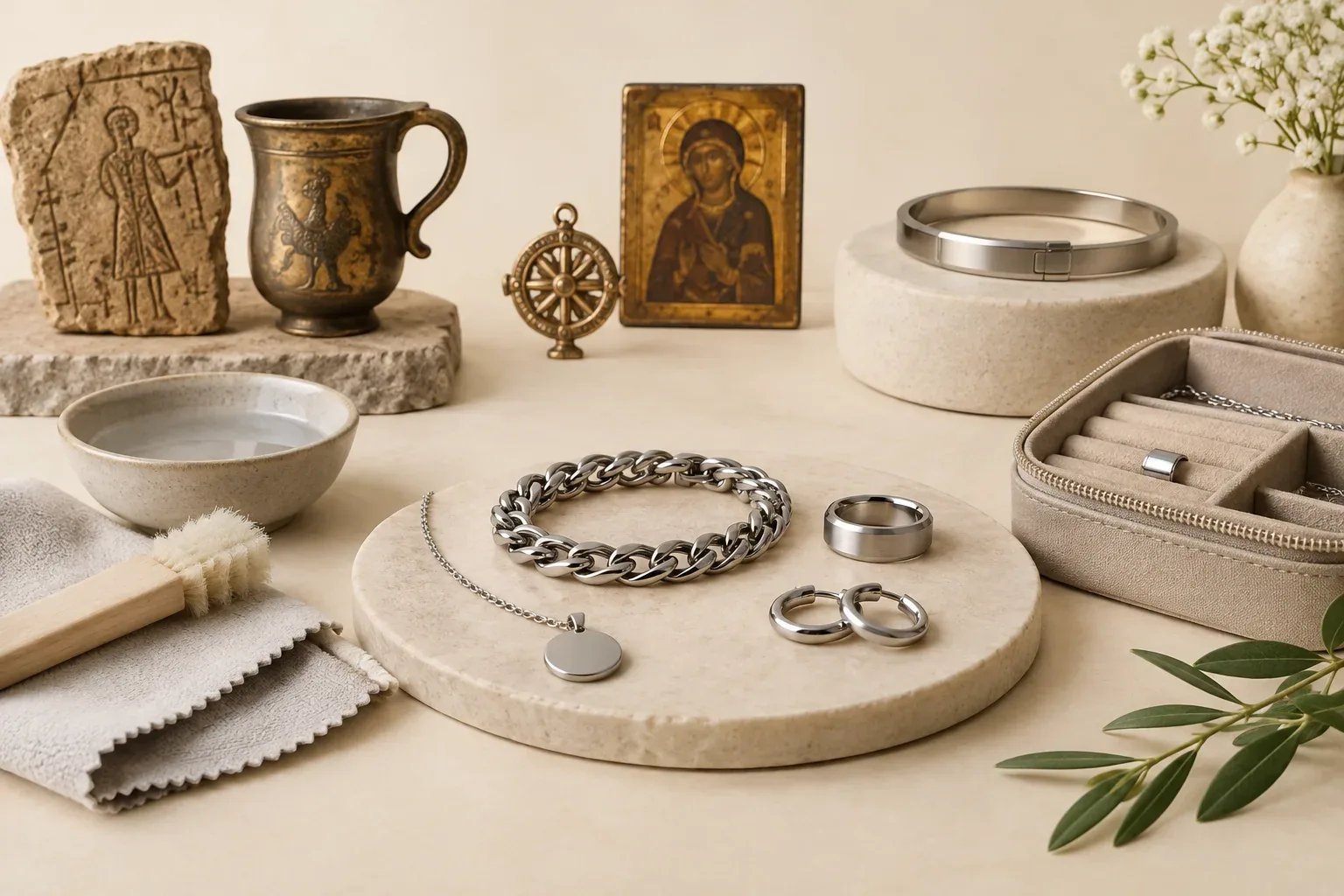
Meaning at a glance
Clean stainless steel jewelry with warm water, mild soap, and a soft cloth; avoid harsh abrasives and incompatible chemicals; store pieces dry and separated. Understand that stainless steel is a modern jewelry material within a long history of changing jewelry practices (Victoria and Albert Museum), and that gemstone or plated elements require separate care and clear seller disclosure (Federal Trade Commission).
Quick answer — what to do and why
Short answer: For everyday stainless steel jewelry, wash gently with warm water and a mild, phosphate‑free soap, dry with a soft cloth, and store each piece separated in a dry place. Avoid strong acids, bleach, and abrasive pads; check settings and any non‑metal components (gemstones, coatings, leather) before using heat, ultrasonic cleaners, or chemical dips.
This article explains the historical context for how jewelry care and meanings have changed (drawing on the Victoria and Albert Museum’s work on jewellery history), separates documented historical evidence from modern personal interpretation, explains how stainless steel and associated motifs appear in contemporary jewelry, and gives practical selection and gifting guidance together with common mistakes to avoid.
What the historical record says (and where it does not)
The Victoria and Albert Museum documents jewelry as a changing social practice: materials, finishes, and the reasons people wear ornaments have shifted across cultures and periods as technology, fashion, and social meanings evolved. The V&A’s work shows that what counts as a fashionable material, what craftsmanship communicates, and how objects are cared for are historically variable and culturally specific.
That broad historical record is important for stainless steel jewelry because stainless steel is a modern industrial metal whose use in personal ornament belongs to recent manufacturing and design practices rather than to the long histories of gold, silver, or certain gemstones documented in older material cultures. The V&A’s overview of gemstones and jewellery history helps us place stainless steel within that longer story of changing technologies and tastes, but the specific development of stainless steel as a jewelry material is a contemporary phenomenon best understood as part of 20th‑ and 21‑century production and fashion shifts rather than an inherited traditional jewelry practice.
Documented history versus modern interpretation
Documented historical meanings are those recorded by museums, written sources, and material culture studies. For example, the V&A’s catalogue and articles explain how particular gemstones and forms carried social, sentimental, or status meanings in identifiable periods and places. Those are distinct from later or modern personal interpretations.
Modern wearers and designers sometimes apply new symbolic meanings or personal narratives to contemporary materials, including stainless steel. Treat those modern attributions as personal or cultural reinterpretations rather than as continuations of an older documented meaning. If a stainless steel ring is presented today as a symbol of industrial chic or durability, that is a modern cultural reading; it should not be conflated with historical meanings for gold or silver documented by the V&A.
How stainless steel appears in jewelry and how that affects care
In contemporary jewelry, stainless steel appears as a base metal for chains, bracelets, rings, and pendants, and as a setting metal for inexpensive or mass‑market pieces as well as designer items. Finishes vary: high polish, brushed or satin surfaces, and plated or coated treatments. Some stainless steel items combine steel with gemstones, glass, enamel, leather, or plated accents.
Because stainless steel is chosen for its durability and resistance to corrosion, many pieces tolerate everyday wear. However, any additional component — gemstone, plating, adhesive, or a leather cord — imposes its own care rules. The Federal Trade Commission’s consumer guidance emphasizes that sellers must disclose treatments, plating, or imitation stones; that disclosure matters for cleaning and storage because treated surfaces or glued settings can be damaged by chemicals or heat.
Safe cleaning methods
Everyday cleaning: Wipe your stainless steel jewelry with a soft, lint‑free cloth after wear to remove oils and sweat. For routine cleaning, prepare a bowl of warm water with a few drops of mild dish soap, soak briefly if the piece has no porous gemstones or glued elements, then gently clean with a soft cloth or a soft‑bristle toothbrush for chain links and settings. Rinse in clean water and dry thoroughly to prevent water marks.
Removing light grime and fingerprints: For polished finishes, a microfiber or jewelry polishing cloth designed for stainless surfaces restores shine without abrading. Avoid silver polish products and abrasive metal polishes unless the manufacturer explicitly approves them for stainless steel finishes.
Dealing with stubborn residues: For stuck‑on lotions or sweat build‑up, use a paste of baking soda and water applied gently with a soft cloth, then rinse and dry. Test any paste on an inconspicuous area first, especially if there is plating, enamel, or a non‑metal component.
When gemstones or plated finishes are present: If your stainless steel piece includes gemstones, pearls, or plated elements, refer to specific care for those materials. Some gemstones are porous or fragile and should not be soaked. The Victoria and Albert Museum’s A–Z of Gemstones is a useful starting point to identify stones and their historic contexts; treat each gemstone according to its known properties. If the piece includes plating, be aware that aggressive rubbing or chemical dips can remove the coating — the FTC requires sellers to disclose plating and treatments, so check product information before choosing a cleaner.
Cleaning methods to avoid
Do not use strong acids, bleach, abrasive powders, steel wool, or household cleaners containing chlorine or ammonia on stainless steel jewelry. These agents can dull finishes, damage plating, or weaken adhesives. Avoid acetone or nail‑polish remover near stones, lacquers, or glued settings.
Be cautious about ultrasonic cleaners and steam cleaners. Ultrasonic cleaning can dislodge stones or damage porous or fracture‑filled gems. Steam cleaning exposes glue and certain treatments to high heat and should be avoided unless the manufacturer confirms it is safe for every component of the piece.
Storage recommendations
Store stainless steel jewelry dry and separated to prevent scratches and tangling. Soft pouches, individual compartments in a jewelry box, or felt‑lined drawers keep pieces from rubbing against each other. For travel, use individual pouches or roll designs that keep chains from kinking.
Control humidity where possible. While stainless steel resists corrosion, salts from sweat and humid air can leave marks over long storage; a small silica gel packet in a closed storage box helps reduce moisture. Avoid leaving jewelry in bathrooms where humidity fluctuates with showers and baths.
Keep metals away from materials that can chemically interact, such as wet rubber bands or certain inks, and avoid direct contact with perfumes, lotions, and hairsprays during storage. If items have leather or fabric components, follow the leather or textile care guidance for those parts separately.
Choosing and gifting stainless steel jewelry — respectful, practical guidance
When selecting or gifting stainless steel jewelry, consider the recipient’s metal sensitivities. Some stainless steel alloys contain nickel; sellers should disclose alloy content and any plating. If the recipient has a known nickel allergy, choose items labeled hypoallergenic or ask for an alloy specification before buying.
Think about lifestyle and maintenance. Stainless steel is often chosen for low maintenance and active wear. If the recipient wants something low‑care, select plain polished or brushed steel without porous stones or glued accents. If the recipient values traditional precious metals or gemstones, explain the durable, contemporary character of steel rather than presenting it as equivalent to gold or silver historically.
Match meaning to preference, not assumption. Museums like the V&A show that meanings attached to materials change with context; therefore, ask about the wearer’s aesthetic and practical preferences. If you want to gift a piece with symbolic meaning, choose a motif or gemstone with documented associations if authenticity matters, and consult resources such as the V&A’s A–Z of Gemstones to understand documented historical uses rather than relying solely on modern trend language.
Common mistakes to avoid and quick troubleshooting
Common mistakes include using abrasive cleaning tools that scratch finishes, storing multiple pieces together so they rub and scratch, assuming all gemstones can be soaked, and ignoring product disclosures about plating and treatments. If a piece looks dull after cleaning, it may have surface deposits rather than corrosion; a gentle cloth rub often restores shine. If a setting feels loose or stones are cloudy, consult a professional jeweler rather than attempting repairs at home.
When in doubt, ask the seller or maker for care instructions and for full disclosure of materials and treatments. The Federal Trade Commission’s guidance on buying gemstones and disclosure of treatments is a practical consumer reference about what sellers should tell you before purchase.
Closing: Respecting history while using modern materials
Stainless steel jewelry sits within a long history of material change and shifting meanings in personal ornament, a history documented and interpreted by institutions like the Victoria and Albert Museum. Treat modern claims about symbolism or durability as contemporary cultural interpretations and pair them with clear, practical care and storage routines.
Good care is straightforward: keep pieces clean with mild soap and soft cloths, avoid harsh chemicals and abrasives, store dry and separated, and pay attention to any gemstones or coatings. When selecting or gifting, verify materials and disclosures, consider wearer preferences and sensitivities, and consult authoritative sources for gemstone or historical meaning when that context matters.
Frequently asked questions
Is stainless steel jewelry hypoallergenic?
Many stainless steel alloys are marketed as hypoallergenic, but some contain nickel or other trace metals. Check the seller’s alloy specification and any plating disclosure; if you have a nickel allergy, choose items explicitly labeled nickel‑free or hypoallergenic and ask the seller for details.
Can I clean stainless steel jewelry with household silver polish?
No. Silver polish is formulated for silver and can contain abrasives or chemicals that dull or damage stainless steel finishes and any plated surfaces. Use mild soap, water, and a soft cloth, and reserve metal polishes for items the manufacturer explicitly approves.
Will stainless steel rust or tarnish if I store it wrong?
Stainless steel resists rust and tarnish more than many base metals, but salts and humidity can leave marks or accelerate surface corrosion over long periods. Store pieces dry, in individual compartments, and use silica gel packets if humidity is a concern.
How do I clean stainless steel jewelry with gemstones?
Treat the gemstone according to its material. Some gems are safe for gentle soaking and a soft brush; others are porous, glued, or heat‑sensitive and require only a damp cloth. The Victoria and Albert Museum’s A–Z of Gemstones can help identify gem types and care considerations; when in doubt, consult the seller or a jeweler.
Can I use an ultrasonic cleaner on stainless steel jewelry?
Only if every component of the piece — including stones, glue, and any coatings — is rated for ultrasonic cleaning. Ultrasonic machines can dislodge stones and damage fragile or treated gems, so consult the maker’s instructions before use.
Sources and further reading
- Bedazzled: A History of Jewellery — Victoria and Albert Museum
- An A-Z of Gemstones — Victoria and Albert Museum
- Buying Gemstones, Diamonds, and Pearls — Federal Trade Commission