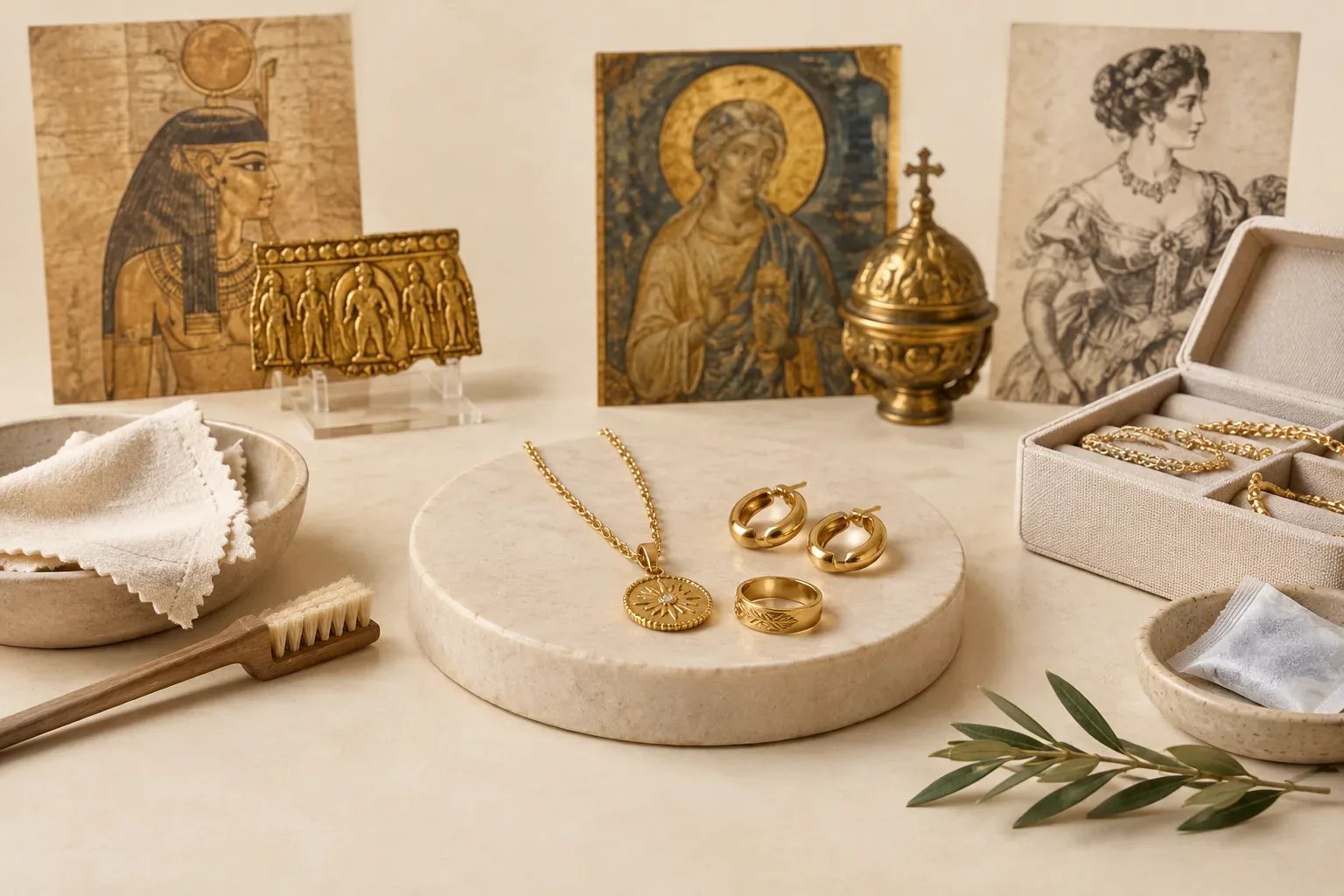
Meaning at a glance
Follow gentle, non-abrasive cleaning and low-humidity, separated storage for gold-plated pieces; understand that gold plating and associated meanings evolved in different periods and cultures, and separate historical evidence from later popular interpretations when choosing or gifting plated jewelry.
Documented history and cultural contexts
Museum research shows that finishing metals with gold surfaces—through gilding, gold leafing, or later mechanical plating—has a long and varied history and that the social meaning of a gold surface depends on time and place. The Victoria and Albert Museum presents the broader narrative of jewellery as a changing social practice and displays examples from different periods and cultures to show how materials and finishes have been used to communicate status, fashion, and sentiment.
When discussing specific cultures or periods, artifacts and curatorial interpretation at the Victoria and Albert Museum illustrate that societies have valued gold surfaces differently: in some periods and places a gold finish indicated high status and was reserved for elites, while in other times and for popular dress gold-coloured finishes were used to approximate precious metal in more affordable forms. The V&A collections and exhibitions document these shifts rather than describing a single, continuous meaning across all cultures.
Separating documented historical meanings from modern interpretation
Documented evidence in museum collections can show how a particular finish or technique was used in a specific context, for example in court dress, funerary items, or popular costume. The Victoria and Albert Museum’s exhibition and cataloguing emphasize context: who wore an item, on what occasions, and how materials were sourced and valued. These contextual facts are distinct from modern personal or commercial interpretations.
Modern interpretations commonly project current preferences, fashion language, or marketing terms onto historical objects. Treat statements that gold-plated or gold-toned pieces 'mean' wealth, status, or spiritual protection as contemporary readings unless a clear historical source documents those meanings for a named culture or time. Where the V&A or other primary documentation identifies a historical meaning, attribute it to that culture and source rather than assuming it was universal or unchanged.
How gold plating, motifs, and gemstones appear in jewelry
Gold plating is a surface treatment applied to a base metal to give the appearance of solid gold without the same material cost. Museum collections described by the Victoria and Albert Museum demonstrate that plated or gold-finished pieces appear across a range of jewellery types including brooches, chains, and dress accessories, often used to achieve a fashionable look at lower expense.
Gemstones and simulated gems commonly accompany gold finishes in both historic and modern pieces. The Victoria and Albert Museum’s A–Z of Gemstones provides identification context and explains how different stones—natural, treated, or synthetic—have been used in settings historically and today. In plated jewellery, gem choices may be genuine, of lower-cost natural varieties, or simulated; visual similarity rather than intrinsic value is frequently the design intent in costume jewellery.
Safe cleaning methods: what to do
Start with the gentlest approach. Use lukewarm water and a drop of mild, non-abrasive dish soap. Dip a very soft lint-free cloth or a cotton ball in the soapy water, wring it nearly dry, and gently wipe the plated surfaces. Avoid scrubbing or using textured cloths which will wear the plating.
Rinse by wiping with a cloth dampened with plain water, then pat dry completely with a soft cloth. Never leave plated pieces to air-dry in humid areas because moisture can encourage corrosion of the base metal where plating is thin or worn.
Avoid jewellery cleaners marketed for solid gold that contain abrasives, polishing pastes, or acids, and also avoid steam and ultrasonic cleaners. The gold layer on plated jewellery is very thin and can be removed by aggressive cleaning methods; those tools are more appropriate for solid-gold pieces or stones set in durable mounts.
Common mistakes that shorten plated jewellery life
Using abrasive cloths, toothpaste, or household cleaners will scratch and quickly remove gold plating. Chemical exposure from chlorine, perfumes, hair sprays, and lotions accelerates wear and can cause discoloration of the underlying metal. Wearing plated rings while doing chores exposes them to mechanical wear from contact with hard surfaces.
Storing multiple pieces together without separation causes surface abrasion as chains, pendants, and settings rub. Leaving plated jewellery in bathrooms or other humid spaces invites corrosion of the base metal and allows plating to lift at edges and joins.
Storage and long-term care
Store plated pieces flat or hanging in a dry, low-humidity place, each item separated in a soft pouch or compartment to prevent rubbing. Use materials that do not shed fibres; cotton-lined boxes, soft flannel pouches, or felt compartments are suitable. If you live in a humid climate, consider a small silica gel sachet in the storage container to lower moisture.
For longer-term storage, clean and fully dry pieces before putting them away. Check periodically for signs of plating loss along edges or at clasps. If the decorative finish is important to you, plan to reserve plated jewellery for less-exposed wear and keep an eye out for reputable replating services if you wish to refresh the finish later.
Practical and respectful selection or gifting guidance
When choosing or gifting gold-plated jewellery, be explicit about materials and care expectations. The Federal Trade Commission recommends transparent disclosure when items have treatments or simulated materials, and sellers should make those details clear. If you are buying as a gift, include guidance about cleaning and storage so the recipient understands how to care for the piece.
Respect cultural and personal meanings: do not assume a plated gold appearance carries the same symbolic weight in every culture or for every wearer. If a piece includes a motif or gemstone with cultural or religious significance, research its documented historical context before gifting. Use museum resources and authoritative guides to confirm whether a symbol’s historical meaning applies to the culture you have in mind rather than relying on modern popular interpretations.
When to replate or choose a different option
Replating can restore appearance but not always original detail; it is a material conservation decision. If you want longevity without maintenance, consider alternatives: solid gold or gold-filled pieces have a thicker layer of gold and will generally tolerate cleaning and daily wear better than most plated items. Use the FTC guidance to compare advertised materials and ask sellers about plating thickness and base metals before purchase.
If the piece has sentimental or historical value documented by museums or family provenance, consult conservation professionals before any aggressive cleaning or replating. For non-heritage contemporary pieces, replating is a practical option to renew appearance when the base metal remains sound.
Closing practical checklist
Clean gently with mild soap and a soft cloth, rinse and dry immediately. Avoid abrasives, ultrasonic or steam cleaning. Store pieces separately in a dry, padded environment. Disclose and ask about plating and base metal when buying or gifting. Reserve plated jewellery for less-exposed wear when possible, and consider gold-filled or solid-gold alternatives for daily-wear pieces.
Frequently asked questions
How often should I clean gold-plated jewelry?
Clean only as needed when the piece looks soiled or dull. Frequent gentle wiping after wear will reduce the need for deeper cleaning. Over-cleaning, especially with abrasive methods, accelerates wear of the thin gold layer.
Can I use a commercial jewellery cleaner on gold-plated pieces?
Most commercial cleaners are formulated for solid gold and may contain abrasives or chemicals that remove plating. Use only mild soap and water and a soft cloth for gold-plated pieces, and avoid steam or ultrasonic cleaners.
Will perfume or lotion ruin gold plating?
Perfumes, lotions, and chemicals can accelerate the wearing of plating and cause discoloration. Apply such products before dressing and allow them to dry, and avoid spraying or applying them directly onto jewellery.
Is replating a good option?
Replating can restore appearance if the base metal is intact, but it is a service decision that affects finishes and sometimes details. For pieces you wear daily, consider alternatives such as gold-filled or solid-gold options for greater longevity.
How should I store gold-plated pieces long-term?
Clean and fully dry them first, store each item separately in a soft pouch or lined compartment, keep them in a low-humidity place, and consider a small silica gel sachet if you live in a damp climate.
How can I tell if a piece is plated or solid gold?
Sellers should disclose treatments according to Federal Trade Commission guidance. If the material is unclear, ask the seller about karat marks, plating details, and whether the core metal is disclosed; a reputable seller will provide that information.
Sources and further reading
- Bedazzled: A History of Jewellery — Victoria and Albert Museum
- An A-Z of Gemstones — Victoria and Albert Museum
- Buying Gemstones, Diamonds, and Pearls — Federal Trade Commission