Meaning at a glance
Explain the documented history and changing contexts of the sterling silver jewelry repair and maintenance motif, separate cultural or religious evidence from later popular interpretations, and give practical guidance for choosing and wearing the motif in modern jewelry.
Quick answer
Sterling silver jewelry repair and maintenance is both a practical craft and a cultural practice: historically, repair and upkeep preserved value, memory, and use across many cultures, and today it balances conservation, aesthetics, and wearer needs. This guide explains the documented history and changing contexts of repair and maintenance, separates historic evidence from later popular interpretations, outlines how repair and maintenance appear in jewelry, and gives practical steps for spotting warning signs and choosing a professional.
Why repair and maintenance matter: documented history and cultural periods
The importance of repair and ongoing care for personal adornment is documented across long histories of jewellery-making and collecting. The Victoria and Albert Museum describes jewellery as an object category that has changed function and meaning over time while consistently requiring maintenance, repair and reworking to stay in use. Examples recorded by the museum show that communities have repeatedly invested in keeping valued pieces wearable rather than discarding them, because jewellery often carried financial, social or sentimental value.
Across named historical periods and cultures—ancient Egypt, the classical Mediterranean, medieval Europe, Renaissance and later early modern Europe, and the nineteenth and twentieth centuries—museum collections reveal recurring practices of repair, modification and re-setting. The V&A’s surveys of jewellery history highlight that repair was often done to adapt pieces to new fashions, to conserve heirlooms, or to reuse precious metal and stones in new settings. These are documentary observations about behaviour and technique recorded in museum collections and scholarship, not universal claims about motive or belief.
Documented meanings versus modern personal interpretations
When historians and curators discuss why people repaired jewellery, their evidence is drawn from surviving objects, workshop records, trade documents and visual culture; the Victoria and Albert Museum frames repair as part of jewellery’s life-cycle—functional conservation, economic reuse, and adaptation to changing taste. Those are documented contexts, grounded in object-based research and archival sources.
Modern interpretations often layer additional meanings onto those practices. Today some owners treat repair as an act of sentimental conservation that preserves family stories, while others emphasize environmental and ethical values by keeping existing pieces in use rather than buying new. These contemporary meanings are personal or social interpretations that build on the historical record but are not the same as historical motives documented by museums. They should be described as modern perspectives rather than statements of historical fact.
How repair and maintenance appear in sterling silver jewellery
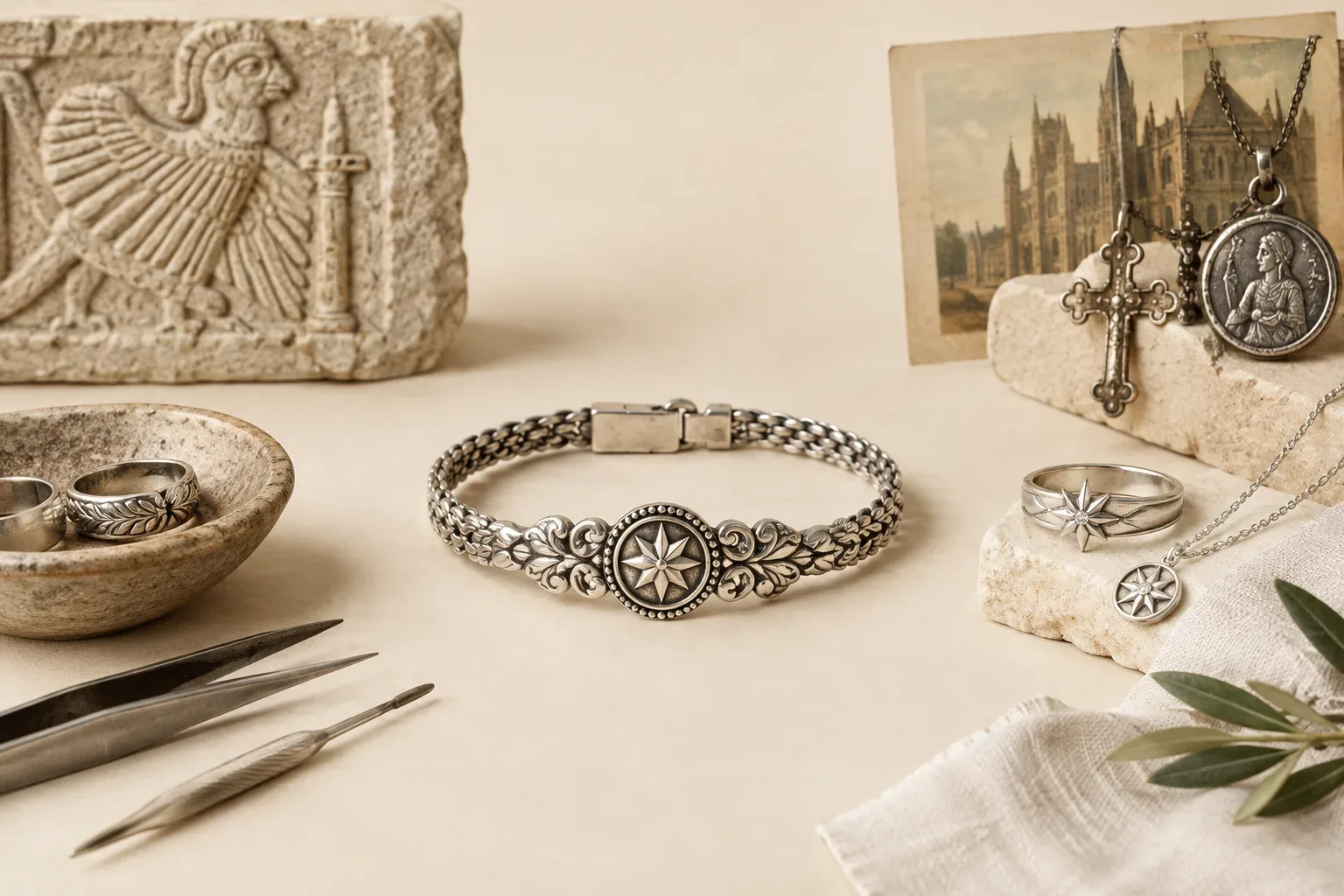
Repair and maintenance leave visible and invisible traces on jewellery. On sterling silver pieces you may see subtle evidence such as areas of polishing that differ in finish from surrounding surfaces, replaced or re-set stones, re-soldered joins, repaired or replaced clasps and jump rings, and the presence of modern materials used to stabilise or conserve older work. These signs indicate past work but do not by themselves tell you the quality of that work.
Conservators and professional jewellers also recognise less visible indicators of maintenance, such as reflowed prongs supporting a gemstone, pinning or rivetting inside hollow forms, or stabilization measures taken to keep delicate components intact. Gemstone identification and historical context are important when stones have been replaced or treated; the Victoria and Albert Museum’s guidance on gemstones helps with recognising commonly used materials and their historic use in jewellery, while contemporary consumer-protection rules govern disclosure of treatments and imitations.
Warning signs: when to consider professional help
There are practical warning signs that a sterling silver piece needs professional attention rather than DIY cleaning. If you notice a loose or missing stone, a cracked or split setting, a broken clasp, a chain kink that won’t straighten, a persistent structural bend, or repeated breakage at the same point, seek a trained jeweller or conservator. Visible gaps at soldered seams or a feeling that a component is unstable when you handle it are also cues that professional repair is needed.
Severe or unusual tarnishing that has darkened crevices, corrosion around non-silver components, or damage from chemical exposure should be evaluated by a professional who can assess whether simple cleaning is safe or whether conservation-grade intervention is required. If the piece is an heirloom or has documented historic value, consider consulting a conservator or a jeweller experienced with historic objects before attempting any repair or aggressive cleaning.
Selecting professional help: what to ask and expect
Choose a jeweller or conservator with relevant experience and credentials for the type of work you need. Ask about their experience with sterling silver, whether they work on historic pieces, and if they can provide references or before-and-after examples. For gemstone work or pieces of potential historic value, ask whether they collaborate with conservators or have experience matching antique finishes and construction methods.
Request a written estimate that distinguishes labour from materials, and ask whether the shop documents repairs with photographs and provides any warranty or post-repair care advice. Transparency about methods and materials is a consumer right: the Federal Trade Commission advises that sellers disclose treatments, replacements and imitations for gemstones and other materials. If a jeweller proposes to replace stones or plate components with non-original materials, ask for written confirmation of what will be changed and why.
Everyday care for sterling silver (practical, cautious steps)
Regular, gentle care reduces the need for repair. Store sterling silver away from humidity and chemicals, ideally in a soft pouch or lined box that prevents scratching. Remove silver jewellery before strenuous physical activity, swimming, or when using household cleaners and personal-care products that can accelerate corrosion or damage settings.
For routine cleaning, use mild, approved silver cleaners or a soft cloth and avoid harsh abrasives that will remove metal or surface details. If a piece has delicate enamel, inlaid stones, or a complex historic finish, do not attempt aggressive cleaning; instead consult a professional. When in doubt about a cleaning method, ask your chosen jeweller or a conservator for a recommended approach tailored to the object.
Practical guidance for buying or gifting sterling silver jewellery
When selecting a sterling silver piece as a purchase or a gift, consider construction and repairability. Heavier, well-constructed items and closed-back settings are generally easier to maintain and repair than extremely delicate filigree or micro-set pieces. If you are buying antique or vintage silver, ask the seller about the piece’s condition, any known repairs, and whether they can provide provenance or condition notes.
Include care information with a gifted piece. A short note that explains any known past repairs, suggested cleaning methods, and recommended servicing intervals is a considerate addition for an heirloom or everyday item. If the recipient values sustainability or historic continuity, prioritize durable construction and the availability of local repair services so the piece can be kept in use and returned to the family if desired.
When repairs affect meaning or value
Restoration or alteration can change an object’s historical character. Museum practice, as described by the Victoria and Albert Museum, treats intervention carefully because it affects how an object is read by future researchers and owners. If the piece may have historical significance, seek advice from a conservator before making irreversible changes such as re-plating, re-setting with different stones, or aggressive reshaping.
For purely personal pieces, practical choices often prioritise wearability and sentimental continuity. Be explicit about priorities when commissioning work: whether you want a repair to be invisible, to preserve patina and use-wear, or to restore a like-new appearance. Clear communication preserves the piece’s meaning for you and for later custodians.
Frequently asked questions
What are the first signs that a sterling silver piece needs professional repair?
Seek professional help for loose or missing stones, a broken clasp, an unfixable chain kink, cracks in settings, or joints that feel unstable. Persistent dark corrosion in crevices or repeated breakage at the same point are also reasons to consult a trained jeweller or conservator.
Can I safely clean tarnish at home?
For routine light tarnish, gentle cleaning with a soft cloth or approved mild silver cleaner is usually fine. If the piece has delicate inlay, stones, enamel, or uncertain repairs, stop and get professional advice because aggressive cleaning can remove finishes or loosen settings.
How do I choose a jeweller for repairs?
Ask about the repairer’s experience with sterling silver and with the type of object you have, request references or examples, and get a written estimate that separates labour from materials. For historic or sentimental pieces, consider a conservator or a jeweller who works with museums or collectors.
Will a repair reduce the value of a vintage or antique piece?
Repairs can affect an item’s historical character and market value, depending on how they are done. Museum practice favours minimal, reversible intervention when possible. If value or provenance is a concern, seek specialist advice before irreversible changes.
What questions should I ask when buying sterling silver as a gift?
Ask about construction and condition, any previous repairs, how easy the piece is to maintain, and whether the seller provides care guidance or a repair service. For gemstone-set pieces, ask about treatments and disclosure; the Federal Trade Commission recommends clear disclosure of treatments, replacements or imitations.
Sources and further reading
- Bedazzled: A History of Jewellery — Victoria and Albert Museum
- An A-Z of Gemstones — Victoria and Albert Museum
- Buying Gemstones, Diamonds, and Pearls — Federal Trade Commission