Meaning at a glance
A good cuff bracelet purchase balances documented historical context (as recorded by museum collections), clear material and treatment disclosure, and personal fit and style; check construction, ask about metal content and gemstone treatments, and consider the motif's cultural meaning separately from modern personal interpretation.
What the historical evidence shows
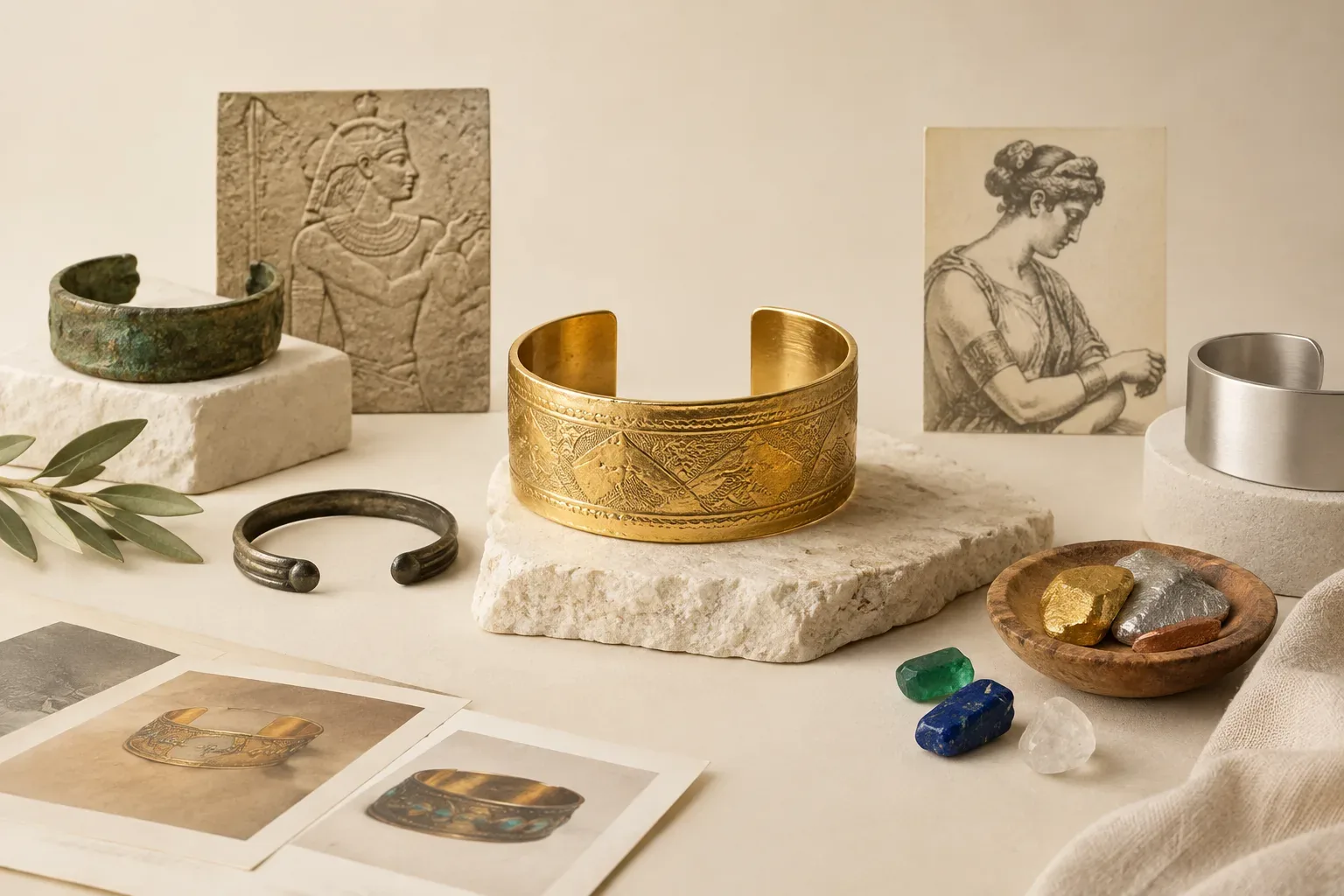
Museum collections and curatorial research show that bracelet forms like cuffs have appeared in many periods and places, with changing materials, techniques, and social functions. The Victoria and Albert Museum notes that bracelets and arm ornaments are present across ancient Egyptian, classical Mediterranean, South Asian, and European collections, and that their forms and uses change with social context and available materials.
In some early contexts museum objects show cuffs made from hammered metal, carved stone, or inlaid materials; in later centuries European workshops developed techniques such as repoussé, filigree, and gem setting that were applied to cuff forms. Curatorial work at institutions such as the Victoria and Albert Museum frames these changes as part of broader shifts in fashion, technology, and social meaning rather than a single, continuous symbolic message.
Documented historical meanings versus modern interpretations
Documented historical meanings of bracelets are best read from context: museum documentation often links particular pieces to status, identity, or function based on where and how they were used. For example, curatorial notes indicate bracelets could signify status in a burial assemblage or be worn as decorative display in court settings. These are interpretations grounded in archaeological or museum evidence and the object's provenance, as described by the Victoria and Albert Museum.
Modern interpretations—such as reading a particular motif as a universal protective emblem or assuming a historic religious meaning applies unchanged today—are often personal or contemporary reworkings. Modern designers and wearers assign meanings based on fashion, personal belief, or marketing narratives. These contemporary readings can be meaningful for the wearer but should be distinguished from the historical functions and meanings recorded by museums or archaeologists.
How motifs, gemstones, and traditions appear on cuff bracelets
Motifs appear on cuff bracelets through a range of traditional and modern techniques. Museums document the use of carving, engraving, embossing, enamelling, and applied metalwork to create motifs on a cuff surface. In many periods motifs were worked directly into the metal; in others they were added as applied elements such as plaques, stones, or plaques of enamel.
Gemstones appear in cuff bracelets either as single focal stones, rows of set stones, or as inlaid surfaces. The Victoria and Albert Museum’s surveys of gemstones describe how stones have been selected and set according to technology and taste in different eras, from cabochon settings in earlier jewelry to faceted stones set in precise mountings after the development of modern cutting techniques.
Traditional forms and regional styles reappear in modern cuff design: a simple hammered-metal cuff can reference artisan metalwork from a particular region, while a richly set cuff with filigree may echo historic court jewelry. Recognize that a motif used by a modern maker might be inspired by a historic source but may carry a new or hybrid meaning in contemporary fashion.
Materials, treatments, and quality indicators
Start by identifying the metal. Common cuff metals include solid precious metals such as gold and silver, lower-cost base metals, and plated or filled finishes. Hallmarks, maker’s marks, and written descriptions are primary indicators of metal content for precious-metal pieces; ask the seller to explain any marks or provide documentation.
Gemstone and material treatments affect value and care. The Federal Trade Commission recommends that sellers disclose gemstone treatments, imitations, and any enhancements that affect appearance or durability. When a seller provides transparent information—lab reports, treatment disclosures, or reputable testing—this is a strong quality signal.
Inspect craftsmanship: look at the finish inside and outside the cuff, the symmetry of any stone settings, and how edges are finished. A well-made cuff will have smooth edges where it contacts the skin, secure settings for stones, and a consistent finish. Heft and rigidity can suggest solid construction, but personal comfort should guide how rigid or flexible a cuff you choose.
Practical guidance for choosing and wearing a cuff bracelet
Fit matters more for cuffs than many other bracelet types. Measure the circumference of the narrowest part of your wrist and consider the opening and gap of a cuff: most cuffs are designed to slip over the hand or to be slightly adjusted at the gap, but excessive bending can weaken some metals. Try a cuff on for movement—walking, typing, or raising an arm—to ensure it remains comfortable and secure.
Match scale to the wearer. Wider cuffs make more of a statement and can overpower a small wrist; narrow cuffs can be layered. Consider the wearer’s typical wardrobe and how the cuff will coordinate with other jewelry and clothing in terms of scale and color.
Think about daily wear and care. Precious metals and hard gemstones tolerate everyday wear better than soft stones or plated finishes. If you plan to wear a cuff daily, ask about metal purity, plating thickness, and recommendations for cleaning and maintenance. If a seller mentions a treated or imitation stone, request written disclosure as advised by the Federal Trade Commission.
Respectful selection and gifting guidance
When a cuff incorporates motifs or forms drawn from a specific culture, research the motif’s origins and documented meanings before purchasing or gifting. Use museum resources and reputable scholarship to understand provenance; the Victoria and Albert Museum’s description of how jewelry’s social context changed over time is a starting point for understanding cultural origins.
Avoid assuming a motif’s historical meaning is identical to a modern marketed interpretation. If the motif carries religious, ceremonial, or community significance, prefer gifts that respect that significance and consider whether the recipient would welcome a culturally derived design as a personal adornment.
Gift with information: include a note that explains whether the piece is an original historic object, a contemporary piece inspired by a tradition, or a reproduction. If the recipient values provenance, provide whatever documentation you have about materials, makers, or treatment. This is both practical and respectful.
Questions to ask sellers and a short purchase checklist
Before you buy, ask the seller to confirm metal content, any hallmarks, the presence of plating, and whether stones are natural, treated, synthetic, or imitations. Request lab or treatment reports for high-value gemstones and insist on written disclosure if any material has been enhanced, in line with Federal Trade Commission guidance.
Ask about return policy, resizing or adjustment options, and recommended care. For vintage or antique cuffs, inquire about repairs, restorations, and whether any parts are replacements. Gauge the seller’s willingness to share provenance details and condition reports—openness is a reliable sign of professionalism.
Finally, try the cuff on if possible. Comfort, fit, and how the cuff looks with the wearer’s usual outfits are decisive factors that photos and descriptions cannot fully convey.
Final considerations
A cuff bracelet buying guide balances history, material truth, practical fit, and respectful use of motifs. Use museum sources to understand documented historical contexts, rely on seller disclosures and regulatory guidance to verify materials and treatments, and choose a cuff that fits the recipient’s style and daily needs.
Treat historical meanings and modern personal interpretations as separate but related: museum documentation can inform respect and provenance, while personal meaning gives contemporary jewelry its everyday value.
Frequently asked questions
How do I size a cuff bracelet?
Measure around the narrowest part of the wrist and compare that number to the internal circumference of the cuff. Consider the cuff’s gap and whether it needs to slip over your hand; trying a cuff on for movement is the most reliable test of fit.
Are cuff bracelets adjustable?
Some metal cuffs can be gently adjusted at the gap, but repeated bending can weaken certain alloys. If adjustability is important, ask the maker about the metal’s ductility and whether the cuff was designed to be reshaped.
How can I tell if a gemstone is treated or synthetic?
Request written disclosure from the seller and ask for laboratory reports for valuable stones. The Federal Trade Commission advises that sellers must disclose gemstone treatments, imitations, and enhancements; reputable sellers will provide transparent information.
What should I expect to pay for a quality cuff?
Prices vary by material, maker, and provenance. Solid precious-metal cuffs with genuine gemstones or maker provenance are typically priced higher than plated or base-metal pieces. Consider value signals such as hallmarks, documented provenance, and treatment reports when evaluating price.
Is it appropriate to gift a culturally inspired cuff?
Research the motif’s origins and documented meaning before gifting. If the design has religious, ceremonial, or community significance, consider whether the recipient would welcome the piece and include provenance or context information to show respect.
How do I care for a cuff bracelet?
Care depends on materials. Precious metals and hard gemstones usually tolerate gentle daily wear and periodic professional cleaning. Plated finishes and soft stones need more cautious wear and may require specialized cleaning; follow the maker’s care instructions and ask the seller for recommendations.
Sources and further reading
- Bedazzled: A History of Jewellery — Victoria and Albert Museum
- An A-Z of Gemstones — Victoria and Albert Museum
- Buying Gemstones, Diamonds, and Pearls — Federal Trade Commission