Meaning at a glance
Topaz occurs in a broad color range, while much blue topaz is treated; responsible jewelry guidance must distinguish color and trade terminology from symbolism, explain cleavage, and require treatment disclosure.
What the mineral record actually shows
Professional gemological and museum records stress the mineral and trade facts about topaz more than a single historic symbolic meaning. The Gemological Institute of America (GIA) and the Smithsonian National Museum of Natural History document that topaz naturally occurs in a wide range of colors and that much of the blue material on the market is produced or enhanced by treatment rather than all blue topaz being naturally vivid blue.
The GIA also notes that the name "imperial topaz" functions as a trade term in the gem market rather than a precise geological category, and the institute records that topaz has perfect cleavage. These are mineralogical and trade observations rather than interpretations of cultural symbolism.
Historical meanings versus modern personal interpretations
When people ask about "topaz jewelry meaning," they often expect a single, longstanding cultural symbolism. The documentary sources named above focus on gem properties and market practice and do not present a single, universally documented symbolic meaning that spans cultures and centuries. In other words, authoritative gem and museum records emphasize substance and trade history rather than a consistent ancient meaning.
Contemporary symbolic uses — ideas such as topaz representing calm, friendship, or creativity — are modern personal or marketing interpretations. These may be meaningful to individuals and communities today, but they are not a single documented historical tradition recorded by the GIA or the Smithsonian. Treat modern symbolic claims as personal or stylistic associations rather than established historical fact.
Colors, treatments, and trade terminology you should know
Topaz is notable for its broad color range; gemological records describe natural topaz colors that include colorless, yellow, orange, brown, pink, and rarer tones. Because color strongly affects value and desirability, many materials are treated to produce or enhance colors.
A major market reality emphasized by both the GIA and the Smithsonian is that much of the blue topaz you will see in jewelry has been treated to achieve its color. Treatment methods commonly used in the trade alter or intensify blue tones, so a buyer should expect disclosure of such treatments. Likewise, the phrase "imperial topaz" appears in trade contexts as a label used by sellers rather than as a single scientific variety; if this term matters to your purchase, ask the seller to explain precisely what they mean by it.
How topaz appears in jewelry
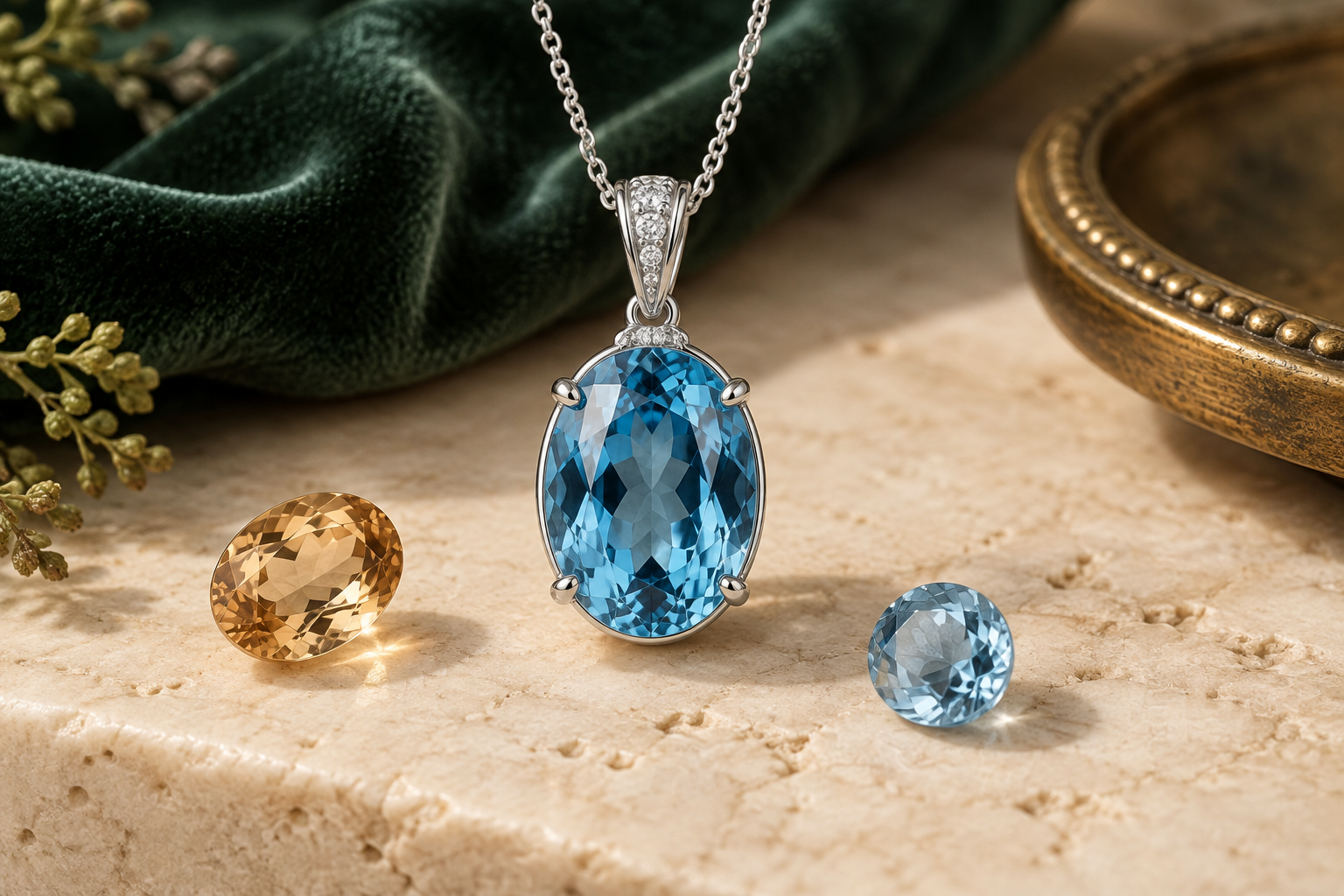
Topaz is a versatile gemstone in contemporary jewelry design. Its range of colors and ability to take a high polish make it a common choice for rings, necklaces, earrings, and bracelets. Jewelry makers typically use faceted cuts to display a topaz's color and brilliance, while cabochon cutting occurs when a design emphasizes body color or an unusual inclusion.
Because topaz can be produced in vivid blue shades through treatment and because sellers use trade names, finished jewelry often emphasizes color and clarity. Designers and buyers should be aware that the visual appeal of a blue topaz piece may be the result of treatment rather than an entirely natural hue. The gemstone's perfect cleavage also influences how it is set: protective settings that shield the stone from edge blows are often preferred to reduce the risk of splitting along cleavage planes.
Practical selection and gifting guidance
Decide first whether color authenticity matters to you. If you prefer untreated, natural color, ask the seller for documentation and clear disclosure. If you are comfortable with treated material, request a written statement describing the treatment so you understand how color was achieved and whether special care is recommended.
Consider durability and everyday wear. The Gemological Institute of America records that topaz has perfect cleavage, which means it can split along defined planes if struck. For rings or everyday pieces, choose settings that protect the stone's edges, and consider designs where the stone is partially shielded by metal to reduce the chance of a hard knock. For pieces likely to experience frequent impact, select stones with secure settings and consider using topaz in pendants or earrings where the risk of edge impact is lower.
When gifting, be explicit about treatment and provenance if the recipient values natural or untreated stones. A clear conversation or a written note that explains whether a blue topaz has been treated, what "imperial" means in that listing, and any available certification will help the recipient appreciate the piece and maintain its care.
Care and maintenance
Because topaz can exhibit perfect cleavage, avoid activities that risk hard knocks or sudden sharp impacts. Even a well-set stone can be damaged if struck on the edge or corner. Routine care includes gentle cleaning and regular inspection of the setting by a qualified jeweler.
Ask your jeweler about any treatments before using professional cleaning methods. Some treatments can affect a stone's reaction to heat, chemicals, or ultrasonic cleaning, so treatment disclosure is essential to avoid accidental damage. When in doubt, have a trusted professional clean and check the piece for loose settings or chips.
Final considerations
Topaz is attractive because of its range of colors and its ability to take an appealing polish. The responsible buyer or giftee focuses on clear disclosure of treatments, an understanding of the trade language like "imperial topaz," and the stone's mechanical behavior, especially perfect cleavage as recorded by the GIA.
Separate your personal or cultural symbolism from market facts. If topaz carries a personal meaning for you or the person you are buying for, that is valid, but it should be treated as contemporary and personal meaning rather than a single, documented historical truth in the professional records cited above.
Frequently asked questions
Is blue topaz natural or treated?
Much blue topaz on the market has been treated to achieve vivid blue tones. The GIA and the Smithsonian note that a large proportion of blue material is the result of treatment rather than naturally occurring intense blue color. Buyers should ask sellers for clear treatment disclosure.
What does "imperial topaz" mean?
According to the GIA, "imperial topaz" functions as a trade term used by sellers. It is not a single scientific classification, so ask a seller to explain exactly what they mean when that label is used for a particular stone.
Does topaz chip easily?
Topaz has perfect cleavage, a mineralogical characteristic recorded by the GIA that means the stone can split along defined planes if struck. That cleavage makes avoiding edge impacts and choosing protective settings important for durability.
How should I clean topaz jewelry?
Before any cleaning, ask whether the stone has been treated. Treatment disclosure affects recommended cleaning methods. When unsure, have a trusted jeweler or gemologist clean and inspect the piece to avoid damage from incompatible cleaning technologies or careless handling.
What should I look for when buying or gifting topaz?
Decide whether untreated natural color matters to you, ask for written disclosure of any treatments, inquire what trade terms like "imperial" mean in that listing, and consider protective settings because of topaz's perfect cleavage.