Meaning at a glance
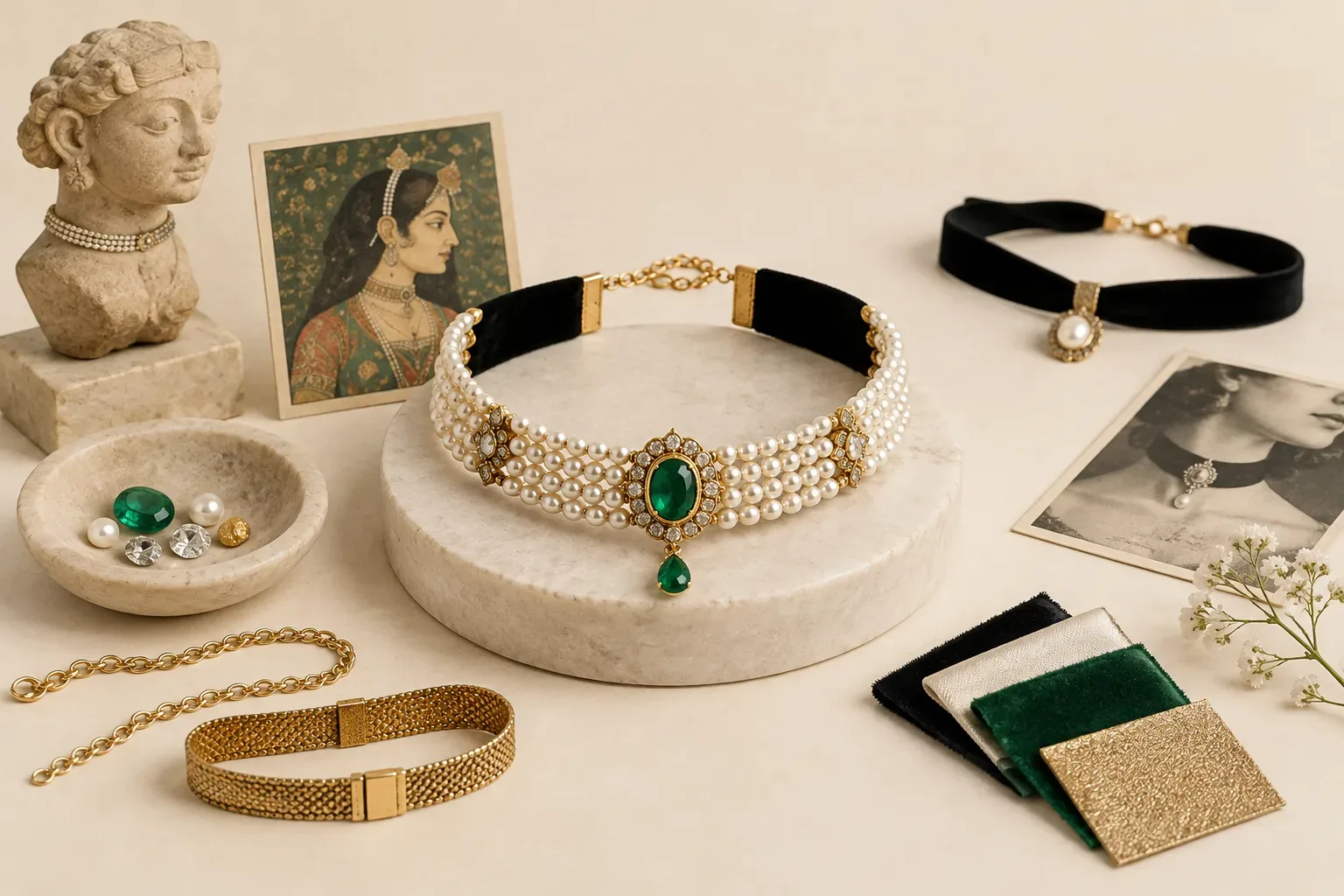
This choker buying guide explains the documented history and changing contexts of the choker, separates cultural and religious evidence from later popular interpretation, and gives practical guidance for choosing, wearing, and gifting modern chokers based on materials, construction, and price.
Quick, direct answer
A sound choker buying guide begins by separating documented history from modern interpretation, then matching materials, construction, and price to your intended use and budget. The documented record shows chokers reappear across many times and cultures as forms of close-fitting neck ornamentation, but specific meanings vary by period and context (Victoria and Albert Museum). For shopping: prioritize comfortable fit, hypoallergenic metals if needed, honest gemstone disclosure, and sturdy clasps; use reputable sellers and ask about treatments and return policies (Federal Trade Commission).
What the historical evidence actually shows
Museum scholarship and objects in public collections demonstrate that close-fitting neck ornaments—what the modern market calls 'chokers'—have appeared repeatedly rather than originating in a single culture. The Victoria and Albert Museum traces jewellery and changing social contexts across many periods and regions, showing chokers or neckbands in museum collections from ancient civilizations through later European fashions (Victoria and Albert Museum).
For clarity: archaeological and museum records document instances of neck adornment in ancient and pre-modern contexts for purposes such as display of status or as components of ceremonial dress; later European eras, including eighteenth- and nineteenth-century fashions, also featured tight necklaces as part of court and everyday dress. In modern times, the form resurfaces in varied subcultures and fashion cycles. Where the Victoria and Albert Museum makes its case, it is on the basis of objects and their documented contexts rather than universal, fixed meanings (Victoria and Albert Museum).
Separate documented historical meanings from modern personal interpretations
Documented historical meanings come from the contexts in which museum collections and contemporary records place objects: for example, a close-fitting necklace worn at court or in a burial can be interpreted as a marker of status, fashion, or ritual according to the object's provenance and supporting documentation in museum records (Victoria and Albert Museum). These documented meanings are specific to place, time, and the evidence available for each object.
Modern interpretations—such as assigning a single symbolic meaning to chokers across all cultures or assuming every historical choker carried the same message—are contemporary readings that often mix fashion revival, popular culture, and personal expression. Such interpretations are valid as personal or cultural reuses of the form today, but they are not the same as the meanings that can be documented from historical contexts. Treat historical function and modern symbolism as distinct categories when choosing or gifting a choker.
How motifs, gemstones, and traditions appear in choker jewelry
The choker form is a platform for motifs and gemstones just as any necklace is. Motifs that appear historically and in modern pieces include geometric metalwork, embossed or repoussé patterns, symbolic pendants mounted to a close band, and inlaid gemstones. The exact motifs vary by culture and era as shown in museum collections and the histories they document (Victoria and Albert Museum).
Gemstones are used in chokers for color, status signaling, and personal meaning. The Victoria and Albert Museum’s resources on gemstones explain how different stones were prized at different times and why their visual and material properties mattered in historical context (Victoria and Albert Museum). Contemporary buyers should ask about gemstone identification, treatments, and whether a stone is natural, synthetic, or an imitation, because treatments or synthetic origins affect value and care.
Materials and quality: what to look for
Choose materials based on wear, allergies, and budget. Solid gold and platinum offer long-term durability and are less likely to tarnish than plated metals, but they cost more. Sterling silver is a lower-cost precious-metal option that requires occasional polishing. Base metals may be affordable but can cause allergic reaction or discolor with sweat and perfume; consider vermeil (thick gold over sterling silver) if you want the look of gold at lower cost.
For gemstones, request documented identification and disclosure of any treatments. The Federal Trade Commission requires sellers to disclose treatments, synthetics, and imitations; ask the seller for this information before buying (Federal Trade Commission). High-quality settings and well-made closures are crucial for a choker because of the tension and wear near the throat.
Sizing, construction, and comfort
A choker should sit comfortably at the base of the throat or slightly below, depending on style and wearer preference. Measure the neck while relaxed and allow for at least 1/2 inch to 1 inch of ease unless the design is intentionally very snug. Check clasp types—spring rings and lobster clasps are common, but adjustable chains and extender links provide flexibility in fit.
Construction details matter: look for secure soldered links, reinforced ends where stones are set, and a clasp that seats firmly without slipping. If the choker includes a rigid element, verify that it has a comfortable backing or padding to avoid chafing. Consider the weight of gemstones and metal; heavy chokers may be uncomfortable for long wear.
Price questions and assessing value
Price reflects materials, craftsmanship, designer premium, and provenance. A handcrafted choker in solid precious metals with natural, untreated gemstones will cost more than a mass-produced plated fashion piece. Decide whether you are buying for everyday wear, occasional use, or as a collectible—this will guide how much of your budget should go into materials versus design.
Ask for clear information about metal purity, gemstone origin and treatment, maker marks, and any warranties or return policies. When shopping online, prioritize vendors who provide close-up images, detailed measurements, and transparent descriptions. The Federal Trade Commission’s guidance about disclosure of treatments and imitations is a practical baseline for evaluating sellers (Federal Trade Commission).
Respectful selection and gifting guidance
Be mindful of cultural associations and personal meaning when choosing or gifting a choker. Because the choker has appeared in many different contexts, avoid assuming a single symbolic meaning applies to all recipients. If you are selecting a piece that incorporates a specific cultural motif, research that motif’s origin and significance and consider choosing a maker from that culture or a piece whose provenance is clearly documented (Victoria and Albert Museum).
For a gift, consider the recipient’s style, metal allergies, and lifestyle. If unsure about fit, choose an adjustable design or include a gentle note offering to exchange or resize. When the piece contains gemstones or historic motifs, include any provenance or disclosure documents with the gift so the recipient understands the origins and materials.
Care, authentication, and asking the seller
Caring for a choker depends on materials: keep precious metals and gemstones away from harsh chemicals, remove chokers before sleeping or exercising, and store them flat or on a padded surface to avoid kinks. For pieces with delicate inlay or fabric elements, follow specialized cleaning instructions and consult a professional jeweller for repairs.
When authenticity matters, request documentation. Ask the seller for metal hallmarks, gemstone certificates when available, written disclosures of treatments, and clear return and repair policies. Public guidance from consumer protection authorities highlights the buyer’s right to clear disclosure about treated and synthetic gems and about imitations (Federal Trade Commission).
Putting history to good use as a buyer
Use documented history to enrich your choice, not to constrain it. Knowing that chokers have recurred in many cultures and periods (Victoria and Albert Museum) means you can adopt the form while respecting specific motifs and attributions. If a piece markets itself with a historical claim—about provenance, cultural origin, or age—ask for the evidence or documentation that supports that claim before you buy.
Finally, balance historic interest with practical needs. A historically styled choker can be a striking modern accessory when its materials and construction meet your comfort and care requirements. Good vendors will welcome questions about materials, fit, and provenance and should provide clear, documented answers.
Frequently asked questions
How should a choker fit?
Measure the neck relaxed and allow about 1/2 inch to 1 inch of ease for comfort unless the design is intentionally snug; consider adjustable chains or extenders if sizing is uncertain.
Are there metal or gemstone disclosures I should request?
Yes. Ask sellers for metal purity (hallmarks), gemstone identification, and written disclosure of any treatments or whether a stone is synthetic or an imitation, as recommended by consumer protection guidance (Federal Trade Commission).
Can chokers be resized?
Many chokers with chain or extender links can be resized or adjusted easily; rigid or fully set designs may require professional adjustment, so verify with the seller or a jeweller before purchasing if resizing is likely.
How do I respect cultural motifs when buying?
Research the motif’s origin using museum resources or reputable scholarship, consider buying from makers of that culture when appropriate, and avoid assuming a single symbolic meaning applies to all contexts (Victoria and Albert Museum).
What should I expect to pay?
Expect prices to reflect materials, craftsmanship, and provenance: solid precious metals and natural, untreated gemstones command higher prices, while plated fashion pieces are lower cost; prioritize transparent disclosures over low price alone.
Sources and further reading
- Bedazzled: A History of Jewellery — Victoria and Albert Museum
- An A-Z of Gemstones — Victoria and Albert Museum
- Buying Gemstones, Diamonds, and Pearls — Federal Trade Commission