Meaning at a glance
Wood jewelry has documented roots in many historical and craft contexts; modern meanings are often personal or popular rather than universal. Use material, workmanship, provenance, and disclosure (including treatments or imitations) to judge quality and price, and choose or gift pieces with attention to cultural context and wearer needs.
What the historical record actually shows
Museum scholarship emphasizes that jewelry is a social object whose materials and meanings shift across cultures and periods. The Victoria and Albert Museum's exhibition material and resources on jewellery history describe how different materials and motifs have had changing roles in status, memory, identity, and daily life, from antiquity through medieval and early modern periods to modern craft and designer practice (Victoria and Albert Museum, "Bedazzled: A History of Jewellery").
That published museum work documents the broad fact that organic materials appear at different times and places: they may be used for everyday beads, religious or ritual objects, amulets, or fashionable decorative items. Where specific cultures or periods assigned particular symbolic meanings to a material or motif, those meanings are rooted in local beliefs, economies, and practices; they are not universal. When a source records a meaning, attribute it to that culture and period rather than treating it as a general rule.
Documented meanings versus modern interpretations
Distinguish between historical documentation and modern interpretation. A museum history explains the contexts and functions of jewelry as objects of identity, memory, or status; it does not imply that any single symbolic meaning for wood carries across all cultures or time periods (Victoria and Albert Museum, "Bedazzled: A History of Jewellery").
Modern sellers, designers, and wearers often assign personal meanings to wood—environmental values, natural aesthetics, or spiritual associations. These contemporary meanings are valid as personal or brand narratives, but they are not the same as documented cultural or religious meanings recorded by historical scholarship. When a design claims a historical or cultural significance, request clear provenance and sourcing or consult specialist literature or museums to confirm the claim.
How wood appears in jewelry designs
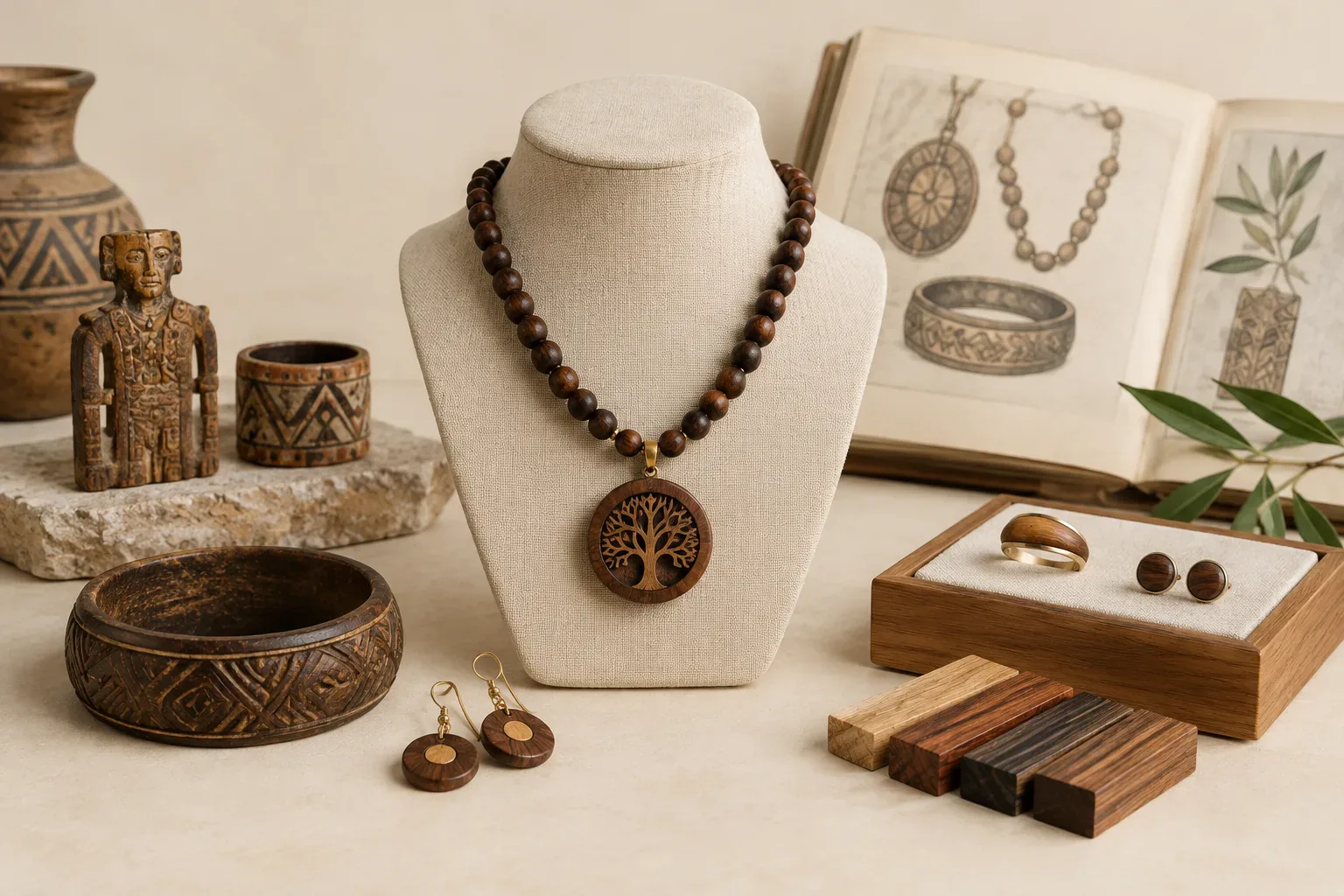
Wood appears in jewelry in several typical ways: carved pendants and cameos, beads strung as necklaces or bracelets, inlay work combined with metal or stone, and as lightweight settings for inlaid gemstones or metalwork. Contemporary makers also stabilize, dye, or laminate woods to achieve colour and durability, and combine wood with metal findings, resin, or stones to broaden aesthetic and structural possibilities.
When gemstones or gem-like materials appear with wood, a specialist reference such as the Victoria and Albert Museum’s guidance on gemstones can help identify common pairings and treatments and put them in historical context (Victoria and Albert Museum, "An A-Z of Gemstones"). Ask sellers how gems are set and whether they are natural, treated, or simulants; the Federal Trade Commission recommends clear disclosure of material treatments and imitations to avoid consumer confusion (Federal Trade Commission, "Buying Gemstones, Diamonds, and Pearls").
Assessing quality and value
Quality in wood jewelry rests primarily on material choice, craftsmanship, finish, and honesty in disclosure. Examine the wood species and whether it is stable or treated. Hand carving, precise joinery, symmetrical drilling in beads, secure settings, and well-executed finishes are indicators of care. A consistent, even finish and well-seated metal findings or gem settings reduce the risk of breakage or loss.
Price depends on the rarity of the wood, the labor involved, the presence of gemstones or precious metals, and the designer or maker’s reputation. Stabilized or specially treated wood may command a premium for durability, while mass-produced components lower costs. Confirm whether dyes, coatings, or resin stabilization have been applied and whether that treatment is reflected in price and disclosure, as the FTC advises clear statements about treatments and imitations (Federal Trade Commission, "Buying Gemstones, Diamonds, and Pearls").
Practical buying checklist
Ask about provenance and sustainability. If the seller markets a wood as rare or culturally significant, request documentation of sourcing and compliance with legal or ethical standards. Sellers who prioritize sustainability will be willing to describe species, origin, and harvesting practices.
Request full material disclosure. Ask whether the wood has been dyed, stabilized with resin, laminated, or coated, and whether any gemstones are natural, treated, or simulants. The FTC’s consumer guidance highlights the importance of transparent disclosure about treatments and imitations so you can compare like for like (Federal Trade Commission, "Buying Gemstones, Diamonds, and Pearls").
Inspect construction. Check how beads or pendants are attached, whether metal components are solid or plated, and how the piece moves and wears. For pieces that mix wood with soft metals or stones, confirm that the joinery or setting provides protection from knocks, moisture, and abrasion.
Consider wearability and maintenance. Think about how the piece will be used: daily-wear items need robust finishes and secure fittings, while occasional wear pieces can accept more delicate carving or softer woods. Ask the maker for care instructions specific to the wood species and finish.
Gifting and cultural respect
Be mindful when selecting wood jewelry as a gift with claimed cultural meaning. If a piece is described as belonging to a particular cultural or religious tradition, verify that it is appropriate to wear or give that symbol outside its community. Museum literature reminds us that meanings are historically specific and that respectful use requires attention to provenance and community context (Victoria and Albert Museum, "Bedazzled: A History of Jewellery").
When the wearer values sustainability, prioritize pieces with clear sourcing and sustainable practices. When the wearer values artisan craft, select items where maker attribution and evidence of hand-finish or small-batch production are provided. For sentimental gifts, choose a design and finish that match lifestyle: waterproof or sealed finishes for regular wearers and more delicate, display-worthy pieces for occasional wear.
Care, repair, and longevity
Wood jewelry can last for many years if treated correctly. Avoid prolonged exposure to water, chemicals, extreme heat, or direct sunlight unless the piece is explicitly stabilized or sealed for such conditions. Clean gently with a soft, dry cloth and follow the maker’s instructions for re-oiling or refinishing when appropriate.
For repairs, seek a jeweller or woodworker experienced in small-object restoration. If gemstone settings are involved, choose someone who understands how to protect both hard and organic materials. Keep records of provenance, maker notes, and any treatment disclosures—these are valuable for future resale or conservation.
When to choose wood jewelry
Choose wood when you want a lightweight, tactile, and often warmer-toned aesthetic than metal, when you value craft or sustainable sourcing, or when the maker’s story and technique appeal to you. Avoid wood for high-contact items unless it is stabilized and finished for daily wear. If the piece purports to carry historical or cultural significance, verify that claim and consider whether the wearer would appreciate or be uncomfortable with that association.
Frequently asked questions
Is wood jewelry durable for daily wear?
Wood can be durable, but durability depends on species, finish, and construction. Stabilized or resin-treated woods with secure metal findings are better for daily wear; untreated or soft woods are best for occasional use. Ask the maker about treatments and care instructions before daily use.
How can I tell if a wooden bead or pendant is genuine wood and not a synthetic?
Ask the seller for material disclosure and provenance. Genuine wood usually displays natural grain patterns; however, dyes and laminates can disguise natural appearance. For any uncertainty, request documentation from the maker or seller and look for clear statements about treatments or simulants, consistent with FTC guidance on disclosure.
Do sellers have to disclose treatments like stabilization or dyeing?
Yes—transparency about material treatments and imitations is important for fair dealing. The Federal Trade Commission advises that consumers should be informed about treatments and enhancements so they can compare items accurately. Ask the seller directly and request written confirmation of any treatments.
Can wood jewelry include real gemstones?
Yes. Wood jewelry is often combined with gemstones, inlays, or metal settings. Use reliable gemstone guides, such as the Victoria and Albert Museum’s resources, to understand how gems are identified and historically used, and ask sellers whether gems are natural, treated, or simulants.
Is it appropriate to wear culturally significant wood designs from other communities?
Cultural appropriateness depends on the symbol, its contemporary meaning, and community context. Museum scholarship shows that symbols and materials are historically specific. If a piece claims cultural or religious significance, verify provenance and consider whether wearing it could be disrespectful; when in doubt, consult community resources or choose a design without contested symbolism.
How should I care for and clean wood jewelry?
Follow maker instructions. In general, avoid soaking wood in water or exposing it to harsh chemicals. Clean gently with a soft, dry cloth. For sealed or oiled finishes, occasional reapplication of appropriate oil or wax may be advised. For stabilized or resin-treated pieces, follow the seller’s recommended care.
Sources and further reading
- Bedazzled: A History of Jewellery — Victoria and Albert Museum
- An A-Z of Gemstones — Victoria and Albert Museum
- Buying Gemstones, Diamonds, and Pearls — Federal Trade Commission