Meaning at a glance
Niobium jewelry durability is primarily a modern concern: there is no documented traditional or religious meaning for niobium in museum records, and the material’s place in jewellery is a contemporary development; buyers should rely on seller disclosures, standard jewellery-care practices, and consumer-protection guidance when assessing tarnish, wear, or treatments.
Historical evidence and changing contexts
When researchers and curators track jewellery across time, they document how materials enter fashion and symbolism in particular eras and places. The Victoria and Albert Museum’s overview of jewellery history observes that metals, gemstones, and new manufacturing techniques are repeatedly adopted and reinterpreted as social contexts change. Those sources chart jewellery from antiquity through modern times and show that meanings attached to materials shift alongside technology, trade, and taste (Victoria and Albert Museum).
The V&A’s resources that summarise gemstone and material histories similarly treat many modern metals and treatments as recent developments in the long sweep of jewellery. They do not list niobium among metals with established, pre-modern cultural or religious roles in specific societies in their public summaries. That absence in museum surveys indicates that any cultural meanings for niobium are products of contemporary practice rather than documented historical traditions (Victoria and Albert Museum).
Because the V&A resources focus on the changing social contexts of jewellery, they are useful for distinguishing well-documented historical symbolism from later fashions or marketing narratives. In other words, where the museum records the historical meaning of an object or material it does so with reference to a specific culture or period; niobium’s adoption into jewellery belongs to the modern era, not to a named ancient culture in those sources.
Documented historical meanings versus modern interpretations
Museum documentation distinguishes meanings that can be tied to identifiable cultures, periods, or practices from later or popular interpretations. The V&A’s treatment of jewellery history shows how certain gemstones or motifs carry specific cultural associations because their use and symbolism were recorded in particular places and times. Where such documentation does not exist, claims of traditional symbolism should be treated as contemporary attribution or marketing language (Victoria and Albert Museum).
Applied to niobium: because the museum resources consulted do not record niobium as having a pre-modern, culturally specific meaning, any claim that niobium has an ancient or religious symbolism should be presented as a modern interpretation or personal meaning rather than a documented historical fact. Modern wearers and makers often assign personal significance to new materials; those meanings are valid on an individual level but are not the same as long-standing cultural symbolism.
How niobium appears in contemporary jewellery
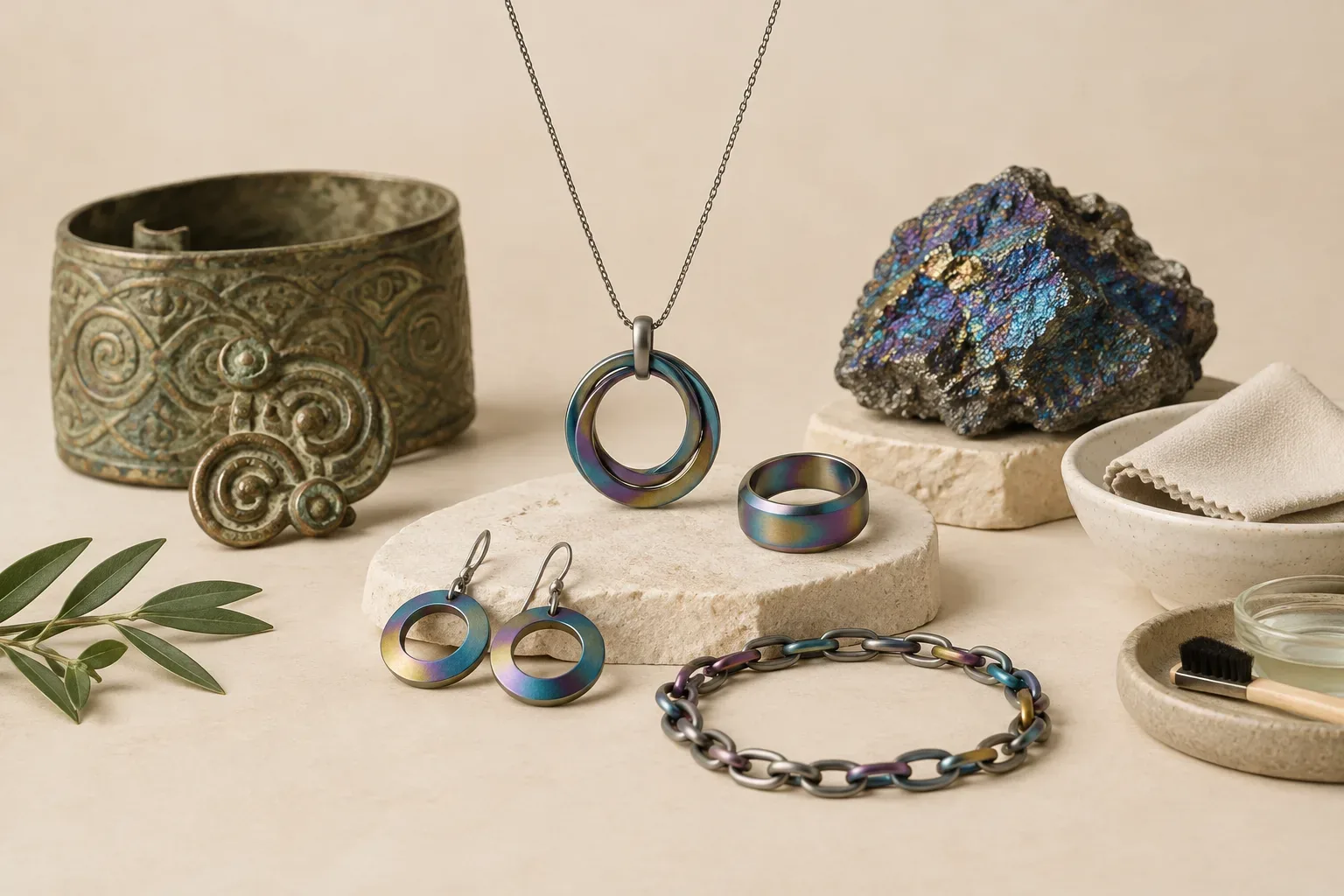
In modern jewellery practice new metals and surface treatments are commonly embraced for their visual effects and functional properties, and contemporary pieces featuring unconventional metals are part of that ongoing change in taste recorded by museum surveys (Victoria and Albert Museum). Niobium is used by some contemporary designers in rings, earrings, pendants, and body jewellery where distinct finishes or colour effects are desired.
Because materials and treatments can alter appearance and perceived value, sellers should disclose the nature of any finishing or treatment applied to metalwork. The Federal Trade Commission advises that consumers receive truthful information about treatments, imitations, and the nature of materials when buying gems and jewellery. That same principle applies to modern metals and finishes: ask for written details on the metal type, any surface treatments, and guarantees or care instructions before purchase (Federal Trade Commission).
Assessing durability: tarnish and wear
General durability concerns for any contemporary jewellery metal include surface wear, scratch susceptibility, and changes to finish over time. Museum accounts of jewellery history make clear that the longevity of a piece depends on material, workmanship, and how it has been treated or finished, and that each of those factors must be considered when assessing long-term wear (Victoria and Albert Museum).
Because museum sources and consumer-protection guidance emphasise disclosure, the first step in assessing a piece’s durability is to obtain clear information from the maker or retailer about the base metal, any surface treatments, and recommended care. Where sellers provide such information you can better judge likely performance in everyday wear. If doubts remain, ask about return or repair policies before buying (Federal Trade Commission).
Practical care: cleaning, storage, and regular wear
Treat care instructions for niobium jewellery the same way you would evaluate directions for any contemporary metal: rely on the maker’s guidance, avoid harsh chemicals, and store pieces to minimise abrasions and contact with other metals. Museum collections and guides on jewellery practice stress the importance of appropriate handling and storage to slow wear and preserve finishes (Victoria and Albert Museum).
If you own a piece, keep it dry when possible, remove jewellery for strenuous activity, and store items individually to reduce rubbing. Clean gently with a soft, dry cloth; if the maker recommends a mild soap solution, test it on a small, inconspicuous area first and follow the seller’s instructions. If a surface is described by the seller as a colour-treated finish, follow any explicit cleaning restrictions to avoid altering that finish. When in doubt about a professional cleaning method, ask the maker or a reputable jeweller for guidance.
Selection and gifting guidance
Because niobium’s presence in jewellery is a modern practice rather than an established cultural symbol, select or gift niobium pieces with clarity about what you intend the gift to signify. If you mean to convey a traditional cultural or religious message, choose materials or motifs that have documented associations in the source culture, and cite museum or scholarly references when appropriate. If the intention is personal—celebrating colour, contemporary design, or hypoallergenic metals—state that openly so the recipient understands the message as personal rather than historical.
When choosing a piece to wear or gift, ask the seller for written details about the metal, any surface treatments, and care instructions. Consider the recipient’s lifestyle: if they work with their hands or frequently expose jewellery to chemicals, choose simpler finishes or items with explicit warranties. Confirm return, resizing, and repair policies before purchase so the gift can be adapted if needed. For broader guidance on choosing meaningful jewellery and researching symbols, consult related practical guides on the site such as our jewellery selection and symbol-research articles.
Summary and final considerations
Niobium jewellery durability belongs in the category of modern material choice and craftsmanship rather than an inherited cultural motif recorded in museum histories. The Victoria and Albert Museum’s surveys of jewellery history and gemstone context are useful reminders that documented symbolism is tied to specific places and periods, and that newer materials acquire meanings through contemporary practice rather than ancient lineage (Victoria and Albert Museum).
For everyday decisions about tarnish, wear, and care, rely on transparent seller disclosures, follow standard cleaning and storage practices, and use consumer-protection resources where needed to verify claims about materials and treatments (Federal Trade Commission). That combination—historically informed perspective plus practical consumer steps—offers the best route to choosing, wearing, and gifting niobium jewellery responsibly and respectfully.
Frequently asked questions
Does niobium tarnish or change color over time?
Because museum surveys do not document niobium as a historically significant metal with established aging patterns, treat claims about color stability as material-specific information you should get from the maker or seller. Ask the seller to disclose any surface treatments or finishes and to explain how they age. If the item has a colour-treated surface, follow the maker’s cleaning and wear recommendations to reduce unwanted changes.
Is niobium hypoallergenic?
Contemporary jewellers often market certain metals as hypoallergenic, but precise allergy risks depend on the metal alloy and any surface treatments applied. The Federal Trade Commission advises consumers to ask for full disclosure about materials and treatments before buying. Request written information from the seller about the metal composition and any coatings if you are concerned about skin sensitivity.
How should I clean and store niobium jewellery?
Follow the maker’s care instructions when provided. As a general approach, store jewellery individually to avoid abrasion, remove pieces before heavy work or exposure to strong chemicals, and clean gently with a soft, dry cloth. If mild soap and water are recommended, test on a small area first and avoid abrasive cleaners. When in doubt, consult the maker or a reputable jeweller for professional advice.
What should I ask the seller about durability before buying?
Ask the seller for written details on the base metal, any surface treatments, expected care, warranty or return policies, and how the finish responds to regular wear. Clear disclosure helps you judge how the piece will perform over time and is consistent with consumer-protection guidance for buying treated or unusual materials.
How do I explain the meaning of niobium jewellery when gifting?
Because niobium lacks documented traditional symbolism in museum records, present its meaning as contemporary or personal. If you wish to convey a historical or cultural message, choose a material or motif with documented associations; otherwise explain that the gift celebrates modern design, colour, or the recipient’s individual taste.
Sources and further reading
- Bedazzled: A History of Jewellery — Victoria and Albert Museum
- An A-Z of Gemstones — Victoria and Albert Museum
- Buying Gemstones, Diamonds, and Pearls — Federal Trade Commission