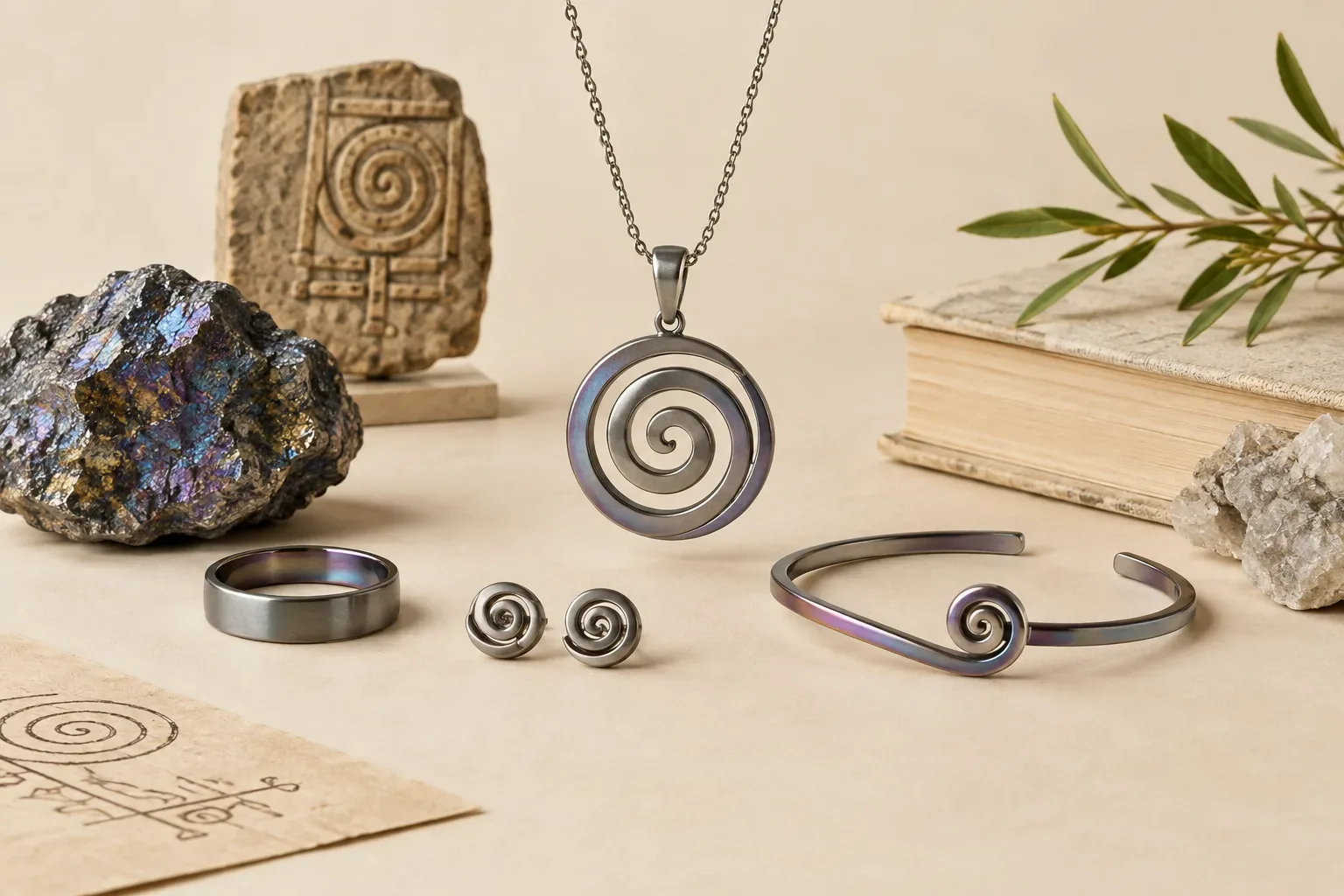
Meaning at a glance
Niobium is a modern material used in contemporary jewellery rather than a metal with a long documented symbolic history; the Victoria and Albert Museum's histories show how jewellery materials and meanings have changed over time, and the U.S. Federal Trade Commission explains what sellers must disclose about materials and treatments. When buying or gifting niobium, ask for clear material information, any tests or reports, and respect a recipient's cultural context or personal interpretations.
Direct answer: What “niobium jewelry explained” means in practice
Niobium jewelry explained, in brief, is an explanation rooted in two facts supported by museum and consumer-protection guidance: niobium is a contemporary metal used by modern jewellers rather than a material with a long, documented symbolic life in older cultures, and buyers should expect transparent disclosure about metal composition and any surface treatments. The Victoria and Albert Museum frames how jewellery materials and meanings have changed across periods and cultures, and the U.S. Federal Trade Commission sets expectations for disclosure about materials, treatments, and imitations.
Composition and the place of niobium in jewellery history
Museum overviews of jewellery history make clear that different metals and gemstones have dominated at different times and places. The Victoria and Albert Museum’s coverage of jewellery history describes how ancient Egypt, classical Mediterranean cultures, medieval Europe, and 19th-century Britain each relied on particular metals and gemstones and tied those materials to social status, ritual, and fashion. Those historical accounts focus on gold, silver, copper alloys, and gemstones that were available and culturally significant in those periods.
Within the scope of the museum’s documented collections and published histories, niobium does not appear as a historically significant metal in those earlier cultures. That absence indicates that niobium’s adoption is a modern development in the long, changing story of jewellery techniques and tastes rather than a continuity from antiquity.
Historical meanings separated from modern interpretations
When historians and curators describe meanings attached to jewellery, they attribute those meanings to specific places and times. For example, the V&A links particular gemstones and metalwork styles to the social roles and beliefs of ancient Egypt, the classical Mediterranean, medieval Europe, and the Victorian era. Those documented meanings are specific to those cultures and periods and arise from the materials, techniques, and social uses of jewellery at the time.
By contrast, meanings people attach to niobium today are contemporary and personal. Contemporary jewellery designers and wearers may value niobium for appearance, technical properties, or symbolic reasons chosen by the wearer. These modern interpretations are valid as personal or cultural statements today, but they are not the same as documented symbolic uses from earlier historical periods described by the V&A.
How niobium typically appears in modern jewellery designs
In contemporary practice designers use a wide range of metals and techniques to create new aesthetic effects and to meet practical needs. The V&A’s narrative about jewellery history highlights that innovation in materials and surface treatments is a continuing theme in the craft. Within that modern context, niobium is one of several non-traditional metals jewellers may choose for rings, earrings, pendants, and everyday wear pieces.
Because niobium is used in modern studio and commercial jewellery, it appears across a range of styles—from minimalist metalwork to pieces designed to showcase contemporary surface finishes. How a maker presents niobium—as an intrinsic material, a plated surface, or a component joined to other metals—matters for both appearance and consumer disclosure. This variety is a contemporary phenomenon rather than a revival of an ancient symbolic motif.
Hallmarks, markings, and seller disclosure: what to expect
Historically, hallmarking and maker’s marks have been used to certify precious-metal content and origin. The Victoria and Albert Museum documents how hallmarking systems evolved and how marks on jewellery helped buyers and institutions understand what a piece was made from and who made it. Those historical hallmark systems were focused on widely traded precious metals and reflected regulatory regimes of particular countries and eras.
For modern materials and treatments, consumer-protection guidance is the most relevant benchmark for disclosure. The U.S. Federal Trade Commission advises that sellers must not misrepresent a product’s material or conceal treatments and imitations. Under that guidance, buyers should expect clear, accurate descriptions of the metal used, any surface treatments, and whether a non-precious metal is being presented as if it were precious.
Practical steps when buying or receiving niobium jewellery
Ask the seller to describe the metal and any surface treatments in writing. A trustworthy seller will provide clear language explaining whether a piece is solid niobium, an alloy, or a plated or coated metal, and they should disclose any treatments or finishes. The FTC guidance on buying gemstones and jewellery supports asking direct questions and expecting truthful answers about composition and treatment.
Check for marks, certificates, or test reports. While conventional hallmarks identify precious metals in countries with hallmarking regimes, contemporary studio jewellery may use maker’s marks, stamped content indicators, or accompanying documentation. If a hallmark or test report is important to you, request it before purchase. When buying remotely, insist on a clear return policy if the material does not match the description.
Consider the recipient’s values and sensitivities. If you are gifting a piece to someone who places importance on historical meaning, cultural provenance, religious symbolism, or material value, research the symbol or style with care. Use museum resources and the site’s own guidance on researching jewellery symbols to understand historical context rather than assuming continuity. If the recipient cares about ethical sourcing or repairability, ask the maker about those practices.
Respectful selection and gifting guidance
When you choose niobium jewellery for yourself or as a gift, match the piece to the wearer’s tastes and any cultural or religious norms they observe. Designers and wearers often assign new personal meanings to contemporary materials; however, attaching a “historical” symbolism to a modern metal without evidence risks creating a misconception. The V&A’s work shows how meanings vary over time and place, so if you want a historically rooted symbol, prefer materials and motifs documented for the culture you are referencing.
If the recipient values transparency, prioritize sellers who provide clear information about composition, treatments, and care. If you are in doubt about material claims, consider buying from a reputable gallery, studio jeweller, or retailer who will offer written confirmation and a fair returns policy. For advice on interpreting symbols and motifs before gifting, see the site’s guide on how to research jewellery symbols and our related gift-selection article, which explain how to match meaning, style, and provenance in a respectful way.
Care, maintenance, and longevity (what to ask the maker)
Contemporary metals and finishes have different care needs. Ask the maker or seller how to clean and store the piece, whether the finish may change with wear, and whether the item can be repaired or resized. The V&A’s discussion of changing social contexts and evolving materials reminds collectors that what looks novel today may age differently than traditional metals, and makers’ instructions are the best guide to preserving a modern piece.
Request information about warranties, repair services, and how the piece will be documented for future buyers or family members. Clear documentation of material and maker increases the long-term value of an object, whether for sentimental inheritance or resale.
Frequently asked questions
Is niobium a traditional or historical jewellery metal?
No single historical tradition documents niobium as a commonly used metal in older cultures. The Victoria and Albert Museum’s histories of jewellery focus on metals and gemstones used in antiquity, the classical Mediterranean, medieval Europe, and later periods, and do not present niobium as part of those documented traditions. Niobium’s use in jewellery is therefore a contemporary development rather than a continuation of a specific ancient practice.
How can I tell if a seller’s claim about niobium or a finished surface is accurate?
Ask the seller for a written description of the metal and any surface treatments, any available test reports, and the return policy. The U.S. Federal Trade Commission advises that sellers must not misrepresent materials or conceal treatments and that buyers should seek clear answers about composition and treatment before purchase.
Do conventional hallmarks apply to niobium jewellery?
Traditional hallmarking systems are designed to certify the content of widely regulated precious metals and vary by country and period, as documented by the V&A. Contemporary or studio pieces in modern metals may not carry conventional hallmarks. If an official hallmark or certification is important to you, request documentation or lab testing from the seller before buying.
Should I attribute historical symbolism to a niobium piece I’m buying as a gift?
Be cautious about assigning a historical symbolism to a modern material unless you have evidence from a reliable historical source. The V&A demonstrates that meanings are culturally and temporally specific. If you want a historically grounded motif, look for materials and designs with documented provenance or consult resources on jewellery symbolism.
What practical questions should I ask a maker when selecting niobium jewellery?
Ask whether the piece is solid niobium, an alloy, plated, or coated; what surface treatments were used; how to care for the item; whether repairs or resizing are possible; and what documentation or warranties accompany the purchase. Clear answers will help you evaluate the piece’s durability, maintenance needs, and long-term value.
Sources and further reading
- Bedazzled: A History of Jewellery — Victoria and Albert Museum
- An A-Z of Gemstones — Victoria and Albert Museum
- Buying Gemstones, Diamonds, and Pearls — Federal Trade Commission