Meaning at a glance
Aluminum jewelry is a lightweight, affordable fashion-metal choice whose value depends more on alloy, finish, craftsmanship, and surface treatment than on intrinsic material worth; a careful buyer checks construction, any coatings or plating, seller disclosure, and wearer sensitivity, and treats aluminum pieces as costume or contemporary jewelry rather than heirloom precious-metal objects.
Quick answer
A straightforward aluminum jewelry buying guide conclusion: treat aluminum pieces as contemporary or costume jewelry—seek good construction, transparent disclosure of finishes or coatings, and a seller return policy; expect lower price than precious metals but wide variety in aesthetic and durability depending on alloy and surface treatment.
What we mean by ‘aluminum jewelry’ and why it matters
In this guide, “aluminum jewelry” refers to jewelry in which aluminum or aluminum alloys are a primary metal. In modern design it is used for lightweight earrings and large-scale pieces, for colored or matte finishes, and for styles that emphasize affordability and wearability.
Why that matters to buyers: the metal’s place in the market shapes expectations about price, longevity, and meaning. Aluminum pieces are usually marketed and worn as fashion or contemporary jewelry rather than as traditional precious-metal objects intended for long-term investment or family heirlooms.
Documented historical context (what museums and scholarship show)
When we look at the history of jewellery as documented by institutions such as the Victoria and Albert Museum, the story to note is change: materials, techniques, and social meanings for jewelry shift with technology, fashion, and social context. The V&A’s overview of jewellery history emphasizes that what counts as valuable or fashionable differs across periods and societies and that new materials often enter jewellery alongside new social functions and aesthetics.
That general pattern is what frames aluminum’s place in jewelry: while museum surveys trace long histories of gold, silver, and gemstones, they also record the increasing use of industrial and non-precious materials in modern and contemporary jewellery as makers experiment with new looks and price points. The V&A’s coverage helps explain how the social meaning of a piece—sentimental, status, decorative, or political—depends on time and context rather than any single material.
Separating documented historical meanings from modern interpretations
Documented historical meanings of jewelry—such as lockets for mourning or signet rings for identity—are recorded by museums and scholars and are tied to specific cultures and periods. The Victoria and Albert Museum’s materials on jewellery history describe these social uses precisely, linking form, material, and function in particular times and places.
Modern interpretations of aluminum jewelry are largely contemporary and personal. Many buyers and makers choose aluminum because it is lightweight, allows large scale without pulling at the ear, or can be finished in striking colors. These modern meanings—affordable self-expression, sustainable-sounding choices, or industrial aesthetics—are contemporary responses to design and market factors; they are not the same as historic cultural or religious symbolism and should not be treated as if they were universally traditional.
How aluminum and related motifs appear in jewelry
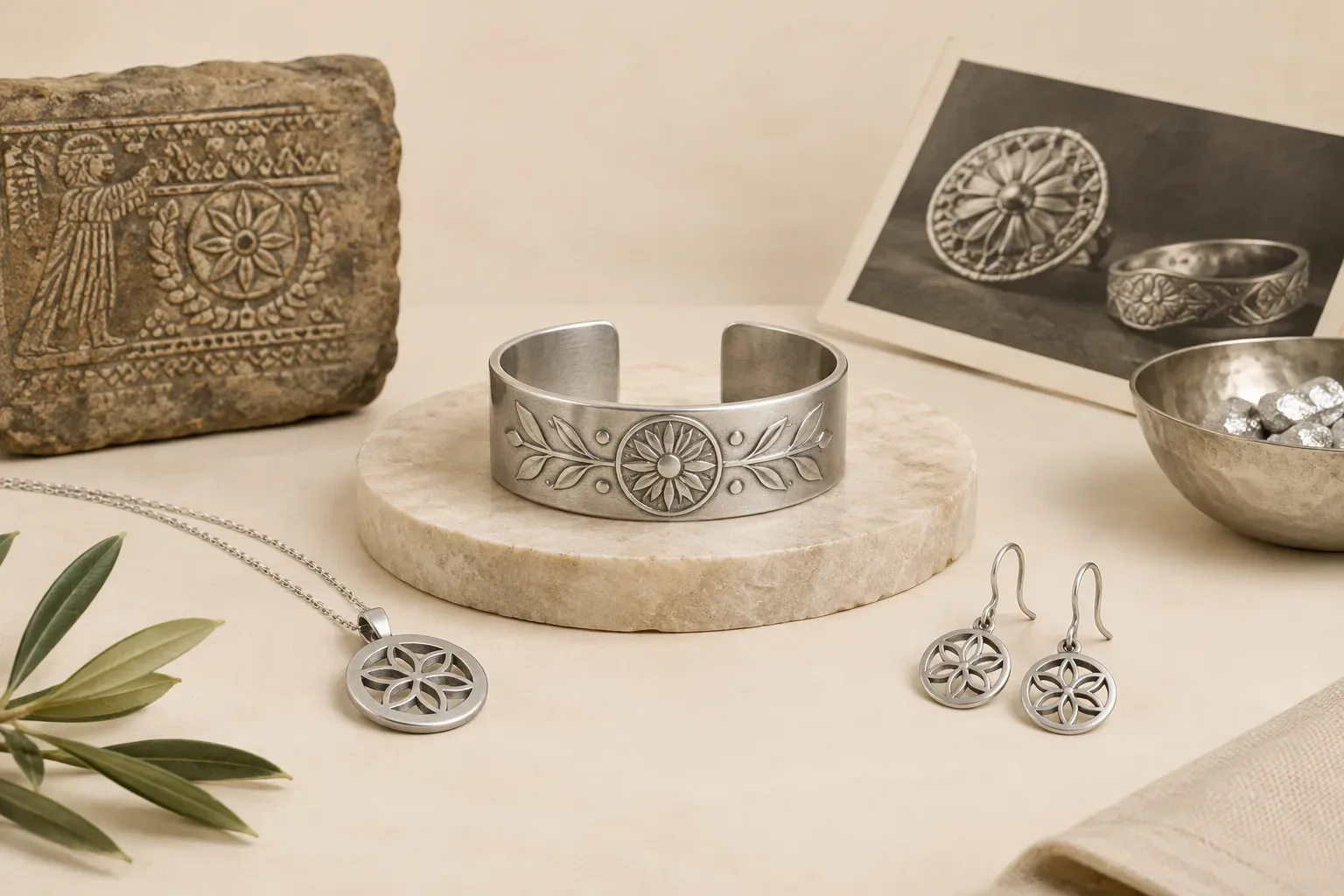
Aluminum appears across a range of forms: minimalist geometric shapes, oversized hoops, cuffs and bangles, layered necklaces, and sculptural statement pieces. Designers often choose it when they want a bold visual scale with minimal weight. The same aesthetic goals that drove the adoption of other non-precious materials in the twentieth and twenty-first centuries are visible in aluminum work: accessibility, experimentation, and contemporary style.
Motifs and gemstones appear in aluminum jewelry much as they do in other metals, but with differences in technique and effect. Gemstones may be set into aluminum components or used on complementary settings, and motifs—floral, geometric, symbolic—are often expressed through formed or cut aluminum shapes rather than traditional gold-smithed techniques. For background on how gemstones and motifs have historically been handled and interpreted, the Victoria and Albert Museum’s A–Z of Gemstones provides useful context on identification and historical usage.
Quality: what to look for when evaluating aluminum jewelry
Craftsmanship matters more than the base metal. Check joins and seams, the quality of soldering or bonding, and whether moving parts (clasps, ear wires, hinges) operate smoothly without rough edges. A well-made aluminum piece will feel consistent in finish and will not show sloppy joints or sharp burrs.
Ask about surface treatments. Many aluminum items are anodized, painted, plated, or lacquered to create colour and protect the metal. The U.S. Federal Trade Commission’s guidance on buying gemstones and materials emphasizes that sellers must disclose treatments and imitations; by extension, reputable sellers should disclose surface treatments on metals as well. Treatments affect both appearance and durability, so know whether a color is integral to the metal or a surface coating that can wear or chip.
Consider weight and feel. Part of aluminum’s appeal is lightness; an overly heavy piece marketed as aluminum may be alloyed or include other metals. Conversely, if a piece looks very substantial but is feather-light, ask whether it is hollow or thin-sheet construction—this affects longevity.
Finishing and allergy risk. Aluminum alloys and surface coatings can affect skin reaction. If you or the recipient have metal sensitivities, confirm whether ear wires or posts are made of a hypoallergenic metal or have a known protective coating. Reputable sellers will state materials for items in contact with skin.
Price: what drives cost and how to set expectations
Aluminum jewelry generally costs less than equivalent pieces in silver, gold, or platinum because the raw material is less valuable and many aluminum items are handmade or mass-produced in fashion categories. But price varies widely: design complexity, brand, craftsmanship, surface treatments, and inclusion of gemstones or fine materials all push price up.
Don’t equate low price with low quality automatically. Some well-made designer pieces use aluminum intentionally for its aesthetic and practical advantages. Conversely, inexpensive mass-produced items may use thin finishes that wear quickly. Set expectations by comparing similar designs from multiple sellers and by asking about materials and finishes.
Best uses and styling guidance
Use aluminum where lightness and scale are desirable. Large hoops, statement cuffs, and bold sculptural necklaces benefit from low weight because they are more comfortable for daily wear. Aluminum’s adaptability to colour and finish also suits summer or festival wear and fashion-forward wardrobes.
Pair aluminum with complementary materials. Aluminum works well with textiles, resin, wood, and non-precious beads, and can be combined with gemstones as accent stones rather than the primary value driver. When gifting, choose styles that match the recipient’s established preferences: if they favour classic, precious-metal pieces, a contemporary aluminum item may be a departure rather than a replacement.
Respectful selection and gifting guidance
Be mindful of cultural and religious contexts. Some metals and motifs carry specific meanings in particular communities; museum research shows that meanings are historically specific. If a motif or metal potentially relates to a cultural or religious tradition, research its provenance and consult knowledgeable sources before gifting.
Match the piece to the occasion. Aluminum jewelry is excellent for casual gifts, birthdays, fashion-minded friends, and situations where wearability and low weight matter. For milestone gifts intended to be future family heirlooms—weddings, major anniversaries—buyers often choose precious metals instead because those metals have longstanding social roles as durable, investable materials.
Include context for the recipient. Because aluminum does not automatically carry a long historical status as a precious metal, a short note explaining why you chose the piece—its design, the way it suits the recipient, or the artist’s story—adds meaning. For people with metal allergies, include materials information and a return option in case of reaction.
Care and maintenance
Treat aluminum jewelry gently: avoid harsh chemicals, store pieces separately to prevent scratching, and clean with mild soap and a soft cloth. If a piece is coated or anodized, follow care instructions from the maker: some finishes resist tarnish and moisture, others can wear if abraded.
When in doubt, ask the seller for specific care guidance and any warranty or return terms. The seller’s willingness to explain treatments and maintenance is a useful signal about overall product quality and customer service.
A short buying checklist
Ask these questions before you buy: What is the exact metal or alloy? Is the finish anodized, painted, plated, or lacquered? What parts touch the skin and what are they made of? What is the return policy and warranty? Does the seller disclose any treatments? Can the piece be resized or repaired and, if so, by whom? Clear answers to these questions will help you assess durability and value.
Frequently asked questions
Is aluminum jewelry hypoallergenic?
Aluminum itself is not commonly classed among the typical allergenic metals, but reactions can occur depending on alloys and surface coatings. If you have a known metal sensitivity, check with the seller about alloy composition and whether ear posts or clasps are made from a hypoallergenic metal; test-wearing or a generous return policy can reduce risk.
How long does an anodized or coated aluminum finish last?
Durability depends on the specific surface treatment and how the piece is worn: coatings can resist wear but may scratch or fade with heavy abrasion or chemical exposure. Ask the maker how the finish was applied and follow their care instructions; sellers should disclose treatments according to consumer-protection guidance.
Can aluminum jewelry be resized or repaired?
Some aluminum jewelry can be reshaped or repaired, but techniques differ from those used for precious metals. Repairs are often best done by the original maker or a jeweler experienced with non-precious metals. Confirm repairability before purchasing if you anticipate future alterations.
How should I clean aluminum jewelry?
Clean most aluminum pieces with mild soap and water and a soft cloth; avoid harsh chemical cleaners, strong abrasives, and ultrasonic cleaners unless the maker specifies they are safe for the finish. Dry thoroughly before storing to prevent moisture-related issues with coatings or attachments.
Is aluminum jewelry a good option for gifting?
Yes—aluminum makes for comfortable, wearable fashion pieces that suit casual or style-focused gifts. For milestone or heirloom gifts, buyers often prefer precious metals with established cultural roles. When gifting aluminum, include material information and a personal note to add meaning.
What should I ask a seller before buying aluminum jewelry online?
Ask for exact materials (alloy and coatings), photos of joins and clasps, dimensions and weight, maker or brand information, care instructions, and return or warranty policies. Clear answers indicate transparency and help you judge value.
Sources and further reading
- Bedazzled: A History of Jewellery — Victoria and Albert Museum
- An A-Z of Gemstones — Victoria and Albert Museum
- Buying Gemstones, Diamonds, and Pearls — Federal Trade Commission