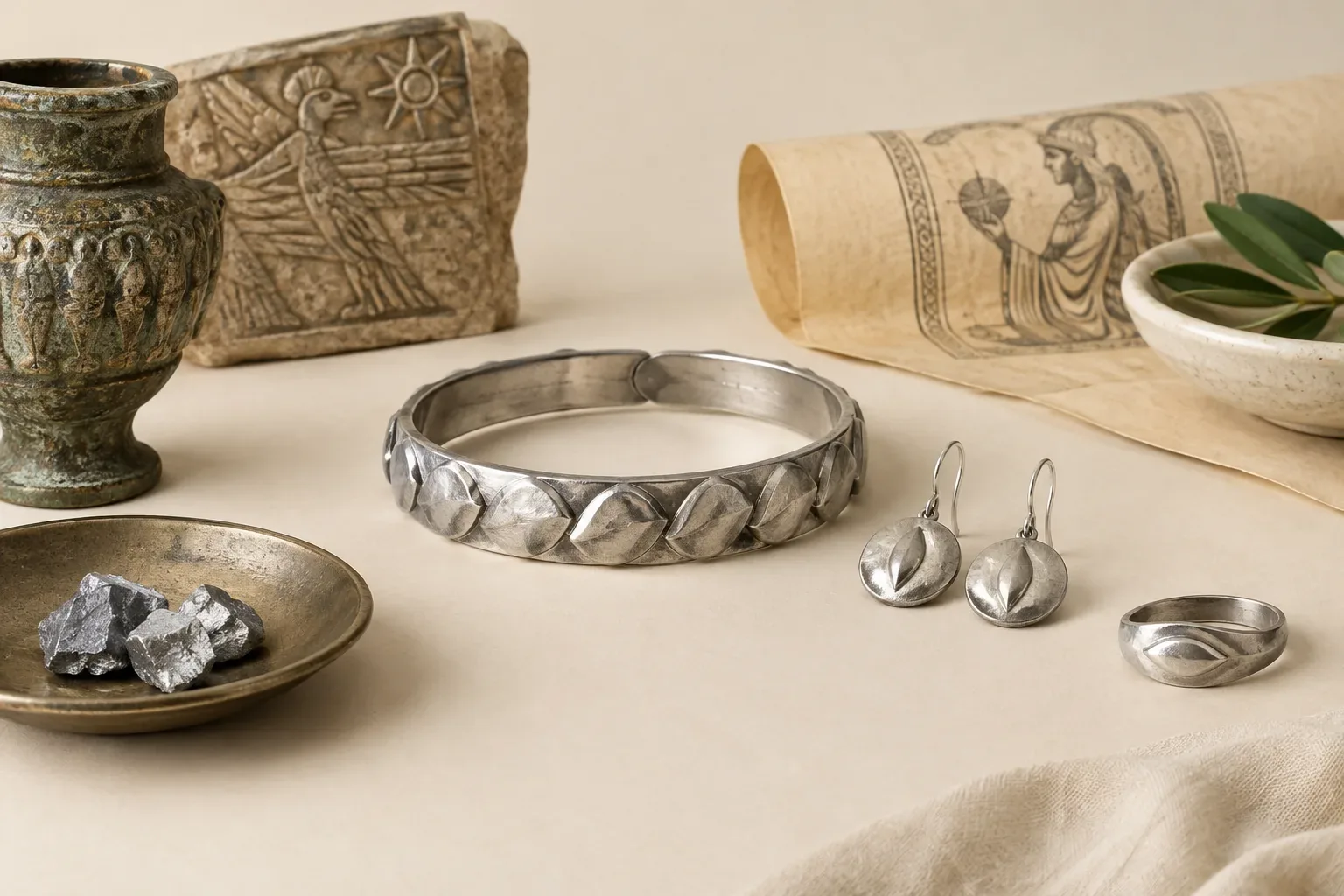
Meaning at a glance
Aluminum jewelry durability depends less on an inherent, universal symbolism and more on the metal’s finish, coatings, and how it’s made; museum sources place metals in changing social contexts, while consumer-protection guidance recommends asking sellers about treatments and disclosures. Choose pieces by matching finish and construction to the wearer’s lifestyle, verify treatment disclosure, and follow gentle care practices to preserve appearance.
Direct answer — the short thesis
Aluminum jewelry durability is determined primarily by how the metal is finished and treated and by the way the piece is worn and maintained. Historical museum studies show that metals acquire different social meanings as technologies and tastes change, and modern aluminum pieces rely on surface treatments (anodizing, plating, lacquer, or paint) and construction quality to resist wear. When choosing, buying, or gifting aluminum jewelry, verify the maker’s disclosures about treatments and alloys and match the piece to the recipient’s lifestyle to maximize real-world durability and satisfaction.
What the historical record shows about metals in jewelry
Surveys of jewelry history emphasize that choice of metal has long reflected available technology, social values, and fashion, not a single, constant meaning. The Victoria and Albert Museum presents jewelry as a social and technical history in which new metals and processes repeatedly altered what makers could do and what wearers expected. Metals from gold and silver to cheaper alternatives have moved in and out of fashion as social conditions, manufacturing techniques, and tastes changed.
Museum accounts document how the introduction of a new metal or method often changes design language and the ways people use jewelry, but those same accounts do not treat a single metal as carrying a universal symbolic content across all cultures and periods. The lesson for aluminum is therefore contextual: the metal’s technical properties, when combined with contemporary manufacturing and finishing methods, shape its appearance and durability, and cultural meanings form around those changing appearances rather than being fixed in the metal itself.
Documented historical meanings versus modern personal interpretations
When historians describe the meanings of jewelry, they rely on documented social contexts, maker records, and museum collections. The Victoria and Albert Museum describes how gem types, settings, and the use of particular metals often reflect social rank, technology, and fashion. Those documented meanings are specific to time, place, and culture and typically concern metals like gold and silver with long documentary trails.
By contrast, many contemporary attributions—such as assigning a fixed symbolic meaning of resilience or modernity to aluminum—are modern personal or marketing interpretations rather than documented historical meanings. Those interpretations are valid as personal symbolism for a wearer or as a brand narrative, but they are not equivalent to historical evidence. If you want to respect cultural specificity, treat claims of long-standing symbolism for aluminum with caution unless a clear, cited tradition is provided.
How the ‘durability’ idea appears in modern jewelry
In contemporary practice, the idea that a piece of jewelry symbolizes durability typically comes from three things: the maker’s design intent, the construction method (for example, solid metal elements versus glued parts), and the surface finish or treatment that affects how the item wears. Jewelry described as durable is often constructed with secure joins, robust fastenings, and surface treatments meant to resist everyday abrasion and moisture.
Aluminum in modern jewelry appears most often where designers prioritize lightness, a contemporary industrial aesthetic, or color achieved through surface treatments. Gemstones, motifs, and traditions are combined with aluminum in many ways: aluminum can form frames and settings for stones, create lightweight cuff or bangle forms, or be finished in matte, brushed, or colored surfaces to support a particular look. For gemstone settings, consult established guides to identification and context, such as the Victoria and Albert Museum’s A–Z of Gemstones, to understand how stones have been used historically and how they pair with different metals.
Practical durability factors: tarnish, wear, and treatments to check
Durability for any jewelry metal is a function of three practical factors: the underlying alloy or base metal, any surface treatment (anodizing, plating, paint, lacquer, or patina), and the quality of manufacture. These factors determine whether the piece will resist abrasion, show fingerprints and surface marks, or need periodic maintenance. Because treatments vary widely, two aluminum rings can have very different lifespans in everyday wear.
The Federal Trade Commission’s guidance on disclosures for gemstones and metals is relevant here because surface treatments and plating materially affect appearance and longevity and should be disclosed by sellers. Before you buy, ask whether the piece is pure aluminum, an aluminum alloy, or base metal with an aluminum finish; whether it has been anodized, painted, lacquered, or plated; and what the maker’s warranty and repair policy are. Sellers who follow consumer-protection norms will provide this information.
Care and maintenance that preserve appearance
General care for lightweight or treated metal jewelry is cautious and routine. Store pieces separately to avoid scratching, remove jewelry during heavy manual work or when using strong household cleaners or chlorine, and avoid abrasive polishes unless the maker specifically recommends a polish for the finish used. Many modern coatings are designed to be easy to clean with a soft cloth and mild soap and water, but follow maker instructions when available.
If a piece is anodized or painted, avoid solvents and aggressive polishing that could remove the surface. For pieces with stones set into aluminum frames, take care during cleaning to avoid forcing water into settings or using ultrasonic cleaners unless the seller states they are safe for that combination of metal and gem. When in doubt, consult a professional jeweler for cleaning and repair recommendations tied to the exact materials and construction.
How to choose or gift aluminum jewelry thoughtfully
Consider the recipient’s daily life. A lightweight aluminum bangle may be ideal for someone who dislikes heavy pieces, but it may not be suited to a wearer who does frequent manual tasks that risk knocks and abrasions. Match the aesthetic to the recipient’s style and the technical qualities to their habits: a polished, delicate finish needs more careful wearing than a brushed or intentionally distressed surface.
Ask the seller clear questions before buying as a gift. Request written information about the metal composition and surface treatment, the maker’s repair or replacement policy, and any care instructions. If the piece includes gemstones, use sources such as the Victoria and Albert Museum’s A–Z of Gemstones to understand historical uses and to assess whether the setting method is appropriate for everyday wear. If cultural or symbolic meaning is part of the gift’s intent, confirm that the interpretation is contemporary or personal rather than a documented traditional meaning unless you have reliable evidence to the contrary.
Questions to ask sellers and what consumer guidance to rely on
Before purchase, ask whether the piece is solid aluminum, an aluminum alloy, or metal with an aluminum finish; whether it has been anodized, lacquered, painted, or plated; what the expected wear characteristics are; and whether the seller provides a warranty or repair options. Ask how gemstones are set and whether cleaning or repair services are available locally.
Rely on consumer-protection guidance for disclosure. The Federal Trade Commission emphasizes honest disclosure for treatments and imitations in the sale of gemstones and metals. Transparent sellers will explain treatments and will not hide coatings or plating that could affect durability and appearance. If such information is not provided, consider buying from a source with clearer documentation.
Final takeaways
Aluminum jewelry durability is not a single property you can infer from the metal name alone. Historical studies of jewelry remind us that metals gain social meanings through context and technology, while modern aluminum pieces depend on finish, treatment, and construction for their real-life performance. Treat modern symbolic claims with an eye to provenance and maker disclosure.
For buyers and gifters: verify materials and treatments, align the choice with the wearer’s lifestyle, and follow conservative cleaning and storage habits. When sellers provide clear information and reasonable repair options, you can make an informed choice that balances the lightweight, contemporary benefits of aluminum with the practicalities of lasting wear.
Frequently asked questions
Does aluminum jewelry tarnish?
Aluminum does not behave the same way as traditionally documented tarnishing metals such as silver; appearance depends heavily on surface finish and any coatings applied. Because treatments vary, check the seller’s description and care instructions to understand how the piece will age and what maintenance it requires.
Is aluminum hypoallergenic?
Some people tolerate aluminum well, but allergic reactions to metals depend on the exact alloy and any surface coatings. If the wearer has metal sensitivities, ask the maker for specifics about alloy composition and coatings, and consider trying a small sample wear period before frequent use.
How should I clean aluminum jewelry?
Follow the maker’s instructions. In general, gentle cleaning with a soft cloth and mild soap and water is safest for most surface finishes. Avoid aggressive abrasives, solvents, and ultrasonic cleaners unless the seller confirms they are safe for the specific treatment and any gemstones.
Can aluminum jewelry be repaired or resized?
Repairability and resize options depend on construction and alloy. Solid, well-constructed pieces are more likely to be repairable; plated or painted surfaces may need refinishing after repair. Ask the seller about repair policies and recommended local professionals before purchasing.
What should I ask the seller before buying aluminum jewelry as a gift?
Request written details about metal composition, surface treatments (for example, anodizing, plating, lacquer, or paint), care instructions, warranty or repair options, and how gemstones are set. The Federal Trade Commission advises clear disclosure of material treatments that affect appearance and value.
Sources and further reading
- Bedazzled: A History of Jewellery — Victoria and Albert Museum
- An A-Z of Gemstones — Victoria and Albert Museum
- Buying Gemstones, Diamonds, and Pearls — Federal Trade Commission