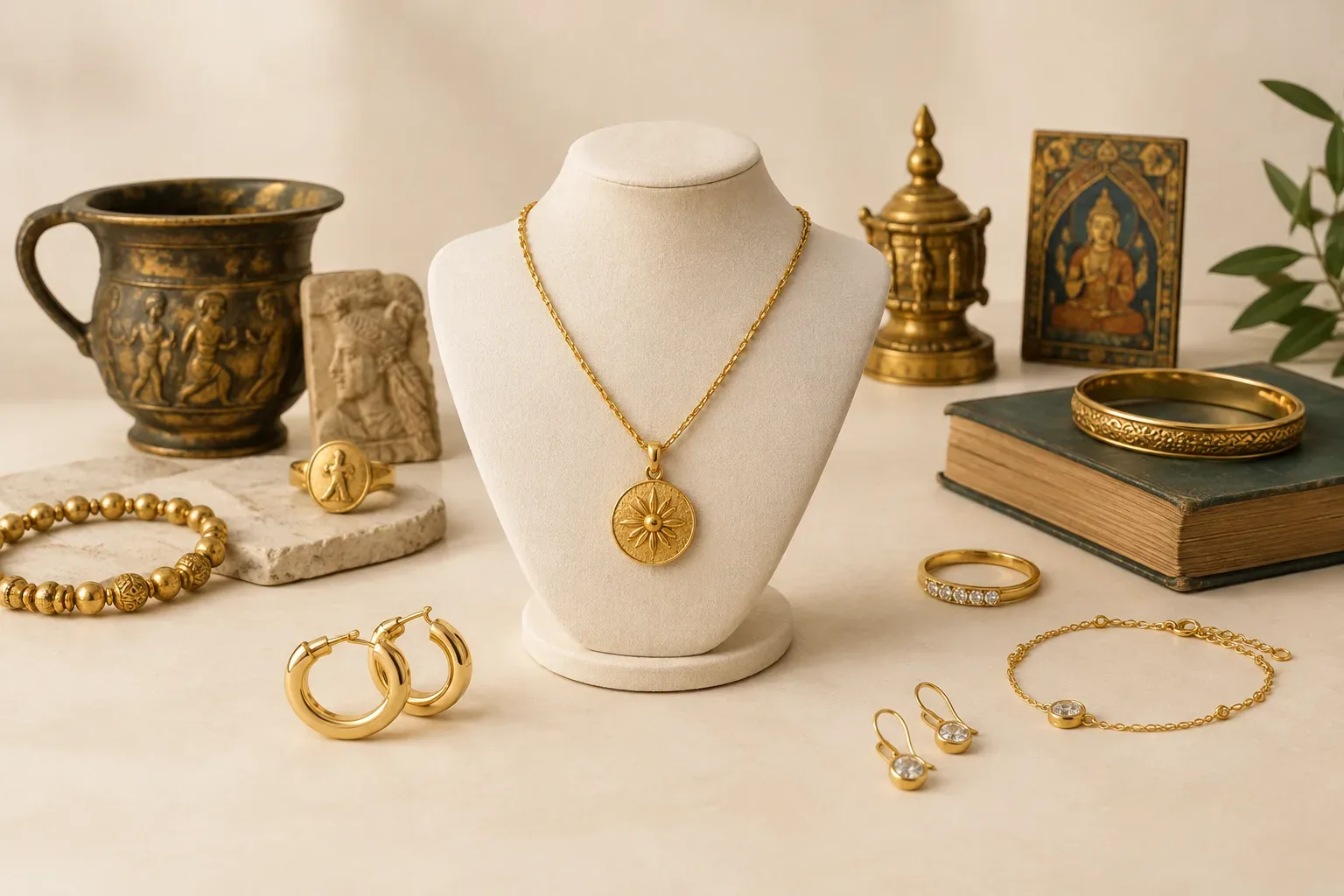
Meaning at a glance
Gold plated jewelry is a surface finish applied to a base metal; historically, gold finishes have signaled status and been used across many cultures, but modern plated pieces vary widely in durability and value—buyers should check disclosures (per the FTC), ask about plating method and base metal, prefer thicker plating and solid craftsmanship for longer wear, and match choice to intended use or gift recipient.
What “gold plated” means today
The term gold plated refers to a thin layer of gold bonded to a base metal or alloy so the piece looks like gold without being solid gold. Plating can be applied by electrochemical methods or other surface treatments; because the gold is a surface layer, plated pieces wear differently from solid gold and, typically, from heavier gold treatments such as gold-filled items. The U.S. Federal Trade Commission (FTC) advises that sellers must be honest about material treatments and imitations, so you should expect clear labeling and answers about the type of plating and the base metal when you shop.
Documented historical evidence and where gold finishes appear
Gold finishes and gilt surfaces appear through a long documented history of jewelry and ornament. The Victoria and Albert Museum’s historical overview of jewelry notes that gold and gold finishes have been used across many cultures and periods to signal wealth, status, and religious meaning, and that techniques for working gold evolved alongside fashion and technology. The museum’s coverage ranges from ancient regimes through medieval and later European tastes to modern costume jewelry, tracing how materials and meanings change with social context.
Specifically, museum resources describe the regular use of gold ornament in ancient societies (for example, elite personal ornaments in ancient Egypt), the elaborate metalwork of classical Greece and Rome, and rich gilt and gold-inlaid techniques in Byzantine and medieval European court and church settings. The V&A also documents changes in the 18th–20th centuries, including the rise of more affordable, decorative jewelry in the modern era that reproduced the appearance of gold through plating and other finishes. These are documented institutional observations rather than a single universal narrative; each period used gold finishes in different technical and symbolic ways, and the museum is the source for these broad historical contexts.
Historical meanings versus modern personal interpretations
In many historical contexts, documented by museum collections and scholarship, gold and gilt signified social rank, religious association, or access to funerary rites. Those documented meanings are part of the material record and are reported by institutions such as the Victoria and Albert Museum. In contrast, modern wearers and sellers often attach personal, fashion-driven, or symbolic meanings to plated pieces—for example, treating a plated heart pendant as a token of affection or choosing a plated birthstone for sentimental reasons. Those modern interpretations are valid personal meanings but are not the same as documented historical uses.
When discussing symbolic meaning, keep the distinction clear: an artifact’s documented function in a specific culture or period is an historical claim supported by museum records; a contemporary wearer’s choice to associate a plated motif with a particular sentiment is a personal interpretation and can vary widely by individual and community.
How motifs, gemstones, and traditions appear in plated jewelry
Many motifs that appear throughout jewelry history are reproduced in gold plated items today. Motifs such as lockets, religious symbols, hearts, floral designs, and geometric patterns have long lives in material culture, and museums document iterations of these designs from ancient to modern times. Contemporary plated pieces replicate the look of historical gold items by applying a gold surface over a less expensive core, making familiar shapes and symbols accessible at lower price points.
Gemstones and simulated stones also appear in plated jewelry. The Victoria and Albert Museum’s A–Z of Gemstones explains how different stones were selected historically for color, hardness, and symbolic association; modern plated pieces mirror those aesthetics by setting natural or synthetic stones into plated settings. The visual effect can be convincing, but the interaction between stone and setting differs depending on the base metal and the method of setting. For example, prongs or bezels made in a softer base metal may wear differently than those in solid gold, which affects long-term security of the stone.
Key quality indicators to check when buying
Ask the seller to describe and document the treatment. The FTC’s consumer guidance on buying gemstones, diamonds, and pearls highlights that sellers should disclose treatments and imitations; apply the same expectation to gold finishes. Ask whether a piece is plated, gold filled, vermeil, or solid gold, and request details about the plating method and the base metal.
Examine craftsmanship: look at joins, clasps, prongs, and finishing. A well-made plated item often uses higher-quality base metals, stronger fastenings, and careful finishing, which all help the plating last. Ask about plating thickness and any protective topcoat; thicker plating and a clear lacquer or other protective finish tend to resist wear longer than thin dress plating. If the seller cannot or will not answer these questions, treat the item as lower-grade fashion jewelry rather than a durable heirloom.
Price, value, and realistic expectations
Plated jewelry is priced primarily for appearance and fashion, not for metal content. Because the gold layer is thin, plated items generally have much lower intrinsic metal value than solid gold pieces. Expect lower upfront cost but also less long-term resale or investment value. The trade-off can be advantageous: plated jewelry lets you follow trends affordably, build layered looks, and experiment with motifs and stones without committing to solid gold.
When judging price, consider workmanship and the intended lifespan. A carefully made plated bracelet with a secure clasp and thicker plating can be a good purchase at a modest price; a cheaply made plated ring or chain intended for heavy daily wear is more likely to show base metal through within months. Use the seller’s disclosures and the piece’s construction as primary guides to value rather than the presence of a gold surface alone.
Best uses for gold plated pieces
Gold plated jewelry is best for fashion items, trend pieces, occasional wear, traveling, and situations where you want the look of gold without the cost. It suits seasonal trends, costume styles, event-specific jewelry, and layered looks where multiple pieces are combined. For everyday staples—wedding rings, watch cases, or pieces you expect to wear daily for years—solid gold or well-defined heavier-gold treatments are usually better choices if longevity is the priority.
Paired gemstones and motifs can make plated pieces meaningful gifts, but match the choice to the recipient’s habits. If the recipient swims frequently, exercises a lot, or has an active lifestyle, choose a plated piece with demonstrated durability or opt for a different metal. For an heirloom intention, consider solid gold or discuss plans for re-plating and maintenance with the recipient.
Care, maintenance, and repair
Protect plated jewelry from perfumes, lotions, household cleaners, and prolonged water exposure to slow wear. Wipe pieces gently with a soft cloth after wearing, and store them individually to prevent abrasion. Minor surface wear can sometimes be masked by careful cleaning or professional polishing, but deep wear that exposes the base metal typically requires re-plating to restore appearance.
If you plan to wear a plated piece frequently, ask your jeweler about re-plating options and estimated cost. Good retailers will disclose if re-plating is feasible for the design and how often it might be needed under typical wear—this helps set realistic expectations about lifetime cost and care.
Selection and gifting guidance (practical and respectful)
When choosing a plated piece as a gift, consider the recipient’s metal sensitivities, personal style, and how they plan to use the item. If the symbol or motif has cultural or religious importance, check its meanings and appropriateness before gifting; our internal guide on how to research jewelry symbols can help you avoid misuse or unintended offense. Choose motifs that align respectfully with the recipient’s background, and if in doubt, opt for neutral designs or ask subtly about preferences.
Request full disclosure from the seller and keep the purchase documentation. For special occasions, pair a plated gift with care instructions and, when possible, a plan for future maintenance or re-plating. If longevity is a core concern for the recipient, consider spending more on a higher-grade treatment or solid precious metal instead of plated jewelry.
Frequently asked questions
How long does gold plated jewelry last?
Lifespan varies widely with plating thickness, base metal, and how often you wear the piece. Well-made plated items with thicker plating and careful finishing can last months to years with occasional wear, while thinly plated fashion pieces may show wear within weeks. Ask the seller about plating method and maintenance, and plan for possible re-plating if you expect long-term use.
Is gold plated jewelry hypoallergenic?
Not necessarily. Allergic reactions usually result from the base metal beneath the plating. If you have metal sensitivities, ask the seller what the base metal is and whether there is a barrier layer between the base and the gold. If you need a hypoallergenic option, consider metals known for lower allergenic potential or confirm the exact construction before buying.
Can you resize a gold plated ring?
Resizing plated jewelry is possible in some cases but requires care because the process can remove or damage the plating. Small adjustments may be feasible without noticeable damage, but major resizing usually requires re-plating afterward to restore the finish. Consult a jeweler before altering plated rings.
How should I clean gold plated jewelry?
Clean plated pieces gently with a soft, dry or slightly damp cloth and avoid abrasive cleaners, ultrasonic baths, or harsh chemicals. Remove jewelry before swimming, bathing, or applying cosmetics and perfumes. For stubborn dirt, a mild soap solution and soft cloth can work, but dry the piece thoroughly and avoid scrubbing the surface.
How can I tell if a seller is being honest about plating?
Ask direct questions: whether the piece is plated or solid, the base metal, plating method, and whether the seller offers documentation of the treatment. The FTC advises that material treatments and imitations should be disclosed, so a reputable seller will provide clear answers. If a seller is evasive or inconsistent, treat the item as lower-grade fashion jewelry.
Sources and further reading
- Bedazzled: A History of Jewellery — Victoria and Albert Museum
- An A-Z of Gemstones — Victoria and Albert Museum
- Buying Gemstones, Diamonds, and Pearls — Federal Trade Commission