Meaning at a glance
Stainless steel jewelry durability is best understood as a modern, practical quality rather than an ancient symbolic tradition: historical jewellery studies explain how new materials gain social meaning over time, while contemporary consumer protections require disclosure of treatments that affect corrosion resistance and appearance; choose pieces with clear maker information, ask about coatings or grade, and maintain routine cleaning to extend wear.
Quick answer
In short: stainless steel jewelry is valued today principally for practical durability—resistance to routine tarnish and everyday wear—rather than for a long preexisting symbolic meaning. Assess durability by asking the seller about the metal grade, any surface plating or coatings, and how the piece was finished; follow simple cleaning and wear habits to prolong appearance and function.
Historical context and evidence
There is very little deep historical record that identifies stainless steel as a traditional jewelry material across older cultures. Studies of jewellery history show that meanings attached to materials and forms change as new technologies and social conditions make different metals and techniques available. The Victoria and Albert Museum outlines how jewellery materials and their social contexts have shifted over centuries, and that the arrival of new materials typically prompts fresh visual styles and cultural associations rather than instant, universal symbolism.
Documented historical meanings versus modern interpretations
Documented historical meanings largely concern traditional precious metals and gems—gold, silver, pearls, and historically significant gemstones—whose values and symbolic roles are recorded by museums and archival studies. The Victoria and Albert Museum emphasises that jewelry often reflected social status, taste, and technological capability in a given era, and that meaning is tied to those specific cultural contexts.
By contrast, the meanings attached to stainless steel are largely modern, deriving from industrial aesthetics, affordability, durability, and contemporary fashion trends. These are personal and cultural interpretations formed in the 20th and 21st centuries as designers and consumers used stainless steel for its practical properties and visual qualities, rather than inherited symbolic systems documented by earlier societies.
How stainless steel and the idea of durability appear in jewelry
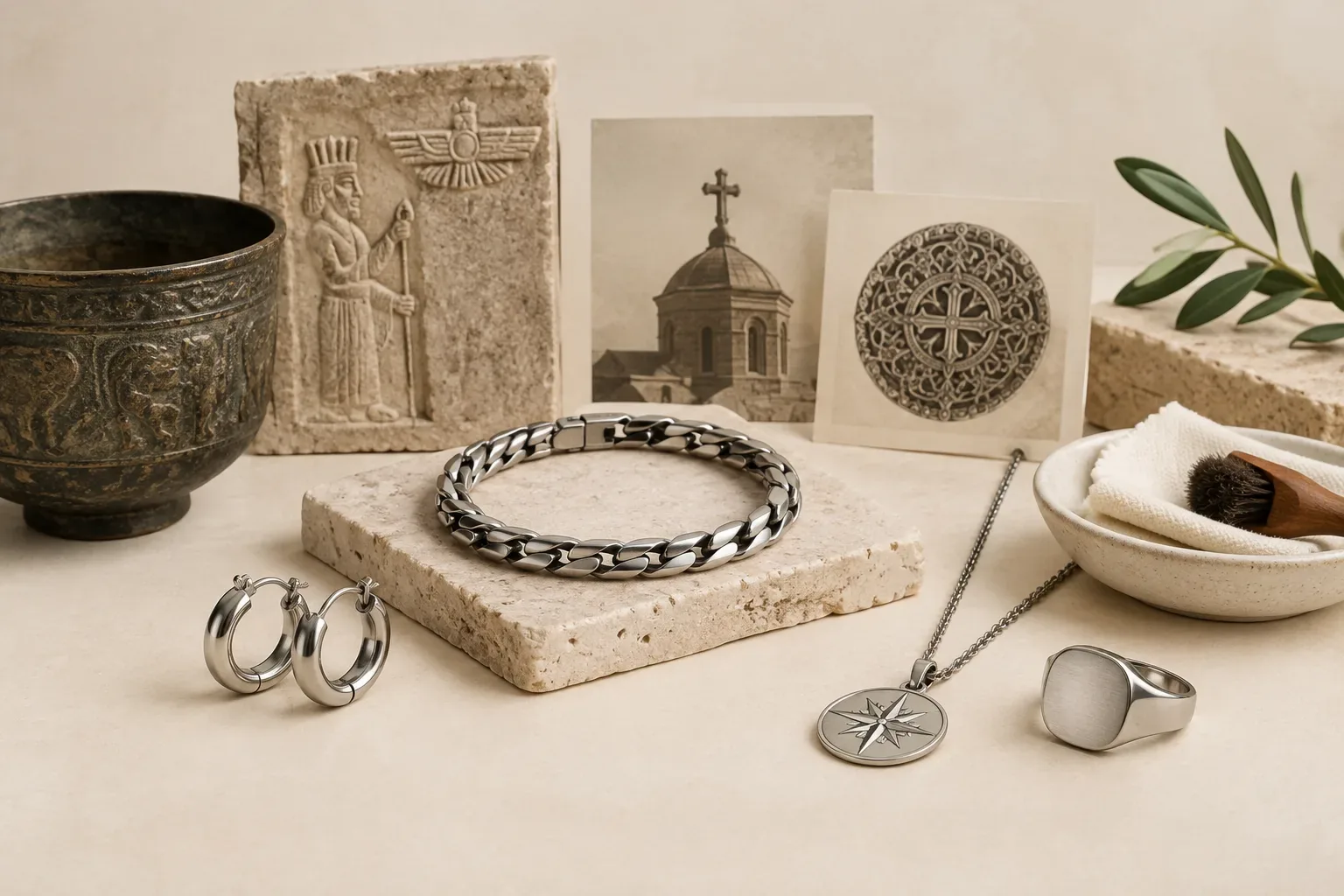
In contemporary jewellery, stainless steel commonly appears where designers want a cool, silvery finish combined with resistance to discoloration under normal wear. Designers use it for chains, rings, cuffs, pendants, and watch cases when they want a modern, industrial or minimalist look that does not rely on traditional precious metals.
Durability as a visible motif is often expressed through form and finish: chunky links, solid bands, brushed or polished surfaces, and streamlined modern silhouettes that signal utility and longevity. When gemstones or decorative elements are present, makers usually set or attach them in ways intended to withstand frequent wear, and consumers often choose stainless steel for pieces they plan to wear daily or in active contexts.
Material disclosures and what to ask sellers
Because modern materials and treatments affect both appearance and longevity, it is reasonable to ask sellers for clear, specific information about a piece. The Federal Trade Commission advises that sellers should disclose treatments, coatings, and whether a metal is an imitation or has been altered, because these factors change how a piece will age and how it should be cared for.
When assessing a stainless steel piece, ask whether the surface is solid stainless steel or whether it has any plating, PVD coating, or other finishes. Inquire about the maker’s stated grade or standard, what parts are solid metal versus hollow or filled, and whether any attached stones are natural, lab-grown, or simulated. Clear answers will help you judge expected durability and inform appropriate care steps.
Practical guidance for choosing and gifting
Match the metal to the recipient’s lifestyle. If the intended wearer is very active, works with their hands, or prefers low-maintenance pieces, stainless steel can be a practical choice because contemporary buyers commonly select it for everyday wear and its modern aesthetic. If the gift’s symbolic meaning relies on historical associations tied to gold or gemstones, consider whether that is important to the recipient, since stainless steel carries modern, rather than ancient, connotations.
Choose pieces from sellers who provide material details, construction photos, and care instructions. For ring purchases, confirm sizing policies and the construction of the band, because durability and comfort depend on how a ring is made as well as on the metal used. When giving stainless steel as a sentimental gift, make the intention explicit—engraving, included notes about durability, or pairing the piece with a traditional material may help bridge contemporary appearance with personal meaning.
Care: dealing with tarnish, wear, and routine maintenance
Although stainless steel is widely promoted as resistant to tarnish and corrosion under ordinary conditions, appearance can still change with abrasive wear, exposure to chemicals, or the presence of coatings that age differently from the base metal. Regular, gentle cleaning with mild soap and water, followed by thorough drying, removes oils and residues that accelerate wear. Avoid strong household chemicals and extended exposure to chlorinated water when possible.
If a piece has visible scratching from everyday use, a metal polisher designed for stainless steel or a jeweller’s refinishing service can often restore shine on polished surfaces; brushed or matte finishes are harder to renew without changing the look. When a surface coating or plating is involved, the seller’s instructions should determine appropriate cleaners and whether professional re-coating is available if the finish degrades over time.
Respectful cultural considerations
Remember that stainless steel is a modern material without a long track record of inherited ritual or religious meanings in most cultures. If you intend a piece to reflect cultural identity or spiritual significance, research whether the desired forms, symbols, or stones have established meanings in the relevant tradition and consider combining stainless steel with materials or symbols that are documented as meaningful for that culture or faith. Use the Victoria and Albert Museum’s accounts of jewelry history as a reminder that materials gain meaning through social context, not automatically through material alone.
When to consult a professional
If you are unsure about the authenticity of stones, the construction method of a piece, or whether a finish will hold up to the recipient’s lifestyle, consult a reputable jeweller or request formal condition and material information before purchase. For repairs, resizing, or refinishing, a trained professional can advise on safe methods for stainless steel and any attached elements such as gems or inlays.
Frequently asked questions
Does stainless steel tarnish?
Stainless steel is commonly described as resistant to tarnish compared with precious metals, but surface changes can occur from abrasion, chemicals, or coatings; for specifics on treated finishes, ask the seller and follow their care recommendations.
Can stainless steel cause allergic reactions?
Some people are sensitive to certain metal alloys; if you have metal allergies or sensitivities, request information from the seller about the alloy composition and any plating, and consider a trial period or a professional patch test for certainty.
How should I clean stainless steel jewelry at home?
Use a mild soap and lukewarm water, gently rub with a soft cloth or soft-bristled brush to remove oils and dirt, rinse thoroughly, and dry completely; avoid strong household chemicals and follow any specific instructions the maker provides for plated or coated surfaces.
Will gemstones set in stainless steel be secure?
Security of gemstones depends on the setting method and craftsmanship as much as on the metal; ask the seller about how stones are set, whether settings are reinforced for daily wear, and whether the piece is recommended for active use.
How can I tell if a piece is solid metal or plated?
Request explicit disclosure from the seller about construction and finishes; the Federal Trade Commission advises that sellers should disclose treatments and plating because these details affect appearance, care needs, and longevity.
Sources and further reading
- Bedazzled: A History of Jewellery — Victoria and Albert Museum
- An A-Z of Gemstones — Victoria and Albert Museum
- Buying Gemstones, Diamonds, and Pearls — Federal Trade Commission