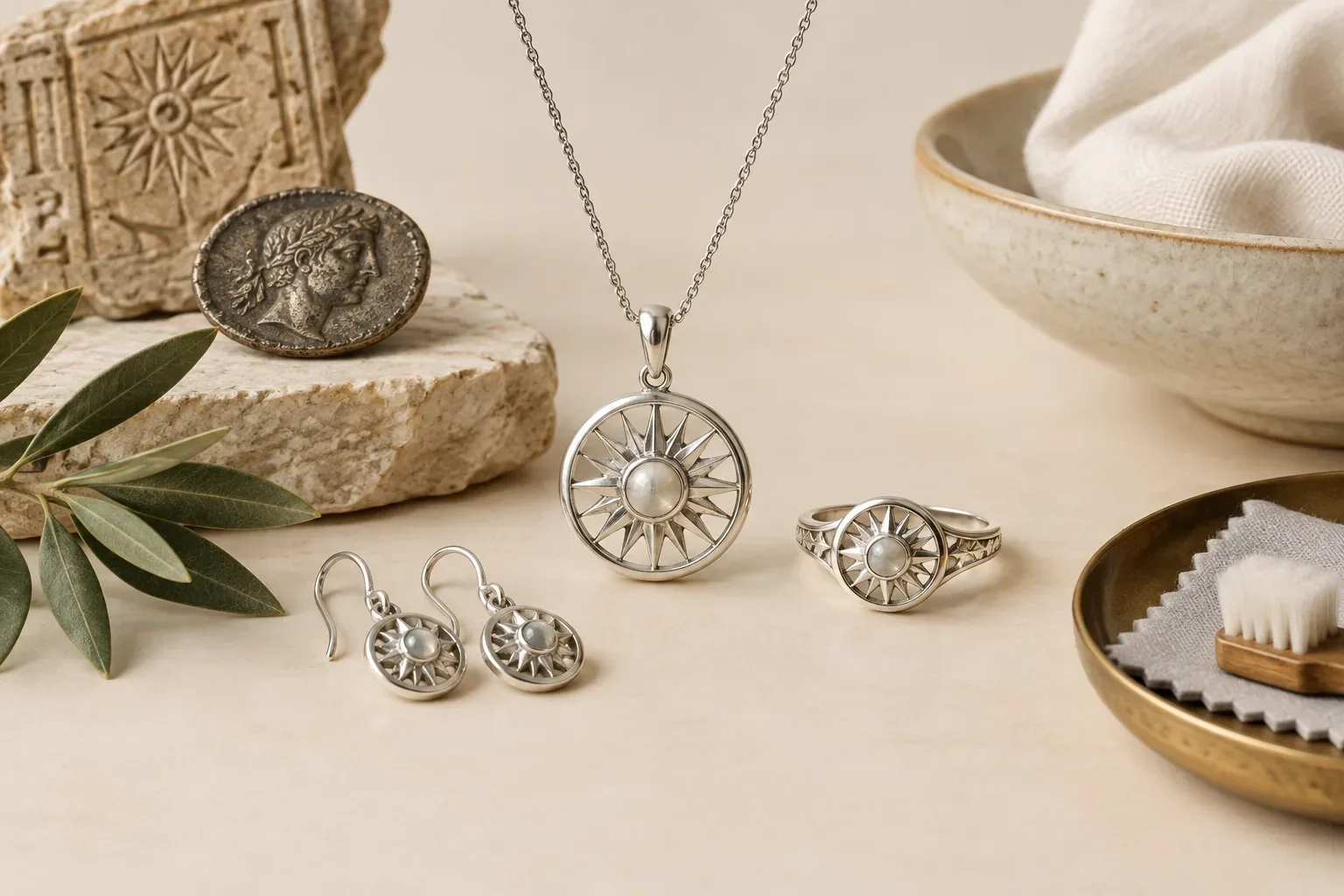
Meaning at a glance
Treat claims about argentium silver’s superior tarnish resistance and wear as modern material claims to be verified with maker disclosure; historically, silver’s durability and repairability have been valued across many cultures (Victoria and Albert Museum), and buyers should check hallmarks, ask sellers about treatments, and follow maker care instructions as recommended by consumer protection guidance (FTC).
What the historical record shows about silver and durability
Durability and the choice of metal are recurring themes in the documented history of jewelry. According to the Victoria and Albert Museum’s exhibition and materials on the history of jewellery, metals such as gold, silver and base metals were selected in different places and periods for a mixture of practical and social reasons: their longevity, ease of repair, and visual effect all shaped use and meaning.
In ancient Egypt and the Near East, for example, metalwork that lasted through handling and burial contexts was highly valued; in Greco-Roman contexts durable silver vessels and personal adornments were both practical and status-bearing. The V&A describes how Byzantine and medieval workshops favored techniques and alloys that allowed repair and refurbishment, because longevity extended the social and economic life of an object. In later European periods, including the 18th and 19th centuries, silversmithing and the visible finish of silver pieces continued to reflect changing tastes and technologies, while collectors and wearers still prized pieces that could be maintained and repaired rather than discarded.
Documented meanings versus modern interpretations
Documented historical meanings recorded by museum scholarship focus on the social uses and technical choices that made jewelry last long enough to be reused, inherited or displayed. The Victoria and Albert Museum’s historical narrative emphasises that jewelry functioned as status display, personal ornament, devotional object and material store of value; in those roles, durability mattered because it supported reuse, repair and transmission.
Modern interpretations and marketing messages are a separate layer. Contemporary terms and alloy names used by makers and retailers often serve to highlight perceived technical advantages such as reduced tarnish or improved hardness. Those modern marketing claims are not the same as the historically documented reasons societies selected silver; they are selling points for present-day consumers and should be treated as claims to be verified. The Federal Trade Commission advises consumers to look for clear disclosures about treatments, substitutes and claims when buying gemstones, diamonds, pearls or other materials, a principle that applies equally to modern metal alloys and finishes.
How the durability motif appears in jewelry design and gem setting
The concern for durability appears in many visible ways in jewelry across cultures: the choice of metal for settings, the use of protective bezels or prongs, and designs that ease repair and cleaning. The Victoria and Albert Museum’s resources on gemstones and jewellery document how makers chose particular settings and mountings to protect stones and to make maintenance feasible, which is one facet of a broader preoccupation with longevity.
Gemstones and settings also influence perceived durability. The V&A’s A–Z of Gemstones explains how some stones have been traditionally paired with protective settings because they are softer or more brittle, and how certain cuts and mountings became widespread in part because they better resisted everyday wear. In that sense, the motif of durability is a practical design principle: makers have combined metal choice, setting style and finish to produce pieces intended to stand up to use and to be serviceable when they need attention.
Assessing claims when choosing or gifting argentium-style silver jewelry
If durability is the reason you are considering a particular silver piece, start by asking the seller or maker for clear, specific information. Ask whether the item is a traditional sterling silver alloy, another named alloy, electroplated, plated over a base metal, or treated in some other way, and ask what hallmark or marking accompanies the piece. The Federal Trade Commission’s guidance for buying gemstones, diamonds and pearls stresses that sellers should disclose treatments and substitutions; similar transparency is equally important for metals and metal treatments.
Consider the recipient’s lifestyle and how the piece will be worn. A ring or bracelet that is subject to frequent knocks and exposure to water or chemicals will face different durability challenges than a pendant worn occasionally. When gifting, choose a style and construction that match how the recipient lives and works, and include care instructions and the maker’s disclosure as part of the gift so the receiver knows how to look after the piece.
For sentimentally intended gifts—heirloom-style pieces or items meant to be passed on—prefer constructions and settings that allow repair and resizing, and keep written documentation of maker disclosures, hallmarks and any warranties. Historical practice, as described by the Victoria and Albert Museum, shows that meaningful transmission of jewelry often depends on the piece being serviceable and documented.
Practical care and wear guidance
Follow the maker’s care instructions. Different alloys and surface finishes can require different cleaning and storage approaches, so the most reliable guidance comes from the person who made or sold the piece. If the seller does not provide clear instructions, ask for them before you buy.
Store jewelry in a dry, low-friction environment and consider keeping delicate pieces apart to avoid scratches. When a piece requires repair or adjustment, choose a jeweller experienced with the construction and finish of that item; historically, repairability was an important element of a piece’s long life, and modern repair keeps that tradition alive.
When assessing long-term durability, think beyond surface appearance. Regular inspection of settings, jump rings and clasps will help you spot wear early and arrange professional maintenance before a failure occurs. If a seller makes specific claims about superior tarnish resistance or hardness, request written confirmation and documentation from them; consumer-protection guidance indicates that sellers should be clear about treatments and material substitutions.
A closing note on cultural sensitivity and symbolism
When selecting silver jewelry for its symbolic meanings, differentiate between documented cultural practices and contemporary personal or commercial interpretations. Museum scholarship, such as that published by the Victoria and Albert Museum, records how jewelry functioned in particular cultures and periods; those contexts are not interchangeable with modern marketing narratives. If you are choosing a piece that references a specific cultural tradition, research that tradition and acknowledge its provenance rather than assuming a single, universal meaning.
In short: treat technical claims about durability as verifiable statements from makers; treat cultural meanings as historically grounded but context-specific; and treat care and selection as practical steps that preserve both the object and the relationship it represents.
Frequently asked questions
Does 'argentium' mean a silver alloy won’t tarnish at all?
No. Treat any claim that a named alloy will never tarnish as a marketing statement to be verified. Ask the maker or seller for written details about the alloy, finish and care requirements, and check for hallmarks or documentation. The Federal Trade Commission advises consumers to seek clear disclosures about materials and treatments.
How can I tell if a silver piece is solid silver, plated, or otherwise treated?
Ask the seller for explicit disclosure and look for any hallmarks or written provenance. The Federal Trade Commission emphasises that sellers should disclose treatments and substitutions. If in doubt, request a written description or an assay report from a reputable source.
Is silver jewelry always a good choice for an heirloom?
Historically, silver has often been used for objects intended to be repaired and passed down, as noted by the Victoria and Albert Museum. For a modern heirloom, choose constructions that can be repaired, keep documentation of maker disclosures and care, and select settings that protect gemstones and structural components.
What should I do if a seller won’t describe the alloy or treatments?
If a seller refuses to provide clear information about the metal, finish or treatments, consider that a red flag. Ask for written confirmation or a return policy and, if necessary, shop with a vendor who supplies transparent disclosures as recommended by consumer-protection guidance.
How should I store and maintain silver jewelry to prolong its life?
Follow the maker’s recommended care instructions. If none are provided, keep pieces dry and separated to reduce abrasion, arrange professional checks of settings periodically, and seek a jeweller experienced with the piece’s construction for any repairs. Avoid assuming that one cleaning method suits all alloys or finishes.
Sources and further reading
- Bedazzled: A History of Jewellery — Victoria and Albert Museum
- An A-Z of Gemstones — Victoria and Albert Museum
- Buying Gemstones, Diamonds, and Pearls — Federal Trade Commission