Meaning at a glance
This guide explains how to evaluate sterling silver jewelry for quality and price, outlines documented historical contexts from museum research, separates those histories from modern personal meanings, describes how motifs and gemstones appear in silver pieces, and gives practical selection and gifting advice.
Quick answer
A reliable sterling silver jewelry buying guide shows you how to verify material and maker information, judge workmanship, decide which motifs and gemstones suit the wearer and occasion, and understand documented historical contexts separately from later popular meanings; ask for clear hallmarks and disclosure of treatments or plating, compare workmanship and finish rather than price alone, and choose styles that match the recipient’s tastes and sensitivities.
What sellers mean by "sterling silver" and hallmarks
In trade and retail, "sterling silver" commonly refers to the standard silver alloy used for finished jewelry and is usually stamped by makers with a hallmark such as "sterling" or "925." When you follow a sterling silver jewelry buying guide, checking for a clear maker’s mark or hallmark is one of the simplest first steps to confirm that the piece is marketed as silver rather than a base metal with a silver-colored finish.
Because surface treatments, plating, and imitations exist, reputable sellers should disclose any non-silver core, plating, or treatments. The U.S. Federal Trade Commission advises buyers to ask sellers about treatments and imitations and to expect transparent disclosure when a material is enhanced, filled, plated, or otherwise altered.
Documented history and changing social contexts
Museum research shows that jewelry materials, techniques, and meanings shift by time and place. The Victoria and Albert Museum describes jewelry as an art form whose social role, materials, and decorative vocabulary have changed across periods and cultures, from personal adornment to status signaling to sentimental use. These documented trajectories help explain why similar silver forms reappear with different cultural meanings in later centuries.
Specific motifs, like lockets or sentimental symbols, can carry distinct histories in particular periods. For example, the V&A’s collection and writings trace how portrait lockets and other keepsake forms were prominent in certain historical contexts as ways to hold memory or status. Those museum-documented uses are not universal meanings; they are historically situated practices that later generations reinterpret.
Separating documented meanings from modern personal interpretation
When you read background on a motif or gemstone, distinguish what museums and historians have documented about past uses from contemporary, personal, or marketing-driven interpretations. A museum account can show how a design functioned in a particular time and culture; modern sellers and wearers may attach new symbolic or emotional meanings that reflect current tastes rather than historical practice.
For buyers and gifters, this distinction matters because it affects appropriateness and respect. If a motif was historically associated with a specific ritual or social role, learn that documented context before assuming it carries the same significance today. Conversely, many people now choose pieces for personal reasons unrelated to historical meanings, and those contemporary choices are valid as personal expression rather than fixed cultural facts.
How motifs, gemstones, and traditions appear in sterling silver jewelry
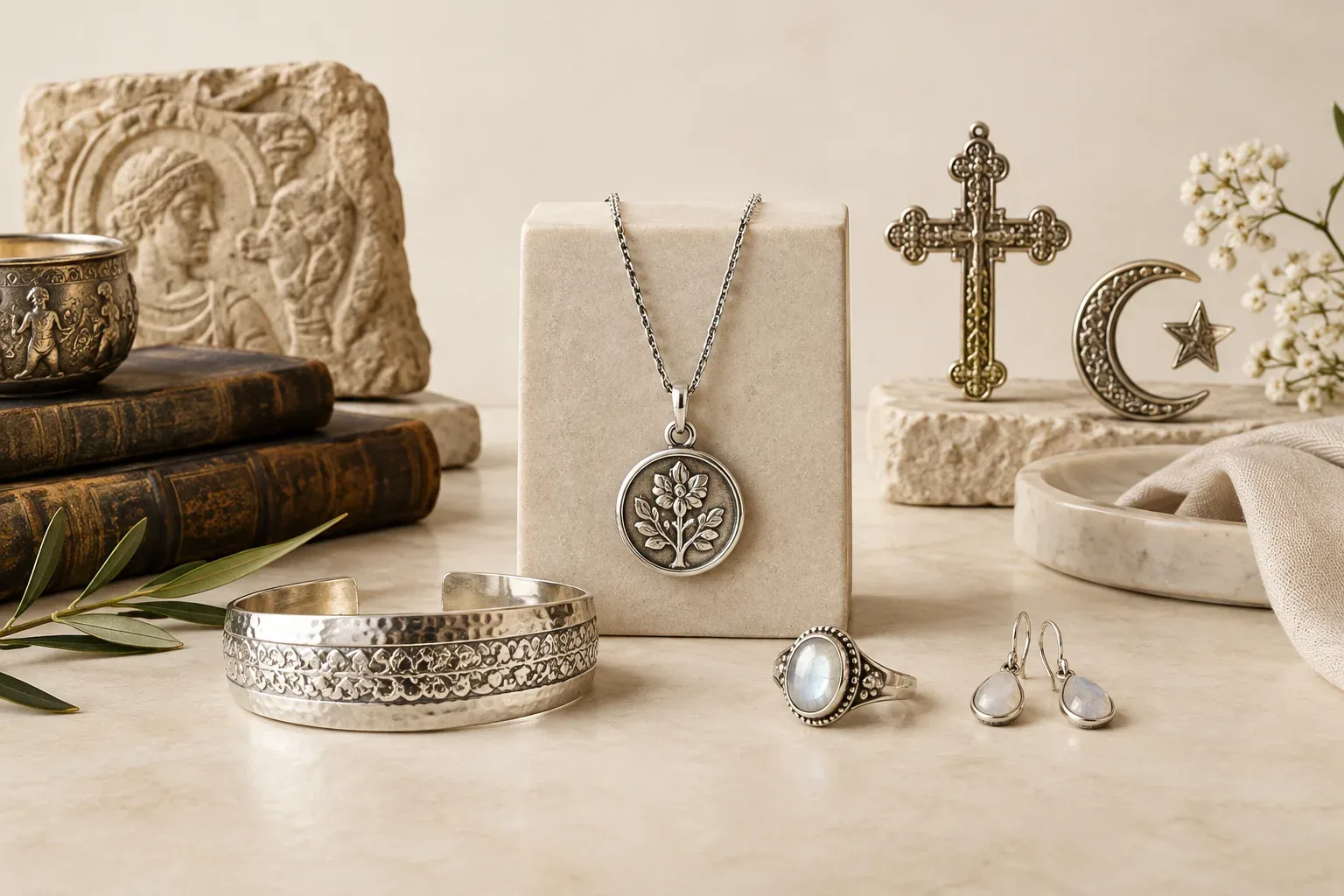
Motifs commonly rendered in silver range from geometric forms and floral ornament to figurative elements such as hearts and lockets. In silver jewelry, motifs can appear as surface engraving, casting, filigree, or as settings that frame a gemstone. The choice of technique influences the piece’s durability and price as much as the motif itself.
Gemstones set in silver have their own histories. The Victoria and Albert Museum’s A–Z of Gemstones explains how different gems were identified, valued, and used across periods. In sterling silver pieces, designers often use gemstones both for color contrast and symbolic reference. The same gem can appear as a cabochon, faceted stone, or bead, and the setting style—bezel, prong, or inlay—affects both appearance and security.
Assessing quality and price
A good buying guide emphasizes workmanship and transparency over price alone. Inspect joins, prongs, and closures: well-made sterling silver shows even soldering, secure settings, and a consistent finish. Heavier gauge silver and solid construction cost more, but a low price can also indicate plating over base metal or thinner, less durable work.
Ask the seller whether the piece is solid sterling, plated, or filled, and whether gemstones have been treated. The Federal Trade Commission expects that sellers disclose treatments and imitations; ask for written confirmation if you need it. Compare similar pieces from multiple sellers to get a sense of a fair price for the craftsmanship and materials offered rather than relying solely on brand name or discounting.
Best uses: when to choose sterling silver
Sterling silver is flexible across styles: it suits everyday chains and signet rings, midweight statement pieces, and decorative elements for formal wear. For daily-wear items such as simple chains, rings, and studs, prioritize solid construction and secure fastenings. For statement or occasional pieces, consider the visual impact of finish and stones and whether the wearer prefers a high-polish look or an intentionally aged or matte surface.
For heirloom or sentimental pieces, consider techniques and settings that favor longevity: closed-back bezels and secure soldered links are less likely to fail over decades than delicate openwork without reinforcement. If the recipient is known to react to certain metals, take that sensitivity into account before selecting sterling silver, and consider alternatives if necessary.
Care, treatments, and ethical considerations
Sterling silver naturally reacts with sulfur compounds in the air and can develop surface tarnish; regular gentle cleaning and proper storage reduce buildup. Many contemporary makers apply surface treatments or plating for a particular look or to reduce tarnish; these interventions should be disclosed to buyers because they change long-term wear characteristics and repairability.
From an ethical perspective, consider the maker’s transparency about sourcing and whether the silver is recycled or newly mined. While museum accounts focus on historical and stylistic context, modern buyers increasingly weigh environmental and social considerations alongside craftsmanship and design when choosing jewelry.
Practical selection and gifting guidance
Match the piece to the recipient’s lifestyle and preferences. If you are uncertain about style, choose classic shapes and moderate sizes that are easy to pair with other jewelry. When buying for someone who values historical forms, select pieces whose provenance or design can be documented or explained; museum-backed descriptions of historical motifs can help you choose something appropriate and respectful.
When gifting, include care instructions and any documentation of material and treatments. If the design has specific cultural or ritual meaning, do brief research before gifting and, when appropriate, mention that you are aware of the documented history rather than making assumptions about its current significance. For higher-value purchases, ask about return or resizing policies so the recipient can make final adjustments if needed.
Closing practical checklist
Before you buy, verify hallmarking or maker marks, ask about plating or treatments, examine workmanship on joins and settings, compare prices for similar craftsmanship, and consider the recipient’s wear habits and sensitivities. Use museum resources to understand historical contexts and the FTC’s guidance on material disclosure when you need clarity from sellers. These steps help you make an informed, respectful, and durable choice.
Frequently asked questions
How can I tell if a piece is solid sterling silver or just silver-plated?
Look for clear hallmarks or maker’s marks such as "sterling" or "925," inspect weight and construction for signs of a solid silver core, and ask the seller directly whether the item is plated, filled, or solid. The Federal Trade Commission expects sellers to disclose treatments and imitations, so request written confirmation if the material is important to you.
Do gemstones set in silver require different care than in gold?
Care depends primarily on the gemstone and the setting rather than the metal. Some softer or porous gems need more protection from abrasion and chemicals, and settings should be chosen to secure the stone type. For historical and identification context on different gems, consult museum resources such as the Victoria and Albert Museum’s A–Z of Gemstones.
Is sterling silver appropriate for everyday wear?
Yes, sterling silver is commonly used for everyday jewelry. For daily wear pieces, prioritize solid construction, secure fastenings, and finishes that suit the wearer’s maintenance routine. Keep in mind that silver can tarnish over time and may require occasional cleaning.
How important is documented history when choosing a motif?
Documented history adds context and respect for a motif’s original uses, but it does not determine an individual’s personal meaning. Use museum sources to learn historical associations and then decide whether those documented contexts make a motif suitable for your use or gifting situation.
What should I ask a seller before buying a vintage or antique silver piece?
Ask about hallmarks and provenance, any known repairs or restorations, whether gemstones have been treated, and return or authentication policies. If the piece is marketed with a historical claim, request documentation or a conservator’s report when available, and consult museum resources for comparative context.
Sources and further reading
- Bedazzled: A History of Jewellery — Victoria and Albert Museum
- An A-Z of Gemstones — Victoria and Albert Museum
- Buying Gemstones, Diamonds, and Pearls — Federal Trade Commission