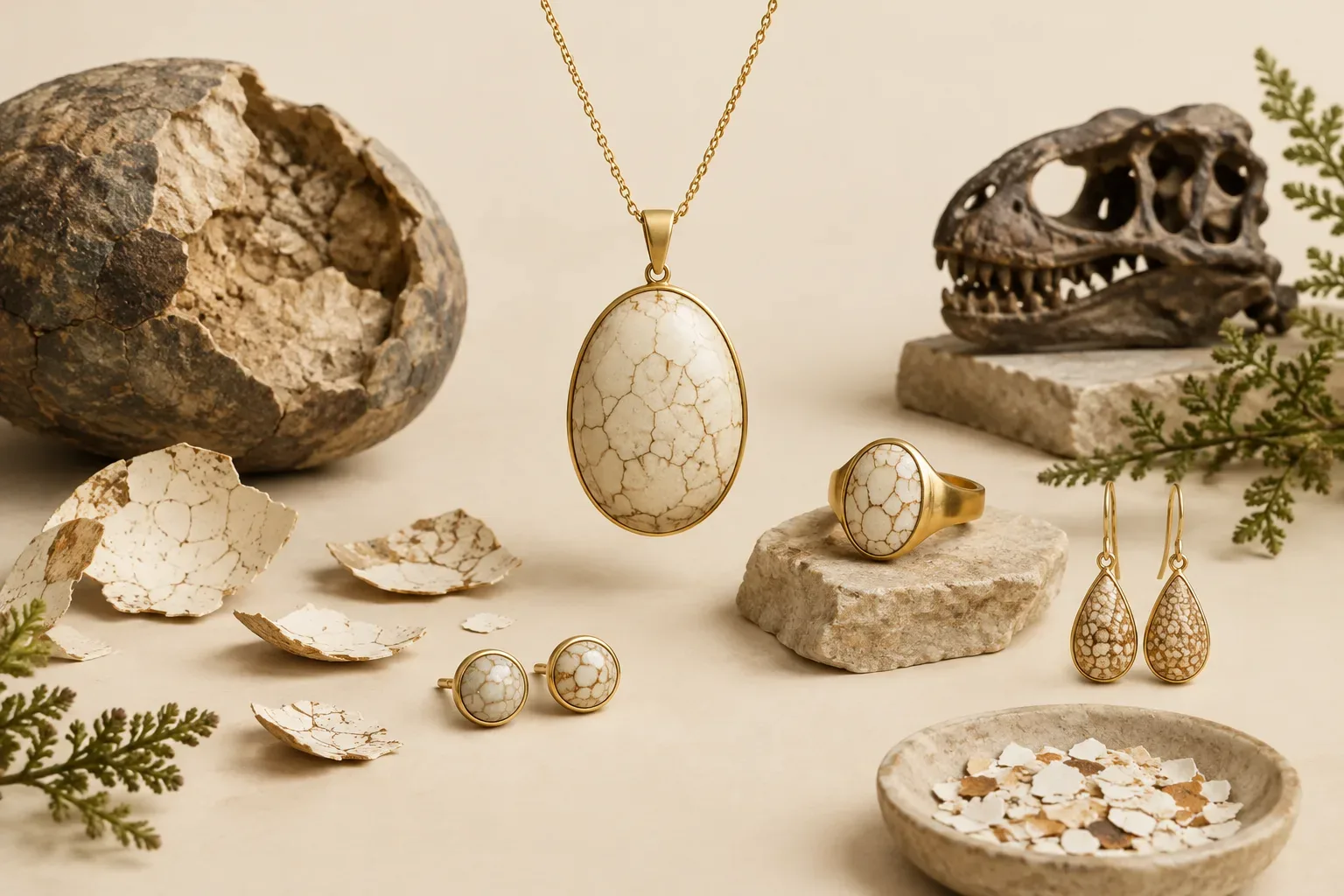
Meaning at a glance
Short answer: Museum surveys of jewellery history do not document a historic cultural or religious meaning attached specifically to 'dinosaur eggshell' as a motif. Today the motif appears in contemporary jewellery as fossil fragments, fossil-inspired inlay or carved pieces and usually carries personal or modern symbolic meanings rather than established traditional ones. Verify provenance and any treatments before buying and apply respectful selection and gifting practices.
Quick answer
There is no well‑documented ancient cultural or religious meaning attached to a specific 'dinosaur eggshell' jewellery motif in the published museum literature; references that survey jewellery history emphasize changing materials and motifs over time but do not record dinosaur eggshell as an historical emblem. In modern jewellery the motif appears as fossil fragments, fossil-inspired inlay, or decorative carving and tends to carry contemporary, personal, or commercial meanings rather than a single historic symbolism. For responsible wear and gifting, treat it as a modern fossil material: ask for provenance and treatment disclosure and consider the ethical and educational context of the piece.
What the historical record actually shows
Surveys of jewellery history underline that materials and motifs have changed across periods and cultures, and that meanings attached to particular designs depend on social, religious, and economic context. The Victoria and Albert Museum’s overview of jewellery history highlights this shifting social context and the ways makers have used new materials at different times, but that work does not identify dinosaur eggshell as a historically documented motif in ancient, medieval, or pre‑Victorian collections.
That absence in museum surveys is important: decorative use of fossils and unusual natural materials becomes more visible with nineteenth‑ and twentieth‑century collecting and the rise of natural history as a public interest, but specific historic cultures (for example, Classical Mediterranean, medieval European, or Qing dynasty China) are not recorded in the cited museum literature as using dinosaur eggshell as a meaningful symbol in jewellery. In short, established historic meanings for this specific material are not supported by the museum source.
Separate documented history from modern interpretation
When researching any jewellery symbol it is essential to separate what is documented about past use from how people interpret the symbol today. The Victoria and Albert Museum’s resources emphasize that motifs acquire meaning from their cultural moment; contemporary meaning can be valid and powerful, but modern symbolism should not be conflated with historical fact.
For dinosaur eggshell jewellery this means: if a maker or seller presents an item as carrying an ancient cultural or religious meaning because it is made from fossilized eggshell, request evidence. If no specific historical tradition is cited in museum or archaeological literature, treat claims of ancient symbolic meaning as modern interpretations or marketing language rather than documented history.
How the motif and material appear in jewellery today
Contemporary jewellery makers may use actual fossil fragments, polished shell or mineral inlays, or creative designs that reference the shape and texture of eggshell. These approaches include setting a cleaned and stabilized fossil fragment in a bezel, creating inlays from small pieces of fossil material in rings or pendants, using cast or carved motifs that imitate eggshell texture, or combining the material with gemstones and metals as a fossil accent.
Gemstone and material guides from the Victoria and Albert Museum highlight how makers historically and today select, cut, and set a range of materials for decorative effect. Whether a piece is a true fossil fragment, an opalized or mineralized piece, or a contemporary imitation affects its appearance, durability, and value. In contemporary practice sellers should disclose whether a specimen is treated, stabilized, or replicated in any way.
Verifying authenticity and disclosure: what to ask for
Before purchasing, ask the seller to describe the material precisely, including whether it is original fossilized eggshell, a cast or synthetic replica, or a stabilized natural material. The Federal Trade Commission’s guidance for buyers of gemstones, diamonds, and pearls stresses the importance of disclosure about treatments, enhancements, and imitations; similar standards apply when buying fossil or novelty materials in jewellery.
Request provenance information where available, such as the geological or collection source, any testing or identification documents, and written statements about treatments (for example, stabilization with resin or dyes). If a seller asserts a historical connection or spiritual significance, ask what documentation supports that assertion and treat answers that lack independent evidence as modern interpretation or marketing.
Respectful selection and gifting guidance
Treat dinosaur eggshell jewellery primarily as a contemporary design choice unless a seller can document a historical tradition tied to the specific piece. Consider the recipient’s interests: a paleontology enthusiast may appreciate an authenticated fossil fragment and explanatory provenance, while someone who values symbolism may prefer a piece accompanied by a clear statement of modern meaning rather than a claimed ancient origin.
Be mindful of conservation and cultural sensitivity. If a piece is presented as coming from a protected site or as part of an archaeological context, ask whether removal and sale were lawful and ethical. When gifting, include any documentation about material identification and treatments, and if the donor hopes to convey an idea (renewal, origins, resilience, scientific curiosity, etc.), explain that the symbolism is contemporary and personal rather than historically universal.
Care, value, and long‑term considerations
Because materials marketed as 'eggshell' or fossil fragments may be fragile or treated, ask about recommended care and whether the piece requires special handling, cleaning, or storage. Sellers who specialize in fossil jewellery or gemstones should be able to explain appropriate care for the specific material they supply.
Finally, if resale value matters, obtain documentation about authenticity and any treatments. The FTC advises buyers to get clear information about enhancements and origin when purchasing gemstones and comparable materials; the same principle helps preserve value and informs future owners about any conservation needs.
Frequently asked questions
Does dinosaur eggshell jewellery have an ancient cultural meaning?
Museum surveys of jewellery history do not record a historic cultural or religious meaning specifically associated with dinosaur eggshell as a motif. Claims of ancient symbolism should be supported by independent archaeological or museum evidence; otherwise treat them as modern interpretations.
How can I tell if a piece contains real fossilized eggshell?
Ask the seller for detailed material identification, provenance, and any testing documentation. Sellers should disclose whether the material is an original fossil, stabilized or treated, or a synthetic replica. Use the same scrutiny recommended for gemstones and fossils: request written descriptions and, when appropriate, a report from a qualified identifier.
What should I ask about treatments and enhancements?
Request clear disclosure of any treatments, stabilizing resins, dyes, or coating used on the material. The Federal Trade Commission recommends buyers get full information about enhancements and imitations when purchasing gemstones; apply the same questions to fossil or novelty materials in jewellery.
Is it respectful to gift dinosaur eggshell jewellery?
Yes, if you choose the piece thoughtfully. Prefer authenticated material with lawful provenance, include documentation for the recipient, and be transparent about whether any symbolic meaning you attach is personal rather than historically documented. For recipients interested in science or natural history, a verified fossil piece with provenance can be especially meaningful.
Where can I research claims about material or motif history?
Begin with museum resources and established gemological references. The Victoria and Albert Museum offers accessible context on jewellery history and gemstones, and government consumer guidance like the Federal Trade Commission’s advice on buying gemstones explains disclosure expectations for sellers.
Sources and further reading
- Bedazzled: A History of Jewellery — Victoria and Albert Museum
- An A-Z of Gemstones — Victoria and Albert Museum
- Buying Gemstones, Diamonds, and Pearls — Federal Trade Commission