Meaning at a glance
This guide explains the documented history and changing contexts of fossil shell motifs in jewelry, separates historical evidence from modern interpretations, outlines how fossil shells appear and are treated in contemporary pieces, and gives practical advice for choosing, authenticating, and caring for fossil shell jewelry.
What the historical evidence shows
Museum research and exhibition work collected by the Victoria and Albert Museum (V&A) documents the use of shells and shell carving across multiple historical periods and styles. The V&A notes that shell-based materials and motifs appear in ancient personal ornament, in the classical traditions that inspired later European revivals, and prominently in 19th-century fashion where carved shell cameos enjoyed renewed popularity. These pieces were made and worn in materially and socially different ways depending on era and place, and the V&A places those changes in social context rather than treating any single meaning as fixed.
Because the V&A presents jewelry as a continuously changing social practice, it is safest to treat claims about meaning with reference to period and culture. For example, portrait cameos carved from shells in the 18th and 19th centuries are documented as fashionable objects tied to classical taste and sentiment in Europe, while earlier uses of shells in other regions are part of separate material and symbolic systems. The V&A emphasizes change over time: the same material — a shell or a fossilized shell — can function as trade ornament, status display, souvenir, or sentimental object depending on precise historical circumstances.
Documented historical meanings versus modern interpretations
Documented historical meanings are tied to specific cultural practices and should be cited accordingly. Where museums like the V&A record a meaning, it is tied to a period, a social group, or a documented use. For example, carved shell cameos in Victorian Britain are documented within that era's tastes for classical imagery and mourning sentiment; that is a contextual, historical claim rather than a universal symbolic fact.
Modern personal or popular interpretations — such as ideas that fossil shells always symbolize healing, ocean spirituality, or environmental values — are contemporary attributions and vary between individuals and communities. These modern meanings are valid as personal or cultural expressions, but they are not universal or intrinsic to the material. Treat them as buyer preferences rather than historical certainties.
How fossil shells and related motifs appear in jewelry
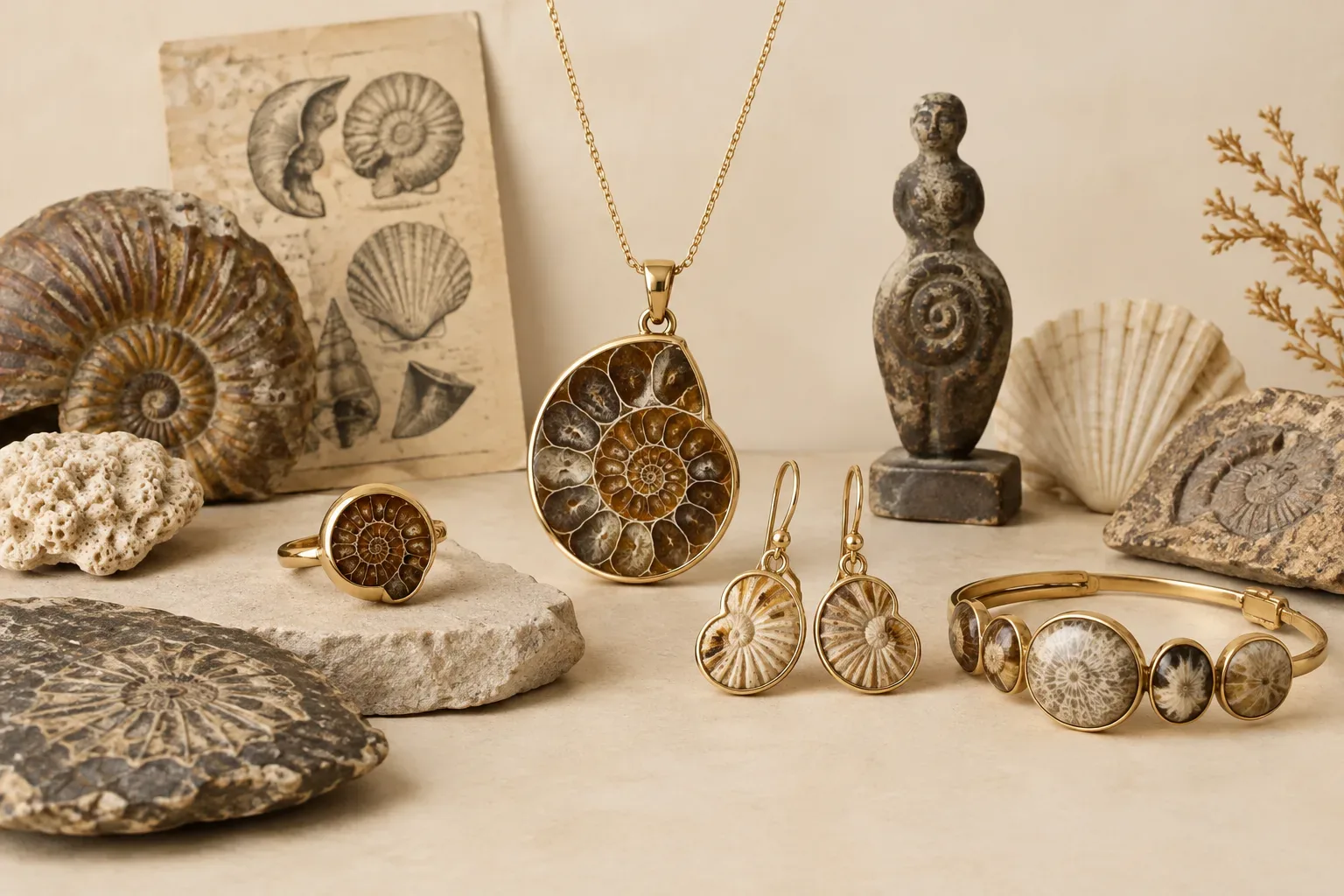
Fossil shells enter jewelry in several recognizable ways. Carved shell cameos use the layered structure of marine shells to create low- or high-relief portraits and scenes. Fossilized shells — including small ammonites or other shelly fossils — are set as cabochons or pendants and may be polished to reveal internal structure. Shells and fossil shell fragments are also used as beads, in inlay work, or as components of composite pieces that combine shell with metals, resins, or other stones.
Contemporary craft and commercial pieces may include untreated natural shell, shells stabilized with adhesives or resin, dyed shells, or entirely synthetic imitations such as molded plastics or glass. Some items described as "fossil" may be naturalized or altered to improve durability or appearance; others are genuine fossil material left intentionally unmodified. The visual and tactile differences can be subtle, so buyer inquiry is important.
Authenticity, treatment, and what to ask sellers
Start any purchase by asking for clear, written information about the piece. The U.S. Federal Trade Commission (FTC) recommends that sellers disclose material treatments and whether an item is an imitation or has been altered. Ask whether the shell is recent or fossilized, whether it has been dyed, stabilized with resin, backed with a filler, or combined with non-original materials.
Request provenance where available: a reputable dealer can provide a history of the item, previous ownership, or a description of how the material was sourced and worked. For higher-value items, ask whether the seller can provide third-party documentation or photographs taken before treatment. If a seller resists clear answers or uses vague language, consider that a red flag.
Look for objective clues in the piece itself. Carved cameos made from shell often show fine growth lines and a layered color structure that reflects natural shell formation. Fossil shells typically have surface textures and patterns that differ from molded plastic. However, visual inspection alone can be unreliable; when in doubt, favor dealers with return policies and written representations, and consider third-party appraisal for important purchases.
Practical selection and respectful gifting guidance
When selecting fossil shell jewelry as a gift, first consider the recipient's style and values. Choose a form and setting that match how they wear jewelry: a modest pendant for everyday wear, a sturdier bezel setting for pieces worn daily, or a framed cameo for those who prefer vintage aesthetics. Keep durability in mind: thin shell cameos and delicate fossil pieces are more fragile than solid metal or harder gemstones.
Be mindful of cultural meanings. Some shell motifs are closely associated with particular communities or religious practices. If you are gifting a piece with a clear cultural origin, learn about its significance before presenting it. The internal resource "How to Research the Meaning of a Jewelry Symbol" can help you approach this respectfully and accurately.
For gifts intended as heirlooms or sentimental objects, document what you know: note whether the item is fossil, stabilized, or dyed, and keep any seller receipts or lab reports together with the piece. A small written label with provenance and care instructions increases the object's future value for family members.
Care and maintenance for fossil shell jewelry
Treat shell and fossil shell jewelry gently. Clean pieces with a soft, dry cloth; if necessary use a slightly damp cloth and mild soap, then dry thoroughly. Avoid ultrasonic cleaners, steam cleaning, and harsh chemicals, as these can weaken shells, dissolve adhesives, or affect dyed surfaces.
Store fossil shell jewelry separately from harder stones and metals to prevent scratches. Keep items in a stable environment away from prolonged sunlight or extreme humidity, both of which can cause organic materials to discolor or the adhesives used in stabilized pieces to fail. For pieces set in metal, periodically check settings for looseness and have a professional jeweler perform necessary repairs using conservation-minded methods.
When to seek professional help
If you suspect a piece has been heavily treated, if you plan to insure or resell a high-value item, or if you simply want a definitive identification, consult a qualified gemmologist or an independent appraiser. They can test for stabilization resins, dyes, and synthetic substitutes, and provide written assessments. For high-value purchases insist on documentation before completing a transaction.
Final thoughts
Fossil shell jewelry carries layered meanings: documented historical uses are best read against specific periods and cultures as recorded by museum research such as that collected by the Victoria and Albert Museum, while many modern meanings are personal or stylistic choices. Use the FTC's guidance on seller disclosure to ensure you know what you are buying. Choose pieces that fit the wearer’s taste and lifestyle, ask clear questions about treatment and provenance, and care for fossil shell jewelry with gentle, conservation-minded practices.
Frequently asked questions
How can I tell if a shell piece is genuinely fossilized or a modern shell?
Visually, fossilized shells often show different surface textures and mineralization than recent shell material, but visual inspection alone is not definitive. Ask the seller for written provenance and disclosure of treatments, and consider independent appraisal if identification matters for value.
Are fossil shells commonly treated or dyed?
Yes. Sellers may stabilize shells with resin, back thin cameos with filler, or dye shells to enhance color. The Federal Trade Commission advises that such treatments and imitations should be disclosed to buyers, so request clear written information from the seller.
What should I ask the seller before buying fossil shell jewelry?
Ask whether the item is fossil or recent shell, whether it has been dyed, stabilized, filled, or backed with adhesive or resin, and whether the seller provides provenance or a return policy. For high-value pieces request third-party documentation or appraisal.
How do I clean and store fossil shell jewelry?
Clean gently with a soft dry or slightly damp cloth and mild soap when needed. Avoid ultrasonic cleaners, steam, and harsh chemicals. Store pieces separately from harder stones and metals to prevent scratches and keep them away from strong sunlight and extremes of humidity.
Is it appropriate to wear or gift shell motifs from another culture?
Because shells and shell motifs can have particular cultural meanings, research the specific motif and context before gifting. If a piece has a clear cultural origin, consider its significance and approach gifting with respect and understanding.
When should I get a professional appraisal?
If you believe the piece has significant monetary or historical value, if you plan to insure it, or if the seller cannot provide clear documentation, a qualified appraiser or gemmologist can test and certify the material.
Sources and further reading
- Bedazzled: A History of Jewellery — Victoria and Albert Museum
- An A-Z of Gemstones — Victoria and Albert Museum
- Buying Gemstones, Diamonds, and Pearls — Federal Trade Commission