Meaning at a glance
This copal jewelry buying guide explains documented history and changing contexts of copal and other resins in jewelry (based on museum scholarship), separates historic cultural uses from modern personal meanings, identifies how copal is used in contemporary pieces, describes how to confirm authenticity and treatment disclosures, and gives practical, respectful guidance for choosing, gifting, and caring for copal jewelry.
What copal is and how it appears in jewelry
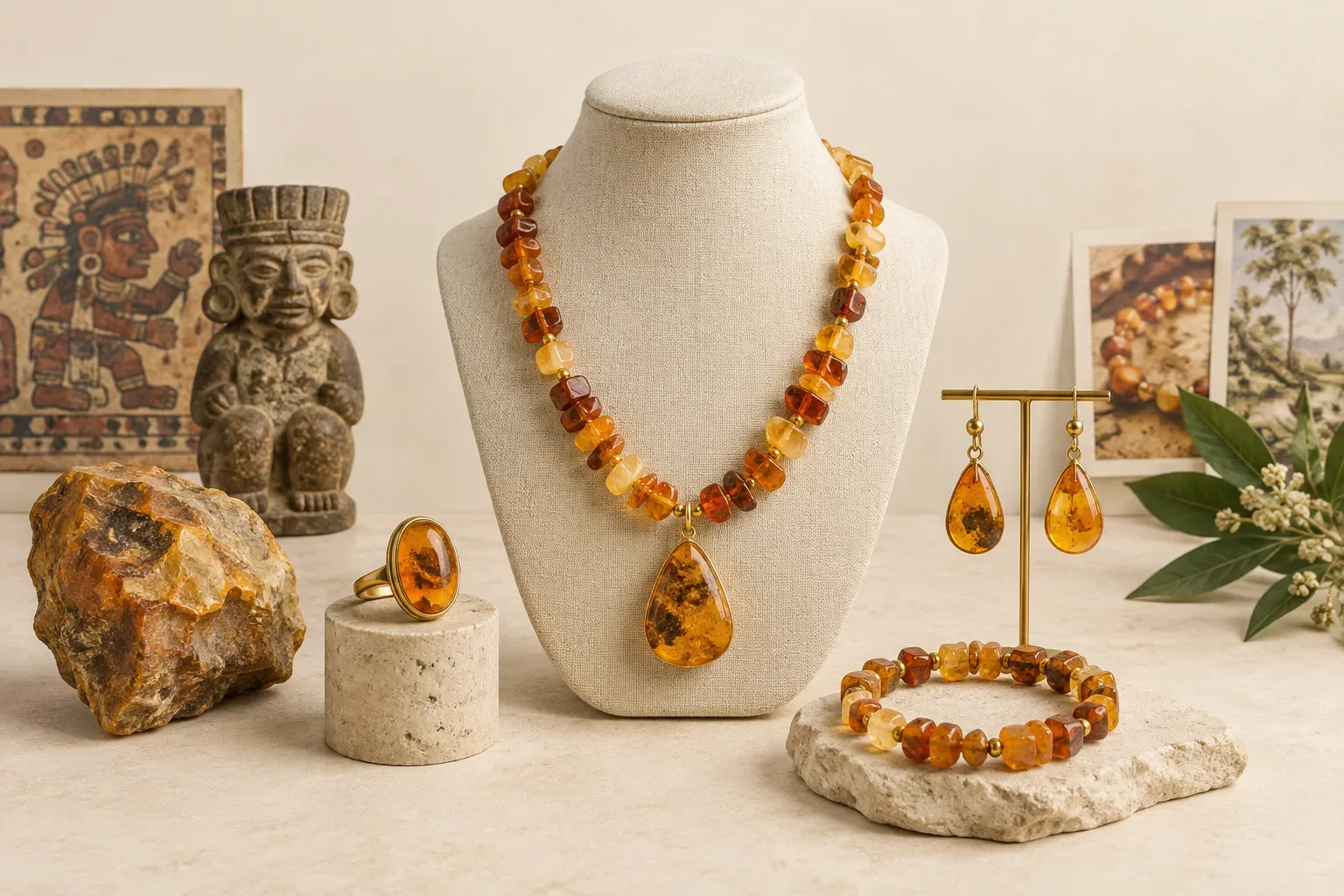
In jewellery contexts, copal is a natural plant resin used like a gemstone: cut into beads or cabochons, carved into pendants, or set into metal mounts. Museums and gem reference guides categorize copal among organic gem materials alongside amber and other fossilized or semi-fossilized resins; the Victoria and Albert Museum groups resins within its broader A–Z discussions of gemstones and objects made from organic materials, noting their long use in ornament and personal adornment.
Contemporary makers use copal in many formats. You will commonly see polished beads strung for necklaces, small carved amulets and pendants, inlaid accents, and modern statement pieces combining copal with silver, gold vermeil, or mixed media. Because copal is typically softer and sometimes less chemically stable than fully fossilized amber, many designers mount it so that edging and surfaces are protected.
Documented historical evidence: where and when resins were used
Museum scholarship records that natural resins and amber have been used in personal ornament from prehistoric times through historic periods. The Victoria and Albert Museum presents resins as materials that appear in archaeological and historic collections and discusses how they were valued, traded, and worked across different eras. V&A materials emphasize changing social contexts for jewellery—what materials signified, how technologies evolved, and how meanings shifted as uses and fashions changed.
Because copal is one member of a broader family of tree resins used over millennia, evidence for resin use appears across multiple cultures and periods in museum collections. When a museum catalogue attributes an object to a particular culture or period, that identification is based on provenance, style, and material analysis. For buyers, the V&A’s documented object histories are a reminder to ask sellers for provenance and to treat attributions to specific cultures or ritual uses with care unless they are well documented.
Separating documented cultural meanings from modern interpretations
Historical or ritual meanings attributed to a piece should be traced to documentation about that culture and that object. The Victoria and Albert Museum’s work illustrates how meanings change: an ornament that once had clearly recorded ritual or social functions can later be reinterpreted as a fashion item or a souvenir. A museum’s catalogue entry or interpretive label is the proper place to find documentation that links a material or motif to a specific belief or practice.
Contemporary sellers and wearers also attach modern personal or wellness meanings to copal—claims about emotional benefits, energetic properties, or spiritual effects are modern interpretations rather than universal historical facts. Treat such assertions as personal or commercial interpretations unless supported by direct cultural or archival evidence. If a seller links a design to a specific cultural or religious practice, request documentation or a clear provenance statement before accepting that connection as historical fact.
Authenticity, treatments, and buyer protections
Copal, like other gem and organic materials, can be presented in natural, treated, or imitation forms. The Federal Trade Commission’s consumer guidance on buying gemstones emphasizes that treatments, enhancements, and imitations should be disclosed to buyers and that consumers should seek clear information from sellers. Follow the FTC’s advice by asking directly whether a piece is natural copal, treated copal, stabilized, dyed, or a resin imitation.
Ask for provenance (where the material was sourced), any laboratory reports or reputable seller certificates, and a written statement of treatments. Reputable sellers will describe whether a material has been heat-treated, stabilized with polymers, dyed, or otherwise altered. If a seller cannot or will not answer straightforward questions about material identity and treatment, consider walking away or buying from a retailer who provides better documentation.
How to evaluate copal pieces when buying
Prefer sellers who provide clear photographs from multiple angles, a written description that states 'copal' rather than generic 'resin' when appropriate, and documented policies on returns and authenticity. Where available, request a lab report or independent verification for high-value pieces, and ask about the setting: a bezel or protective mounting will better preserve a softer resin than an exposed prong setting.
Consider practical durability. Copal is generally softer and less stable than highly fossilized amber, so examine how it is set, whether edges are protected, and whether the finish looks even. If you plan to wear copal daily, select designs that minimise abrasion and exposure to chemicals. If buying an antique or historically attributed piece, ask for the object’s provenance and any conservation history; for valuable historical pieces, consult a conservator or a museum professional before purchase.
Respectful selection and gifting guidance
When a design references a specific cultural motif or tradition, research that motif before gifting. The Victoria and Albert Museum’s historical approach shows why this matters: meanings change depending on context, and an object with sacred or community-specific significance should not be treated as a casual fashion token. If the intended recipient has ties to the culture that uses that motif, ask them or their community representatives about acceptability and significance.
Choose gifts with transparency and ethics in mind. Prefer pieces that declare material sourcing and treatment, and consider makers who pay fair prices to source communities. If a piece is presented as having ritual or ancestral significance, ask for credible provenance and think twice about gifting it unless you are sure it is appropriate. For general-purpose gifts, pick designs that reflect the recipient’s tastes and lifestyle: for someone active, choose a protected setting; for someone who values historic pieces, look for documented provenance and conservation-ready mounting.
Caring for copal jewelry
Handle copal as you would other soft organic gem materials: avoid prolonged exposure to heat, strong sunlight, or harsh chemicals. Clean gently with a soft, dry or slightly damp cloth and avoid ultrasonic cleaners and steamers for pieces you suspect may be antique or treated. When in doubt for a valuable or antique item, consult the seller’s care instructions or a qualified conservator.
Store copal away from harder gemstones and metals that might abrade it. Keep pieces in separate soft pouches or lined boxes. For long-term preservation of historically important objects, museum practice is to document condition and limit handling; for personal jewelry, regular gentle inspection and conservative cleaning will extend the life of copal pieces.
Final checklist for buyers
Before you buy: ask the seller to state clearly whether the item is natural copal, treated copal, or an imitation; request provenance information and any available lab reports; examine how the copal is set and whether the setting protects the material; confirm return and refund policies; and treat cultural attributions with care unless well documented.
If you own or wear copal: keep it away from heat and chemicals, clean gently, store it separately, and consult specialists for valuable or historically significant pieces. Following museum-led context and federal consumer-protection guidance will help you buy copal jewellery with more confidence and respect for its varied histories.
Frequently asked questions
How can I tell copal from amber?
Copal and amber are related materials but differ in age and hardness. For reliable identification, request documentation from the seller or an independent lab report; museums and gem references classify them differently, so documentation and provenance are the safest way to confirm identity.
Should sellers disclose treatments and imitations?
Yes. The Federal Trade Commission advises that treatments, enhancements, and imitations should be disclosed to consumers. Ask the seller whether the piece is natural copal, treated, stabilized, dyed, or an imitation and request that disclosures be in writing.
Is copal suitable for everyday wear?
Many copal pieces are wearable as daily jewelry, but copal is often softer than fossilized resins and can be more sensitive to heat, chemicals, and abrasion. Choose protected settings for daily wear and follow conservative care recommendations.
How should I clean and store copal jewelry?
Clean gently with a soft, dry or slightly damp cloth and avoid aggressive cleaners. Store copal pieces separately in soft pouches or lined boxes to prevent abrasion, and avoid prolonged exposure to strong sunlight or heat.
What should I do if a seller claims cultural or ritual significance for a piece?
Ask for documentation or provenance. Museum scholarship shows that meanings change with context, so verify claims before accepting them as historical fact. If an item is presented as sacred or community-specific, consider whether gifting or wearing it is appropriate and respectful.
Sources and further reading
- Bedazzled: A History of Jewellery — Victoria and Albert Museum
- An A-Z of Gemstones — Victoria and Albert Museum
- Buying Gemstones, Diamonds, and Pearls — Federal Trade Commission