Meaning at a glance
This guide explains what museum scholarship documents about ivory in jewellery, separates historic uses and meanings from modern interpretations, and gives practical, FTC-backed guidance on authenticity checks, treatment disclosure, selection, gifting, and care for mammoth ivory jewellery.
What the historical evidence shows — and what it does not
Publicly available museum surveys of jewellery history emphasise continuity and change: objects made from bone, ivory and other organic materials appear across prehistoric, ancient, medieval and modern contexts, and their social meanings shift with time and place. The Victoria and Albert Museum (V&A) frames jewellery as a material practice that reflects social status, technological skill and changing aesthetic tastes across periods rather than a single, fixed symbolism.
Museum collections and exhibitions document carved and worked ivory items in archaeological and historic contexts, but the archaeological record and museum interpretation are careful to attribute materials and meanings to specific cultures and periods rather than to make universal claims. In other words, a carved ivory bead found in a prehistoric context and an ivory inlay in a later courtly piece belong to different cultural histories and should be discussed separately.
Contemporary use of fossil or "mammoth" ivory in jewellery is primarily a modern phenomenon in the marketplace and conservation fields. While museums catalogue and interpret historical ivory objects, they do not collapse those diverse histories into a single cultural meaning for the material in the present day. Use museum resources to understand historical techniques, uses and contexts, and be cautious about assuming that modern marketplace uses reproduce ancient meanings.
Separating documented historical meanings from modern personal interpretations
Documented historical meanings for ivory items in museum catalogues and scholarship are contextual and specific. In many documented cases, ivory and other exotic materials signalled wealth, access to long-distance trade, specialised craft skill, or had ritual uses tied to a particular society's beliefs. The V&A emphasises that jewellery meanings change: a material that signals status in one period can be used sentimentally or decoratively in another.
Modern interpretations — for example, treating mammoth ivory jewellery as a statement about conservation, deep time, or a personal connection to the prehistoric past — are contemporary personal or cultural readings. Those modern meanings are valid for wearers and gift-givers but are not the same as proven historical symbolism unless a direct, documented line of continuity can be shown in provenance records or reputable scholarship.
How the motif, material, and tradition appear in jewellery
In the museum record, motifs and working methods vary by era. Jewellery can incorporate carved elements, beads, inlays and mounted panels; ivory and similar organic materials have been used for small carved pendants, carved reliefs in portrait jewellery, and inlaid decoration in metalwork. The V&A's overview of jewellery history highlights these changing techniques and uses across time, from handcrafted personal amulets to highly polished courtly ornaments.
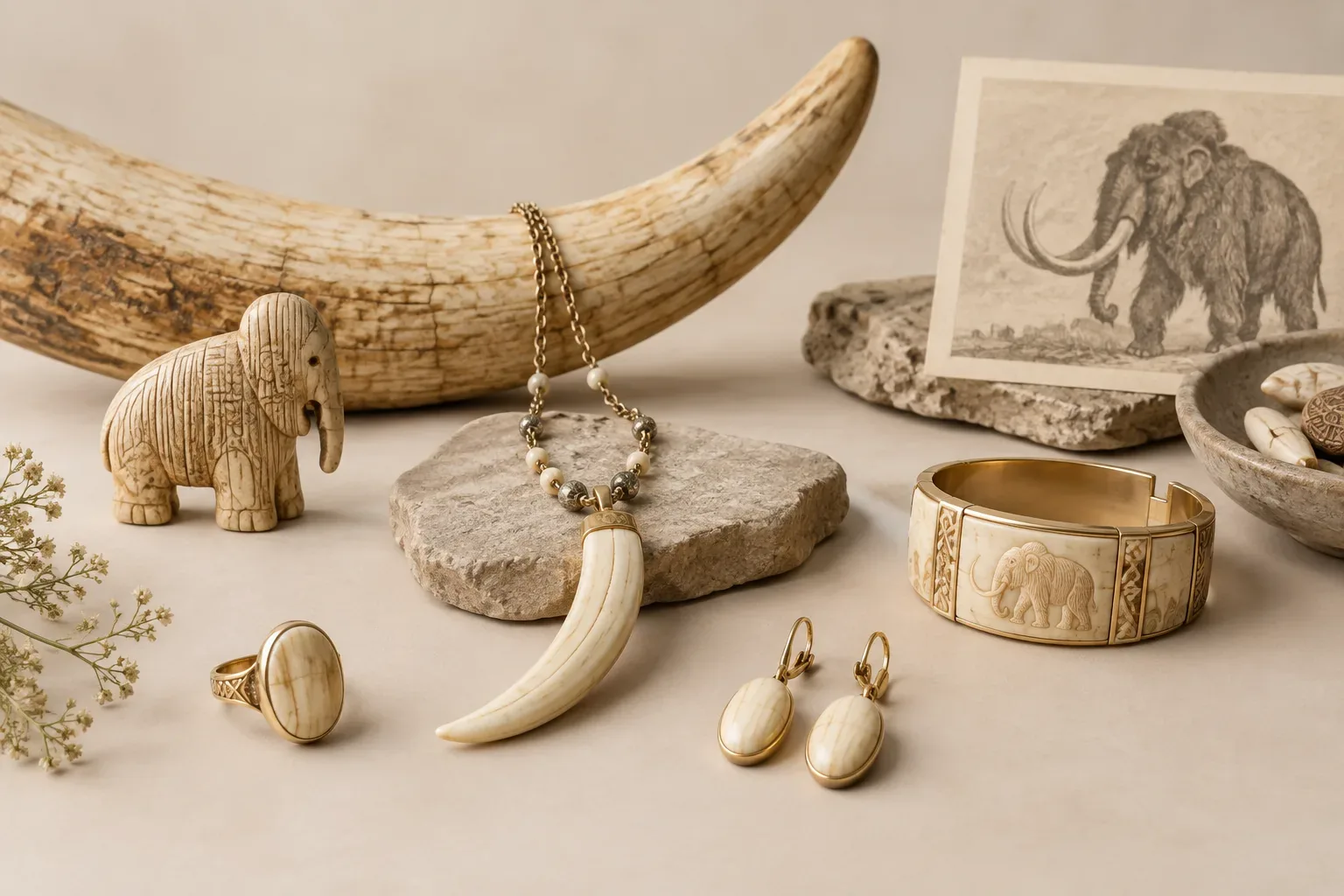
In modern commercial jewellery, references to "mammoth ivory" usually appear as carved beads, small pendants and accents set within metal mounts. Contemporary makers combine these elements with current motifs — geometric shapes, natural forms, and mixed-media settings — rather than re-creating a single historical style. When motifs from a particular culture are used (for example, prehistoric-inspired carving or Victorian revival settings), it is important to distinguish whether the style is a modern revival or part of an unbroken cultural tradition.
Authenticity, treatment and disclosure: what to ask and expect
Treat mammoth ivory purchases like any specialist gem or organic material: ask for clear provenance, written documentation of species or geological origin when available, and disclosure of any treatments or stabilising processes. Federal Trade Commission guidance on buying gemstones, diamonds and pearls recommends that sellers disclose treatments and imitations and that buyers request clear information before purchase. Apply the same standard to organic materials sold as "mammoth" or fossil ivory.
Useful questions to ask a seller include: Where does this material come from (provenance)? Has the piece been stabilized, dyed or otherwise treated? Can you provide a written disclosure or lab report describing species, treatment and any conservation work? What return, authentication or appraisal policy accompanies the sale? Reputable dealers and institutions should be willing to answer these questions or provide supporting documentation.
Be cautious of unsupported claims on labels or listings. Ask for close photographs or the opportunity to inspect the piece in hand, and favour sellers who document conservation history and who can show where the material fits in a broader provenance chain. The V&A encourages looking at craftsmanship and context in museums to understand authentic historical techniques; apply a similar scrutiny to contemporary sellers when assessing authenticity.
Practical selection and respectful gifting guidance
Choose an item that aligns with the recipient’s values and with the documented context of the piece. If you are buying a contemporary item that draws on historical motifs, make this clear when gifting so the recipient understands whether the piece is an inspired revival or an object with historical provenance. For gifts meant to reference a specific culture or tradition, research that tradition’s documented uses and symbolism using reputable museum sources or published scholarship.
If provenance and documentation are important to you or the recipient, buy from a dealer who provides verifiable records and a clear return policy. If you prefer a symbolic or ethical stance, discuss it openly: some buyers choose mammoth or fossil materials because they are marketed as alternatives to modern elephant ivory, but claims about ethics and legality vary by jurisdiction and should be verified with both the seller and local regulations.
Present the piece respectfully: include the seller’s documentation or notes about the maker and provenance in the gift, and provide care instructions so the recipient can preserve the object. When in doubt, a conservator’s evaluation or an independent appraisal can add confidence for an expensive or historically claimed item.
Care and conservation for mammoth ivory jewellery
Organic materials are generally more vulnerable than hard gemstones and metals. Handle pieces gently, avoid prolonged exposure to direct heat or intense sunlight, and protect them from harsh household chemicals, perfumes and chlorinated water. Store jewellery in a stable, moderate environment away from extreme humidity or dryness, and keep pieces separately to avoid abrasion.
For routine cleaning, use a soft dry or barely damp cloth and avoid abrasive cleaners or ultrasonic devices. For fragile, historically significant or high-value items, seek advice from a trained conservator rather than attempting home restoration. Museums and conservation services can advise on appropriate cleaning, consolidation or long-term storage methods; if an item has been stabilised by a seller, keep the documentation of that treatment.
A practical checklist before you buy
Before purchasing, request written disclosure of provenance and any treatments, ask about return and appraisal policies, inspect images or the object in person for craftsmanship and condition, and verify the seller’s reputation. Use museum resources like the V&A to inform yourself about historical contexts and craftsmanship, and follow FTC guidance on disclosure and truthful advertising when evaluating representations of the material. If the piece claims historical provenance, ask for supporting documentation from the seller or an independent appraisal.
Closing note
Mammoth ivory jewellery sits at the intersection of material history, contemporary market practices and personal meaning. Museums such as the V&A document the long and varied use of ivory and related materials across periods and cultures, offering a source of careful contextualisation; consumer-protection guidance such as the FTC's advice on gemstones and treatments offers practical standards for disclosure and buyer questions. Use both strands of evidence — historical scholarship and consumer-protection practice — to make informed, respectful and well-documented choices.
Frequently asked questions
How can I tell if a piece is authentic mammoth ivory?
Ask the seller for written provenance and any lab reports, request clear photos and close inspection, and ask whether the piece has been stabilised, dyed or otherwise treated. The Federal Trade Commission advises buyers to insist on disclosure of treatments and imitations for gemstones and similar materials; apply the same standard to mammoth ivory. For valuable or historically claimed pieces, consider an independent appraisal or specialist analysis.
Are claims about the symbolism of mammoth ivory historically documented?
Museum scholarship shows that meanings of ivory and carved organic materials vary greatly by culture and period; the Victoria and Albert Museum emphasises changing social contexts rather than a single universal symbolism. Modern symbolic readings—such as ecological or personal associations—are contemporary interpretations unless supported by direct provenance and scholarly evidence.
Do sellers have to disclose treatments or imitations?
Yes; guidance from the Federal Trade Commission recommends that sellers disclose known treatments, stabilisation and imitations for gems and similar materials. When buying mammoth ivory jewellery, ask the seller to document any stabilising, dyeing, or other treatments in writing.
How should I care for mammoth ivory jewellery at home?
Treat organic jewellery gently: avoid prolonged exposure to direct heat, sunlight, or chemicals; clean lightly with a soft dry cloth; store pieces in stable humidity and separate from abrasive items. For fragile or valuable pieces, seek advice from a professional conservator rather than performing aggressive cleaning.
Is it respectful to gift jewellery that references another culture’s motifs?
Yes, if you take care to research the motif’s documented context, present the piece transparently as either a historic object or a contemporary interpretation, and avoid misrepresenting provenance. Use reputable museum resources to learn about meaning and context and include any seller documentation when you give the gift.
What steps should I take if a seller won’t provide documentation?
If a seller cannot or will not provide provenance or treatment disclosure, consider looking elsewhere or request a return option and independent appraisal. Reputable sellers should be willing to answer reasonable questions and provide written information about materials and treatments.
Sources and further reading
- Bedazzled: A History of Jewellery — Victoria and Albert Museum
- An A-Z of Gemstones — Victoria and Albert Museum
- Buying Gemstones, Diamonds, and Pearls — Federal Trade Commission