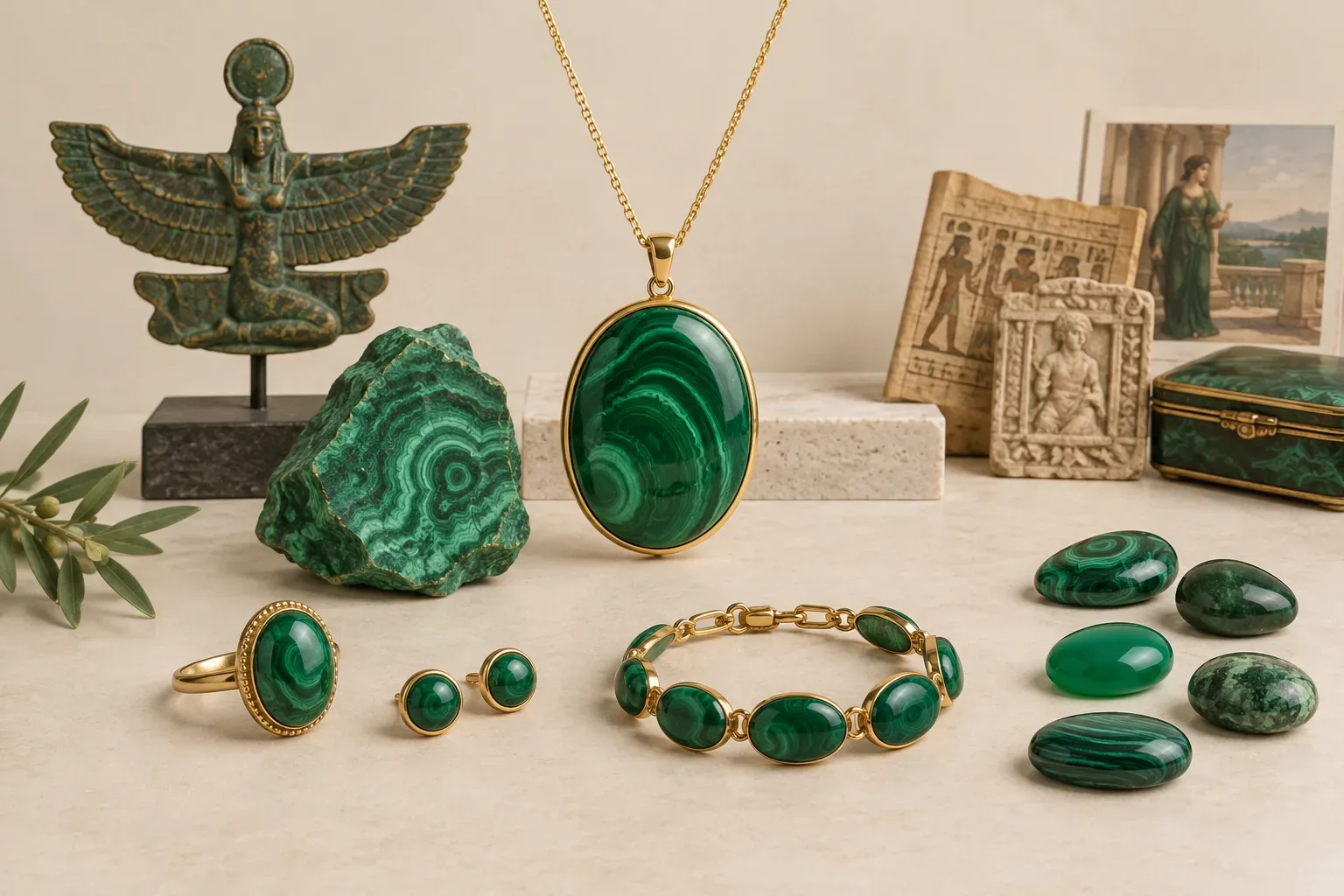
Meaning at a glance
Explain the documented history and changing contexts of the malachite treatments and imitations motif, separate cultural or religious evidence from later popular interpretations, and give practical guidance for choosing and wearing the motif in modern jewelry.
Documented history and cultural contexts
Museum scholarship and collection records show malachite has been used as an ornamental mineral in a number of historical contexts. The Victoria and Albert Museum documents malachite among the materials used in decorative arts and jewellery across different periods, noting its appeal for colour and pattern rather than recorded religious doctrines attached to the stone.
Specific cultures and periods in which malachite appears in material culture include ancient and historic decorative contexts reflected in museum holdings and interpretive displays. The Victoria and Albert Museum’s resources on gemstones and on the history of jewellery place malachite within broader trends in decorative stone use over time, for example in small carved objects, inlay and set stones in jewellery, rather than ascribing a single universal meaning.
Separating documented meanings from modern interpretations
When museums report on gemstones they generally record how a material was used, how it was worked, and the social or aesthetic contexts in which it appears. Sources such as the Victoria and Albert Museum describe malachite’s material and decorative qualities and chart how tastes and uses have changed. That documented record is different from later or contemporary attributions that treat malachite as a symbol with fixed spiritual, metaphysical or healing powers.
Modern metaphysical or personal-meaning interpretations are common, and many people find personal significance in malachite’s bands and green colour. These personal or New Age meanings are contemporary cultural layers and should be treated as personal beliefs or modern traditions rather than as direct continuations of a single historically documented symbolic system. Distinguish museum-recorded use (what people made and wore, and in what social contexts) from modern claims about universal symbolism.
How malachite appears in jewellery
Museum catalogues and gemstone overviews note several recurring ways malachite has been used in jewellery and decorative objects. Typical uses recorded in collections include beads and cabochons set into rings, brooches and necklaces, small carved elements and inlay panels. The stone’s banded green patterns make it attractive for both single-stone focal pieces and for matched bead strands or intarsia-style inlay work.
In later decorative arts and jewellery, malachite is often paired with metals and other stones to create contrast or large decorative surfaces. Museums such as the Victoria and Albert Museum document examples where malachite’s appearance — broad banding, swirling patterns and rich green — is used as an aesthetic element rather than as part of a single codified symbolic vocabulary.
Treatments, imitations and disclosure: what the law and consumer guidance say
Consumer protection guidance requires clarity. The U.S. Federal Trade Commission advises sellers to disclose treatments and imitations clearly so buyers know what they are purchasing. That guidance applies to gemstones generally and is relevant when buying malachite or malachite-look materials.
In practice, disclosure means a seller should tell you if a material is natural malachite, stabilized or enhanced, reconstituted (made from powdered stone plus a binding material), or an imitation such as glass or plastic. If disclosure is missing or vague, ask for a written statement, a lab report when relevant, or the return policy. Clear disclosure protects you and preserves the social meaning of a gift by matching intention to the actual material.
Questions to ask when buying or receiving malachite jewellery
When you are considering a purchase or preparing a gift, use straightforward questions that focus on material and care. Ask whether the piece is natural malachite, whether it has been treated or stabilized, and whether it is reconstituted or an imitation. Request documentation or written confirmation if the answer matters to you. Ask the seller how the stone has been worked or matched, and whether the piece is vintage or recently made, since age and treatment history affect value and meaning.
Also ask about care recommendations and return policy. If you’re buying vintage or antique malachite, ask whether a professional assessment was made and whether repairs involved adhesives or backing that could affect future restoration. These practical questions help match expectations and preserve the integrity of a meaningful gift or personal purchase.
Choosing and gifting: practical and respectful guidance
Be thoughtful about context. If you or the recipient places importance on a material being natural, ask for clear verification before purchase. If the colour and pattern are the primary attraction, a high-quality reconstituted or well-made imitation may be appropriate and more affordable, but clarity about the material avoids misunderstanding.
Respect the recipient’s beliefs. If a recipient attributes spiritual or traditional meanings to malachite, make sure the material aligns with that significance. If you are unsure, choose a presentation that emphasises the aesthetic or sentimental reason for the gift rather than asserting a particular symbolic meaning as universal.
Caring for malachite and preserving meaning
Treat malachite as a soft, porous mineral in everyday care. Seek and follow the seller’s recommended care instructions. When the objective is to preserve an antique piece or a matched set, professional advice from a conservator or trusted jeweller can be helpful; museums advise careful handling and specialist conservation for delicate historic objects.
When documenting provenance or a gift’s intention, keep receipts, any lab reports and written care instructions together with the piece. These documents help maintain transparency about the material and protect the piece’s value and the giver’s intended meaning over time.
When to consult a professional
If material identification matters for value or for fulfilling a gift’s meaning, ask for a gemological report or a second opinion from an independent appraiser. For pieces described as antique or historically significant, museum and specialist conservators or accredited gem labs can offer reliable identification and condition reports. A professional assessment is the safest route when the purchase is costly or the cultural or sentimental meaning depends on the material being authentic.
Final practical checklist
Before you buy or give malachite jewellery, confirm in writing whether the stone is natural, treated, reconstituted or an imitation; ask about provenance and age if that matters; request care guidance; and make sure the seller’s return policy matches the level of disclosure you receive. Following these steps aligns the practical, aesthetic and cultural expectations that make meaningful jewellery successful.
Frequently asked questions
How can I tell if malachite has been treated or is an imitation?
Ask the seller for clear disclosure in writing. Request specifics about whether the piece is natural malachite, stabilized, reconstituted or an imitation. If the answer is important for price or meaning, ask for a gem lab report or an independent appraisal.
Is malachite suitable for everyday wear?
Malachite is a relatively soft and porous mineral, so follow the seller’s care instructions. For valuable or sentimental pieces, avoid harsh chemicals and consult a professional for conservation of antique pieces.
What should sellers disclose about malachite?
Consumer guidance from the Federal Trade Commission requires sellers to disclose treatments and imitations clearly. Sellers should state whether a stone is natural, treated, reconstituted or an imitation, and provide documentation on request.
Does historic use of malachite mean it had a single cultural meaning?
No. Museum records, such as those of the Victoria and Albert Museum, document how malachite was used materially and decoratively across cultures and periods. Those records do not support a single universal symbolic meaning; modern spiritual or metaphysical claims are contemporary interpretations.
Should I ask for a return policy when buying vintage malachite?
Yes. For vintage or antique pieces, ask about the return policy and any documentation of past repairs or stabilizing work, because restoration and past treatments affect both value and future conservation.
Sources and further reading
- Bedazzled: A History of Jewellery — Victoria and Albert Museum
- An A-Z of Gemstones — Victoria and Albert Museum
- Buying Gemstones, Diamonds, and Pearls — Federal Trade Commission