Meaning at a glance
Citrine's quality and value depend most on color, clarity, cut, carat and disclosure of treatments or imitations; historical uses and symbolic meanings changed by period and culture, and modern buyers should verify treatment disclosure and choose pieces based on documented facts and personal preference.
Quick answer
Citrine quality and value factors are driven primarily by observable gem properties (color, clarity, cut and carat), plus whether a stone has been heat-treated or imitated; documented historical and cultural meanings are separate from today's personal or commercial interpretations, and reputable sellers should disclose treatments and origin.
Documented history and the cultural record
Museums that document jewelry history place gemstones — including varieties of quartz such as citrine — within changing social and technological contexts rather than fixed universal meanings. The Victoria and Albert Museum (V&A) treats jewelry as material culture that reflects fashions, status, religious practice and technological change across specific periods such as ancient Egyptian, classical antiquity (Greek and Roman), and nineteenth-century Victorian Britain.
The V&A's A–Z of Gemstones emphasizes identification and the historical contexts in which stones were used, noting that what made a gem desirable often varied by era: color, rarity, symbolic association or compatibility with prevailing styles. This means that any cultural meaning attached to citrine in one period may not apply in another; the best-documented claims about gemstones come from the surviving object record and contemporary texts catalogued by institutions such as the V&A, not from modern marketing claims.
Documented meanings versus modern personal interpretations
Historical evidence for the symbolic use of gemstones tends to be specific and contextual: museums and collections record how particular stones were used in mourning jewelry, religious settings, rank badges or decorative fashions in named cultures and periods. The V&A's work shows how meanings shift with social context, and that researchers rely on provenance and contemporary accounts to attribute function or symbolism.
Modern spiritual, psychological or commercial interpretations of citrine — for example, assigning uniform healing properties or universal symbolic meanings — are contemporary personal or marketing frameworks, not universal historical facts. Treat modern meanings as personal narratives or consumer traditions that may matter to you or a recipient, but separate those from the documented, period-specific uses recorded by museums and historians.
How citrine appears in jewelry
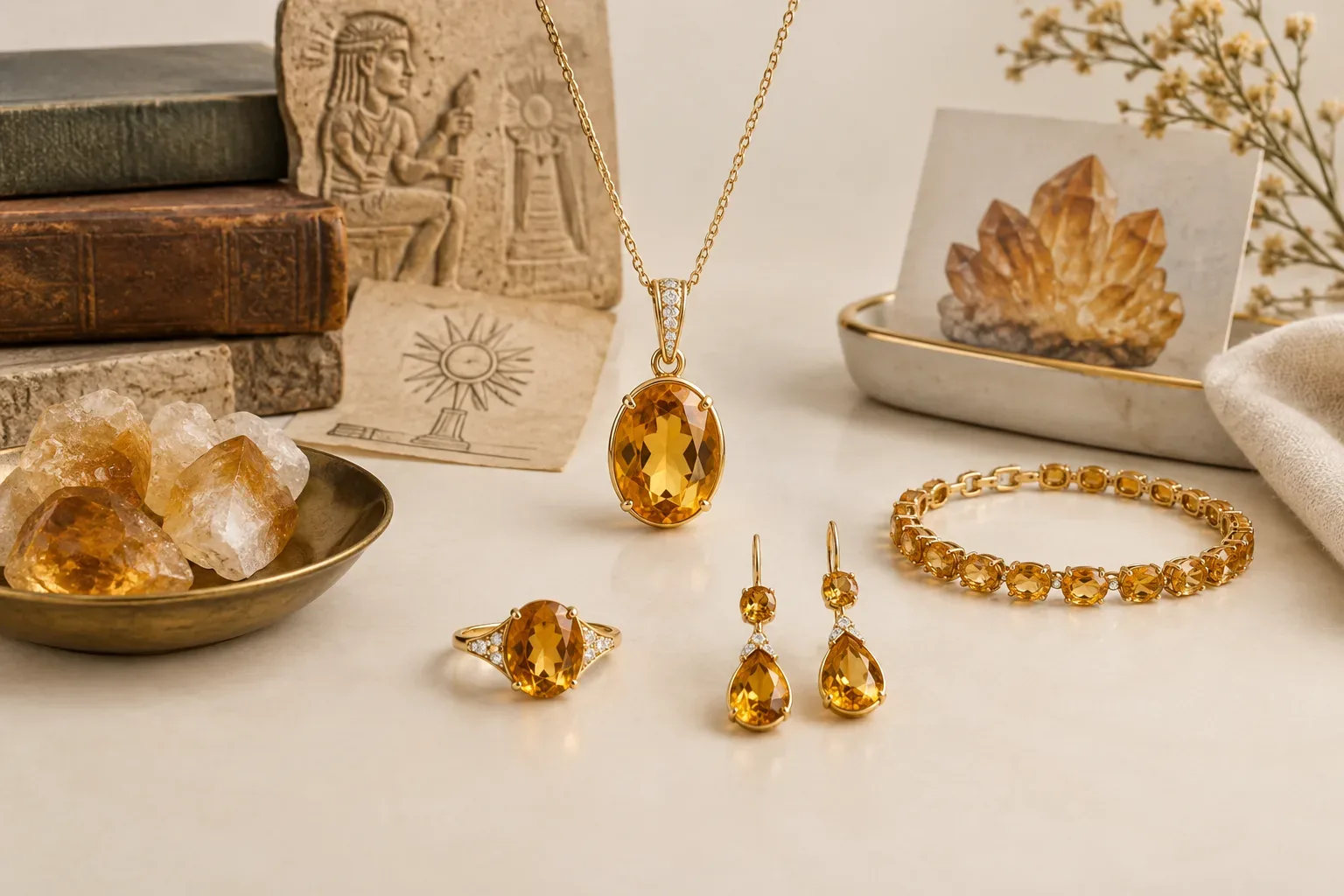
Citrine is a yellow-to-orange variety of quartz commonly fashioned into faceted stones, cabochons, beads and carved decorative elements in rings, necklaces, bracelets and brooches. Historical and modern design choices reflect prevailing styles: museum collections show gemstones set in metalwork appropriate to their period, while contemporary jewelry uses modern cuts and settings to emphasize color and brilliance.
Because citrine is hard enough for everyday wear (quartz registers around Mohs 7), it is often set in rings and bracelets as well as pendants. Designers may pair citrine with warm metals such as yellow or rose gold to reinforce its honey tones, or with cooler metals for contrast. Vintage and estate pieces can illustrate changing tastes documented by institutions like the V&A, where form and setting reveal period-specific preferences.
Core quality and value factors explained
Color. Color is the most immediately noticeable attribute of citrine. Values typically follow buyer preference and market demand: clear, saturated tones that appeal to the market generally carry higher prices than pale or muddy colors. Because perceptions of desirable color change over time and by market, color should be judged against current standards and the recipient's taste rather than any claim of universal preference.
Clarity. Citrine is usually eye-clean; visible inclusions or fractures reduce its appeal and structural integrity. Inspect a stone for obvious blemishes that affect sparkle or durability, and ask whether inclusions are stable or could lead to breakage under everyday wear.
Cut. Proportions and faceting influence brilliance and perceived color. A well-cut citrine maximizes light return and evens color distribution, improving attractiveness without changing the material's intrinsic value.
Carat and size. Larger citrines exist and command higher prices per stone where color and clarity are preserved. Because quartz is relatively abundant compared with precious gemstones, a very large citrine with excellent color and clarity may still be affordable, but size interacts with color and clarity to determine market value.
Treatment and origin disclosure. Many commercial citrines are created by heat-treating other quartz varieties (for example, amethyst or smoky quartz) to achieve attractive yellow-orange tones. The Federal Trade Commission (FTC) advises that sellers must disclose material treatments and imitations; treatment status affects both value and long-term expectations. Natural, untreated citrine is comparatively uncommon in the modern market, which is a legitimate influence on price and rarity judgments.
Imitations and synthetics. As the FTC explains for all gemstones, disclosure is required for imitations, synthetics or other non-natural materials. Glass and other simulants can imitate citrine's color but differ in hardness and value; always request clear disclosure from a seller.
Practical steps for selecting citrine
Decide which visual qualities matter most: color saturation, size, or even a particular cut that flatters the wearer. Treat color preference as a primary filter, then compare clarity and cut among stones within your budget. Look at stones in neutral daylight or good white light to judge true color and avoid purchasing from images alone where possible.
Ask the seller for treatment disclosure and, for higher-value purchases, a written statement. The FTC's guidance requires sellers to disclose heat treatment and imitations; insist on clear language that specifies whether a stone is natural citrine, heat-treated quartz (for example, heat-treated amethyst), a synthetic, or a simulant.
For significant purchases, request provenance documentation or third-party testing. While not every citrine needs a laboratory report, a gemological certificate can be a sensible safeguard when paying a premium for color, size or apparent rarity.
Check settings and metal choices. Citrine is durable enough for everyday wear when secured in protective settings; prong settings should be robust and closed-back settings require consideration of how light enters the stone. Choose settings that match lifestyle: bezel or halo settings add protection for active wearers, while exposed prongs show more color and light.
Plan for aftercare. Citrine resists scratching from common contact but benefits from routine cleaning with mild soap and water and a soft brush. Avoid prolonged exposure to harsh chemicals and extreme heat. Consider insurance or extended return and repair policies for high-value pieces.
Gifting guidance that respects meaning and context
Separate documented history from personal meaning when gifting. If you wish to invoke a historical association, specify the culture and period — for example, a Victorian-style citrine brooch — and explain that this reference is stylistic rather than a universal claim about the stone's properties. Museums such as the V&A provide clear context for how gemstones were used in named periods, which can help you craft an accurate sentiment.
If the recipient values spiritual or contemporary meanings, treat those meanings as personal and social rather than historical facts. Ask whether the recipient prefers natural stones or is comfortable with heat-treated material; for many wearers, visual appearance matters more than technical origin, but disclosure and consent remain important.
Respect cultural sensitivities. Avoid asserting that citrine has a single sacred function across cultures. Instead, gift with an explanation of your intent and an acknowledgement that meanings vary by community and time period. When in doubt, prioritize the recipient's tastes and any documented provenance that makes the piece meaningful.
A short care note
Store citrine jewelry separately to prevent abrasion against harder gems and metals. Clean with warm, soapy water and a soft brush; avoid steam cleaners or sudden thermal shocks if the piece may have been heat-treated. Routine visual inspections of the setting will catch loose stones early and preserve value.
Conclusion
Citrine quality and value factors come down to the stone's color, clarity, cut, size and whether treatments or imitations have been disclosed. Use documented historical context from museum resources such as the Victoria and Albert Museum to understand period-specific meanings, and follow FTC recommendations on treatment and imitation disclosure when buying. Choose pieces based on a combination of documented fact and the personal preferences of the wearer, and always ask clear questions about treatment, return policy and provenance before purchasing.
Frequently asked questions
Is most citrine natural or heat-treated?
Many commercial citrines are heat-treated quartz converted from amethyst or smoky quartz; natural, untreated citrine is less common. Ask sellers for clear treatment disclosure, as required by the Federal Trade Commission.
How should I judge citrine color when buying?
Judge color in neutral daylight or good white light and prioritize the hue and saturation that appeal to you or the recipient; consistent, saturated color with good transparency is generally more desirable.
Does treatment affect value?
Yes. Treatment typically reduces rarity and can affect resale value, though many buyers prioritise appearance over origin. Always request written disclosure about treatments before purchase.
What paperwork should I expect with a higher-value citrine?
For significant purchases, request a written treatment disclosure and consider a third-party gemological report or provenance documentation; such paperwork helps verify claims and supports resale or insurance.
Is citrine durable enough for everyday jewelry?
Citrine, as a quartz variety, rates about 7 on the Mohs scale and is suitable for many everyday uses, but settings should protect against knocks and abrasive wear; regular inspections keep settings secure.
Sources and further reading
- Bedazzled: A History of Jewellery — Victoria and Albert Museum
- An A-Z of Gemstones — Victoria and Albert Museum
- Buying Gemstones, Diamonds, and Pearls — Federal Trade Commission