Meaning at a glance
This article explains documented historical contexts for rubies, separates historical meanings from later interpretations, outlines the gemological quality and market factors that determine value, and gives practical guidance for selecting and caring for ruby jewelry.
Quick answer
Rubies have been prized across many cultures and periods for their color and rarity; the factors that determine ruby quality and value today are primarily measurable gem attributes (color, clarity, cut, carat), provenance and treatments, and market demand. This article explains the documented history and changing contexts of rubies, separates historical cultural evidence from modern personal meanings, and gives practical guidance for choosing and gifting ruby jewelry.
Documented historical evidence: where rubies appear and what museums record
Collections and exhibitions at the Victoria and Albert Museum show that rubies appear in jewellery from a wide range of cultures and periods, from South and Southeast Asian court pieces through European medieval and Renaissance objects to later Western fashions. The V&A's survey material describes how gemstones, including rubies, were used as displays of wealth, technical skill and social rank in different eras rather than carrying a single universal meaning.
Museum records and curated histories make two consistent points: first, rubies were selected for display and status because of their color and rarity; second, the social meanings attached to precious stones changed with context. For example, the way gemstones were set, the jewellery types that featured them, and the occasions on which they were worn varied across courts, religious settings and personal adornment. The V&A's history-oriented resources place rubies within these shifting social contexts and technological developments in gem cutting and setting.
Separating documented historical meanings from modern interpretations
When historians describe rubies in museum collections, they cite specific social uses — such as court dress, religious plate, or diplomatic gifts — rather than one single symbolic meaning. The V&A emphasizes changing social context: a ruby's presence in a thirteenth- or seventeenth-century object signalled status and access to trade networks, not necessarily the same personal symbolism later applied in popular culture.
Modern personal interpretations — calling a ruby a symbol of love, courage, or spiritual energy — are common today, but these contemporary meanings are not universally documented across all cultures and periods. Some of these modern associations derive from marketing, literary traditions, or new spiritual practices rather than direct continuity from historical uses recorded by museums and curators. Treat modern symbolic attributions as contemporary, personal, or culturally specific interpretations rather than universal historical facts.
Ruby quality and value factors explained
Gem-quality rubies are a variety of corundum; their value is driven by a combination of color, clarity, cut, carat weight, provenance, and any treatments or enhancements. The Victoria and Albert Museum's gemstone resources explain how gem identification and historical use intersect: museums consider both intrinsic properties like color and cut and external factors such as setting and provenance when discussing a gemstone's significance.
Color is a primary factor. A ruby's body color, tone (light to dark) and saturation (intensity) together determine how the stone looks to the eye. Strong, vivid red tones with good saturation are typically most sought after because the color defines the gem's visual appeal.
Clarity matters for appearance and durability. Many rubies have natural inclusions; what matters commercially is how those inclusions affect transparency and brilliance. Eye-visible fractures or cloudiness that significantly reduce sparkle or threaten the stone's stability will lower value.
Cut affects how color and light are displayed. Well-proportioned cutting brings out color and brilliance; poorly cut stones can appear dark or washed out even if the rough is fine. Historically, cut styles have shifted with technology and taste, but the modern buyer should evaluate how a particular cut presents the stone's best attributes.
Carat weight scales value, but larger stones can show color and clarity differently than smaller ones. In rubies, very large, high-quality stones are uncommon and command a premium because of scarcity.
Treatments and imitations have a material effect on value. The Federal Trade Commission advises buyers that disclosure of treatments and imitations is an important part of ethical selling. Heat treatment is common and may be acceptable to many buyers if properly disclosed; other treatments or glass fillers require clear disclosure because they affect both durability and value. Synthetic and imitation rubies exist and should be identified and disclosed by sellers.
Provenance, certification and market context
Origin or provenance can influence market price when particular localities have a well-established reputation, but provenance is a secondary value factor compared with color and clarity. Museums document provenance as part of an object's story, which is different from a market premium paid for a commercially recognized origin.
Independent gemological reports and clear disclosure from a seller help translate historical and scientific claims into reliable buying information. A written report from a respected laboratory that describes treatments, synthetic status, and the stone's basic properties is helpful documentation for buyers. The FTC's consumer guidance underscores that sellers should disclose material facts such as whether a gemstone is treated, synthetic, or an imitation.
How rubies and the 'ruby motif' appear in jewellery
In the histories recorded by museums like the V&A, rubies feature across many jewellery types: as central stones in rings and necklaces, as accents in elaborate settings, and as part of ensemble pieces that signal rank or taste. Exhibitions and museum essays show how design and setting evolved: rubies could be mounted as solitary focal points, combined with diamonds and other stones for contrast, or set into metalwork that amplified their color.
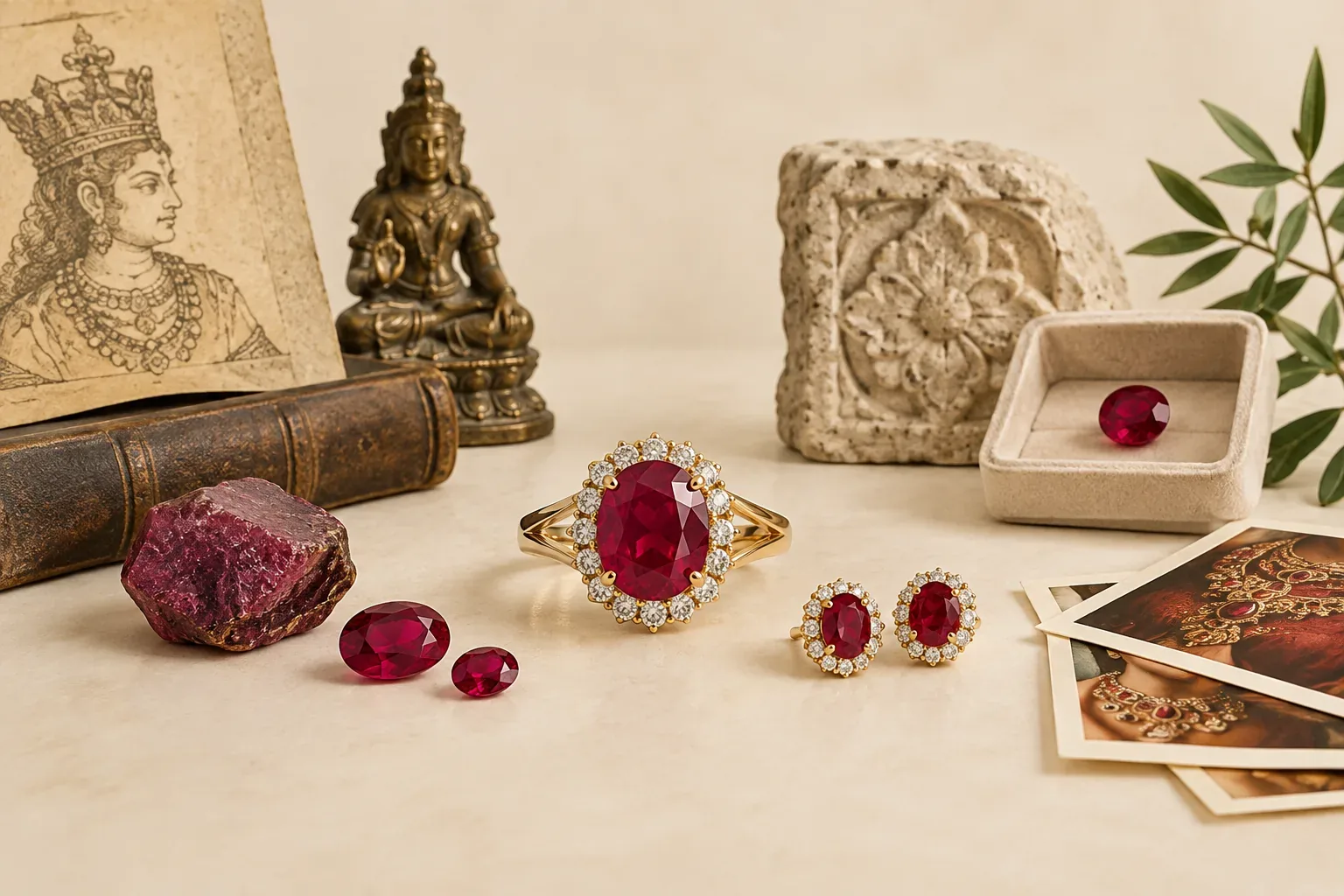
Contemporary jewellery continues these traditions while adding current design languages. You will see rubies in solitaires, three-stone rings, cluster and halo settings, pendant necklaces, and in mixed-stone pieces where designers use the ruby's red as a point of contrast. How a ruby appears in a piece — its size, cut and setting — will significantly affect presence and wearability.
Practical, respectful selection and gifting guidance
Decide first what matters most to you: color impact, size, budget, or a documented origin. If the emotional or symbolic meaning for the wearer is the priority, choose a design and color tone that match their style and the sentiment you intend. If investment or long-term value is the goal, prioritize color, clarity and documentation of treatments.
Ask the seller for clear, written disclosure of any treatments and for any available laboratory reports. The Federal Trade Commission recommends that consumers ask direct questions about treatments and synthetic status and that dealers disclose these facts. A reputable seller will provide a written report or be willing to have the gem independently tested.
Match the setting and cut to the recipient's lifestyle. Rubies are durable (a hard corundum variety) and suit rings worn daily, but some treatments and fillers can affect how well a stone withstands wear and repair, so confirm treatment details before commissioning a daily-wear piece. For an heirloom or frequently worn ring, choose stones with stable treatments or untreated stones with good clarity and color.
Budget realistically and consider tradeoffs. A smaller, eye-clean ruby with excellent color can look more impressive than a larger, poorly colored stone. Setting quality and design often affect perceived value more than marginal differences in carat weight.
When gifting, contextualize the piece with its history or meaning if you like, but avoid presenting modern symbolic claims as universal historical facts. If the recipient values provenance or museum-style narratives, include any documentation or the seller's lab report with the gift so the wearer can appreciate both the gem and its verified attributes.
Caring for ruby jewellery
Routine care keeps a ruby looking its best. Clean with mild soap and warm water and a soft brush; avoid harsh chemicals used for other stones or plating. Ask your jeweller about care tailored to any specific treatments the ruby has undergone. Museum conservation practices recorded by institutions like the V&A emphasize stable environments and gentle cleaning for historical pieces; apply the same conservational mindset to modern jewellery.
Store ruby pieces separately from softer gems to prevent scratches to settings or surrounding stones. For high-value stones, consider periodic inspection by a professional for loose settings or damage, particularly on pieces worn frequently.
Conclusion
Understanding the factors that determine ruby quality and value — color, clarity, cut, carat, provenance and treatments — helps you make a confident purchase and to communicate responsibly when gifting. Use museum scholarship, such as that available from the Victoria and Albert Museum, to understand historical context, and follow consumer-protection guidance, such as that from the U.S. Federal Trade Commission, to ensure transparent disclosure of treatments and synthetic status. With thoughtful questions, documentation and attention to design and care, you can select a ruby that aligns with aesthetic, emotional and practical priorities.
Frequently asked questions
How can I tell if a ruby has been treated?
Ask the seller for written disclosure and for any laboratory report. Many treatments, such as heat treatment, are common and acceptable to many buyers if they are openly disclosed. The Federal Trade Commission advises that sellers should disclose treatments and whether a stone is synthetic or an imitation.
Is a larger ruby always more valuable?
Not necessarily. While carat weight affects value, a smaller ruby with superior color and clarity often looks better and can command higher per-carat prices than a larger stone with poor color or significant inclusions.
Should I buy a certified ruby?
A report from a respected gemological laboratory helps confirm identity, treatments and other important attributes. Certification is especially useful for higher-value purchases where provenance or treatment status affects price and long-term value.
Can rubies be worn every day?
Yes. As a corundum variety, rubies are hard and durable and are commonly used in daily-wear rings. Confirm that any treatments are stable and ask a jeweller about the best setting and care for the stone if you plan daily wear.
Are synthetic rubies the same as natural ones?
Synthetic rubies are grown in laboratories and have the same chemical composition as natural rubies, but their origin affects value. Sellers should disclose whether a ruby is natural, treated, or synthetic; the FTC's guidance stresses clear disclosure.
Sources and further reading
- Bedazzled: A History of Jewellery — Victoria and Albert Museum
- An A-Z of Gemstones — Victoria and Albert Museum
- Buying Gemstones, Diamonds, and Pearls — Federal Trade Commission