Meaning at a glance
Documented museum evidence shows that ruby cutting and setting evolved with technology and taste; separate those historical facts from later popular meanings, and choose cuts and settings that fit the wearer’s lifestyle while asking sellers for treatment and authenticity disclosures.
What the historical evidence shows
The Victoria and Albert Museum’s surveys of jewellery history document how gem cutting and mounting changed across periods and places and how those changes affected appearance and use. Early techniques favored simpler cuts that emphasized a stone’s color rather than optical brilliance; later technological advances in cutting and polishing produced more faceted styles intended to maximize sparkle and light return. These shifts are described broadly in the V&A’s exhibition materials and its A–Z of gemstones.
Museum collections and catalogues preserved by the V&A record rubies mounted in many cultural contexts. For example, rubies appear in South and Southeast Asian court jewels, in European Renaissance and later dress jewellery, and in 19th‑century sentimental pieces. The specific forms of cutting and setting used in each period reflect the available lapidary technology, prevailing tastes for color or brilliance, and the social uses of jewellery documented by the V&A.
Separating documented historical meanings from modern interpretations
The documented historical record, as presented by museum scholarship, links rubies to status, display, and particular fashions rather than to a single universal symbolic meaning. The V&A frames rubies within the history of jewellery and changing social contexts: they were prized for color and rarity and incorporated into the ceremonial and personal dress of elites in multiple regions.
By contrast, many contemporary statements about ruby symbolism — for example, assigning a fixed spiritual or personality trait to every ruby wearer — are modern personal interpretations or marketing language rather than documented historical fact. Modern wearers and brands often layer new meanings onto historical associations; those personal or commercial interpretations are valid for the individuals who choose them, but they are not the same as the documented evidence recorded in museum holdings.
How rubies, cuts, and settings appear in jewellery
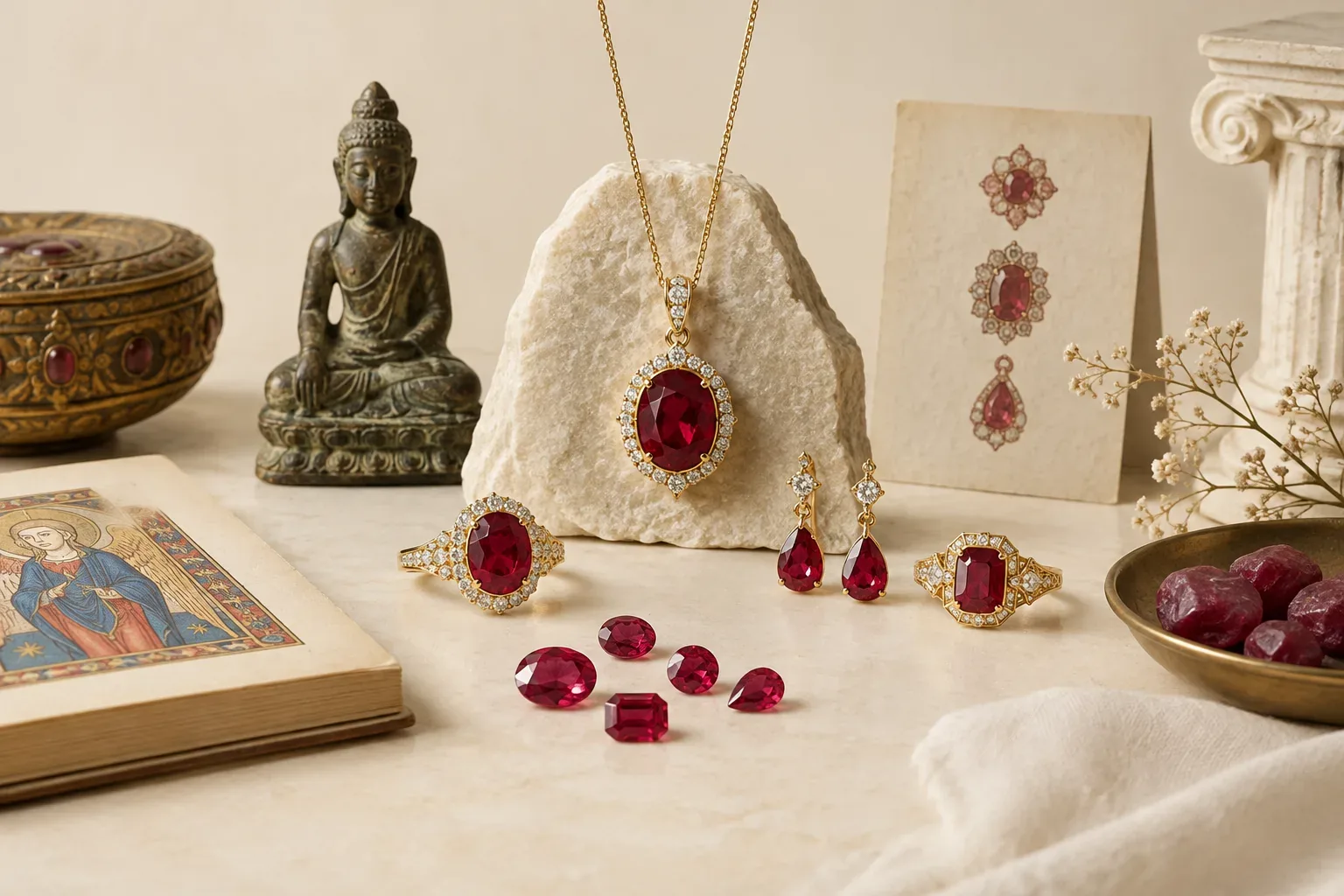
Across collections documented by the V&A, rubies appear in rings, necklaces, brooches, pendants and earrings. The same stone can look very different depending on cut and setting. Historically, simpler cuts emphasized a stone’s saturated color and were often set in closed or bezel mountings that protected the back of the gem and masked mineral inclusions. As cutting advanced, faceted styles were used to enhance light performance and were frequently set to show both the crown and pavilion.
Settings also vary by period and purpose. A protective bezel or closed mount can reflect a historical preference for durability and color emphasis; open-back or prong settings became common where light return and brilliance were desired. The setting choice affects how the color reads, how much light the stone receives, and how well the piece withstands daily wear—features visible across the historical examples discussed in museum literature.
Practical guidance for choosing cuts and settings today
Match the stone to the wearer’s lifestyle. For someone who wears jewellery daily or has an active job, choose a setting that prioritises protection: lower-profile bezels and closed mounts reduce the risk of knocks and chipping. If the wearer prefers maximum sparkle for occasional wear, consider faceted cuts set to allow light through the pavilion, such as prong or open-cup settings that showcase brilliance.
Balance color and brilliance. If you or the recipient prefers deep, saturated color, cuts and settings that show more surface area and emphasize hue are suitable. If you prefer fire and scintillation, a modern faceted cut paired with a setting that allows light in will achieve that effect. Remember that the same ruby can appear different in different metals and under different lighting; museum collections show how historical settings were chosen to complement the stone’s qualities.
Ask for disclosure about treatments and imitations. The Federal Trade Commission advises consumers to obtain clear written information about material treatments, enhancements, and whether a gem is natural, laboratory-grown, or an imitation. Request written confirmation of any heat treatment, diffusion, fracture filling, or other common enhancements and ask whether the seller follows FTC guidance on disclosure. This helps align your aesthetic choice with what you are actually buying.
Consider durability and repairability. Historical jewellery often used settings and constructions intended for repair and resetting; modern pieces vary. If you expect to hand the piece down as an heirloom, select a metal and setting style that a jeweller can service. Discuss setting options with a qualified jeweller who understands how different mounts affect the long‑term safety of a corundum gem.
Obtain documentation. For significant purchases, request a gemological report or an appraisal from a reputable laboratory or accredited appraiser. While museum descriptions help with historical context, a contemporary certificate will provide objective information about the specific ruby’s treatment, origin statements if available, and any clarity characteristics relevant to cut choice.
Selecting and gifting with cultural respect
When gifting, be mindful that rubies have different associations in different cultures and that modern meanings are not universal. The V&A’s work reminds us that jewellery has been used for many social and personal purposes across periods and places. Do not assume a given symbolism applies to every recipient; instead, consider the recipient’s own cultural background and personal tastes.
If the gift references a particular cultural tradition or historic motif, research its documented meaning using museum and scholarly resources rather than relying on generalized commercial descriptions. If you are uncertain, choose a design that prioritises the recipient’s preferences—color palette, metal, and wearability—over symbolic claims that might not align with their values.
Putting it together: practical steps before buying
Decide whether you want color emphasis or light performance and choose cuts and settings accordingly. Ask the seller about the stone’s treatment history and request written disclosure in line with FTC advice. Inspect settings for protection if the piece will be worn often, and consult a reputable jeweller about repairability and maintenance. For high-value purchases, obtain a gemological report or appraisal.
Use museum resources such as those produced by the Victoria and Albert Museum to understand historical contexts and styles, and pair that knowledge with modern consumer protections described by the Federal Trade Commission to make a purchase that meets both aesthetic and practical requirements.
Frequently asked questions
What cut is best for a ruby if I want everyday durability?
For everyday wear, choose a cut and setting that minimize exposed edges and reduce the risk of impact. Lower-profile cuts set into bezel or closed mounts provide more protection than high-profile prong settings. Discuss the specific design with a jeweller so the mount balances aesthetics with strength.
Do historical cuts affect how a ruby looks today?
Yes. Historical cuts often emphasized color over optical brilliance, so a stone cut in an older style can look different from a modern faceted gem. Museum collections show that cutting style and setting together shape color perception and presence.
Should I be concerned about treatments or enhancements?
Yes. The Federal Trade Commission advises consumers to ask for clear, written disclosure of any treatments, enhancements, or whether a gem is synthetic or imitated. Request documentation from the seller and, for high-value purchases, consider a gemological report.
Can I rely on symbolic meanings of rubies when gifting?
Symbolic meanings vary by culture and have changed over time. Museum research links rubies to status and decorative use rather than a single universal symbolism. Consider the recipient’s background and personal preferences rather than assuming a meaning applies universally.
How will the setting affect the perceived color of a ruby?
Metal color, the openness of the setting, and the cut all influence how a ruby’s color is perceived. Closed-back settings may intensify color, while open settings allow light to pass and can change how saturated the stone looks under different lighting.
What documentation should I request when buying a ruby?
Ask for written disclosures about treatments and whether the gem is natural or laboratory-grown, in accordance with FTC guidance. For significant purchases, obtain a gemological report or appraisal from a reputable laboratory or accredited appraiser.
Sources and further reading
- Bedazzled: A History of Jewellery — Victoria and Albert Museum
- An A-Z of Gemstones — Victoria and Albert Museum
- Buying Gemstones, Diamonds, and Pearls — Federal Trade Commission