Meaning at a glance
Explain the documented history and changing contexts of the ruby treatments and imitations motif, separate cultural or religious evidence from later popular interpretations, and give practical guidance for choosing and wearing the motif in modern jewelry.
Short answer
Documented museum and consumer-protection material shows that rubies have been valued and imitated across many periods, that gem materials may be altered or reproduced, and that sellers should disclose treatments and imitations; buyers should therefore ask clear, written questions about whether a stone is natural, treated, synthetic (lab-grown), or an imitation, and request any available paperwork or return terms before purchase.
What the historical record shows — evidence and periods
The Victoria and Albert Museum (V&A) presents jewelry as a changing social and material practice from ancient times through the medieval and early modern periods into the 19th and 20th centuries. V&A exhibition and reference material traces how gemstones have been used to signal status, adorn garments, and express religious or dynastic meanings in specific periods and cultures rather than making a single universal claim about their meaning.
V&A's 'Bedazzled' exhibition and its A–Z of gemstones show that both precious stones and cheaper imitations have long coexisted in the jewelry record. Across different eras in Europe and Asia, craftsmen used genuine gemstones when the budget and meaning demanded it, and used glass, paste or other materials as imitations when affordability or fashion required. Those contexts—ancient, medieval, early modern, Victorian and modern—are documented as changing social practices rather than fixed symbolic systems.
Documented historical meanings versus modern personal interpretations
Museum documentation records particular historical contexts and meanings where they are evidenced: for example, museums and curators describe how certain gemstones appeared in royal and religious jewelry in particular places and times and how fashions shifted. These are historical claims tied to specific artifacts, patrons and periods and should be treated as such.
Modern interpretations—such as believing that a ruby will always convey passion, protection or good fortune—are personal or cultural readings rather than universal historical facts. Contemporary wearers and givers often layer personal, family or commercial meanings onto a stone. Those modern meanings are valid for the wearer but are separate from historical documentation; the two can coexist, but they are different kinds of claims.
How rubies, their treatments, and imitations appear in jewelry
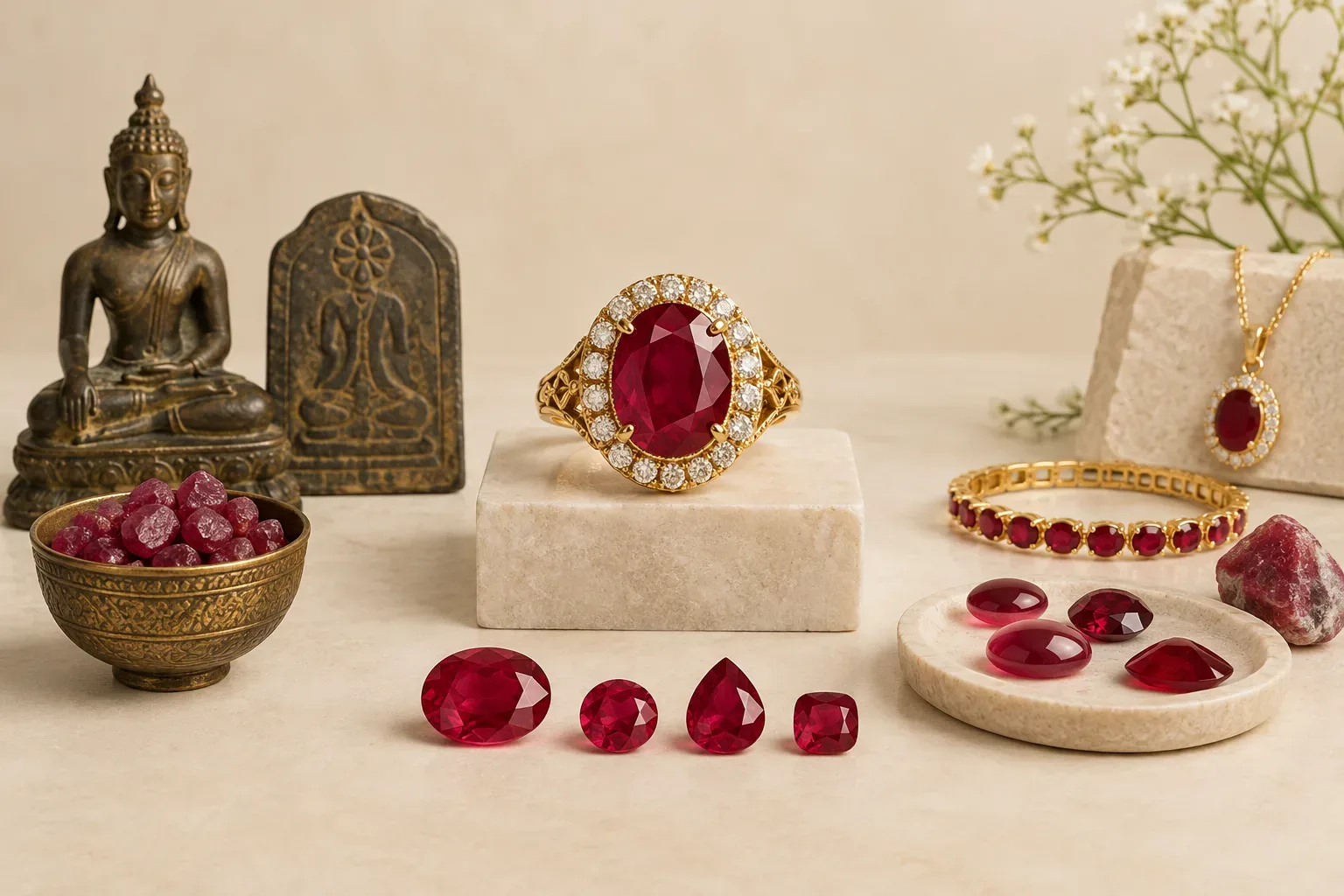
In the material record and in modern commerce, you will encounter four broad categories: natural rubies (formed in nature and unchanged), natural rubies that have been treated to improve color or clarity, synthetic or lab-grown rubies that are made from the same chemical composition in controlled conditions, and imitations—materials such as glass or other stones made to look like ruby. The V&A makes clear that genuine stones and imitations have both been used historically, depending on taste, technology and cost.
In jewelry design, rubies are often used to emphasize color and contrast: they appear as focal stones in rings, brooches, necklaces and crowns, and as accent stones framing diamonds or pearls. Imitations and lower-cost alternatives historically enabled wider sections of society to participate in trends that began at court or in elite fashion. Today, imitations still appear in costume jewelry, in historical reproductions, and in pieces where color, rather than gem value, is the priority.
What to ask before you buy — practical questions
The U.S. Federal Trade Commission (FTC) sets expectations for disclosure in the gem marketplace: sellers should be clear about whether a stone is natural, treated, synthetic (lab-created) or an imitation, and about any other material facts that would affect value or use. Ask the seller directly and in writing which of those categories applies to the ruby you are considering.
Request any available paperwork such as a gemological report or seller’s disclosure. If the piece is marketed as untreated, ask for evidence. If the stone is treated or lab-grown, ask what treatment was applied and whether that affects durability or care. If the item is an imitation or a costume piece, confirm materials and return policy, especially if purchase is for a gift.
Ask about origin and provenance if those matter to you; ask about setting and mounting quality so you understand whether the piece is suitable for everyday wear. If resale value concerns you, ask whether the seller can provide documentation that supports the stone’s description.
Selection and gifting guidance — practical and respectful
Decide which qualities are most important: historical authenticity, visual color, ethical sourcing, durability, or price. If the recipient values historical accuracy or investment potential, prioritize natural, well-documented stones with clear disclosure. If color and design matter more than material value, a high-quality imitation or lab-grown ruby may be an excellent, more affordable choice.
Be explicit and respectful when buying for someone else. If you are giving a piece that may look like a natural ruby but is treated, lab-grown, or an imitation, consider including the seller’s documentation or a note explaining why you chose that material. That kind of transparency is considerate and preserves trust, especially if the wearer values authenticity.
Care, durability and long-term considerations
Treatments and imitations can affect how a piece should be worn and cared for. Treated stones might be more sensitive to heat, chemicals or cleaning methods than untreated natural stones. Ask the seller how their described materials should be cleaned and whether routine wear is appropriate for the setting.
If long-term value matters to you, insist on written disclosure and any available lab reports. Documentation is the basis for resale, insurance and appraisal, so keep any paperwork in a safe place. The FTC recommends that sellers disclose material facts; buyers should preserve those disclosures for future reference.
Frequently asked questions
What is the difference between a treated ruby, a synthetic ruby, and an imitation?
In common consumer terms and in FTC guidance, a treated ruby begins as a natural stone that has been altered to improve appearance, a synthetic or lab-grown ruby is manufactured to have the same chemical composition as natural ruby, and an imitation is a different material made to look like ruby. Ask the seller to state which category applies and to provide any available documentation.
Should a seller disclose treatments or that a stone is an imitation?
Yes. The Federal Trade Commission expects sellers to disclose material facts about gemstones, including whether a stone is natural, treated, lab-grown, or an imitation. Buyers should request written disclosure before completing the purchase.
If a ruby is treated, does that make it a bad gift or less meaningful?
Not necessarily. Treated stones can be beautiful and more affordable, and many buyers choose them for design and color. What matters is transparency: if authenticity is important to the recipient, disclose the treatment; if the color or style is the priority, a treated or lab-grown stone may be entirely appropriate.
How can I verify a seller’s claim about a ruby?
Ask for a gemological report from a recognized laboratory or for the seller’s written disclosure and provenance. Keep any paperwork for insurance and resale. If in doubt, commission an independent appraisal or verification.
Are imitations acceptable in historical reproductions or costume jewelry?
Yes. Museums and makers have long used imitations in reproductions and costume pieces to achieve a historical look or a specific color at lower cost. For ethical and resale reasons, the key is transparent labeling so buyers understand what they are purchasing.
What practical care differences should I know about?
Some treatments can affect a stone’s sensitivity to heat, chemicals or cleaning methods. Always ask the seller for care instructions and follow those guidelines to preserve appearance and durability.
Sources and further reading
- Bedazzled: A History of Jewellery — Victoria and Albert Museum
- An A-Z of Gemstones — Victoria and Albert Museum
- Buying Gemstones, Diamonds, and Pearls — Federal Trade Commission