Meaning at a glance
This article explains the documented history and changing contexts of Viking‑Age Scandinavian jewelry techniques, distinguishes archaeological evidence from later popular interpretations, and offers practical guidance for choosing or gifting jewelry inspired by that period.
Historical evidence and cultural context
Evidence for Viking‑Age Scandinavian jewelry techniques comes from archaeological finds, historical objects held in museum collections, and scholarly interpretation of those objects. The Victoria and Albert Museum's overview of jewellery history situates jewelry as a craft that changes with social context and notes how techniques and materials have shifted over the centuries, including in northern Europe. When discussing the Viking Age specifically, it is important to name the period and region precisely: this article focuses on Scandinavia broadly during the Viking Age (roughly late 8th to 11th centuries) rather than on a single kingdom or later national identity.
Museums and collections—such as the bodies of material documented in museum histories—show that metalsmithing methods like casting and working in fine silver and gold were widely practiced, and that complex surface decoration and metal joining techniques were used to make brooches, arm rings, pendants and other wearable objects. The Victoria and Albert Museum emphasizes how jewellery’s function and meaning vary across time and societies, and that these artifacts must be interpreted within their archaeological and social contexts rather than assumed to carry a single, timeless meaning.
Documented historical meanings versus modern interpretation
What is documented by archaeology and museum scholarship is the object's physical attributes, find‑context, and likely social functions—examples include personal adornment, markers of wealth, or items deposited in graves or hoards. The Victoria and Albert Museum frames jewellery as historically variable in purpose; that is, Viking‑Age items were used in social signaling, exchange and everyday adornment in ways consistent with the material and contextual evidence.
Modern personal or spiritual interpretations of Viking motifs—such as reclaiming symbols for contemporary identity, neopagan religious use, or treating them as universal talismans—are contemporary practices. These modern meanings are valid personal choices but are not the same as documented Viking‑Age beliefs unless explicitly supported by period sources or archaeological context. When discussing symbolic meanings, I separate what is documented by museum and archaeological evidence from how 21st‑century people choose to wear or interpret those symbols today.
How motifs, gemstones, and traditions appear in Viking‑Age jewelry
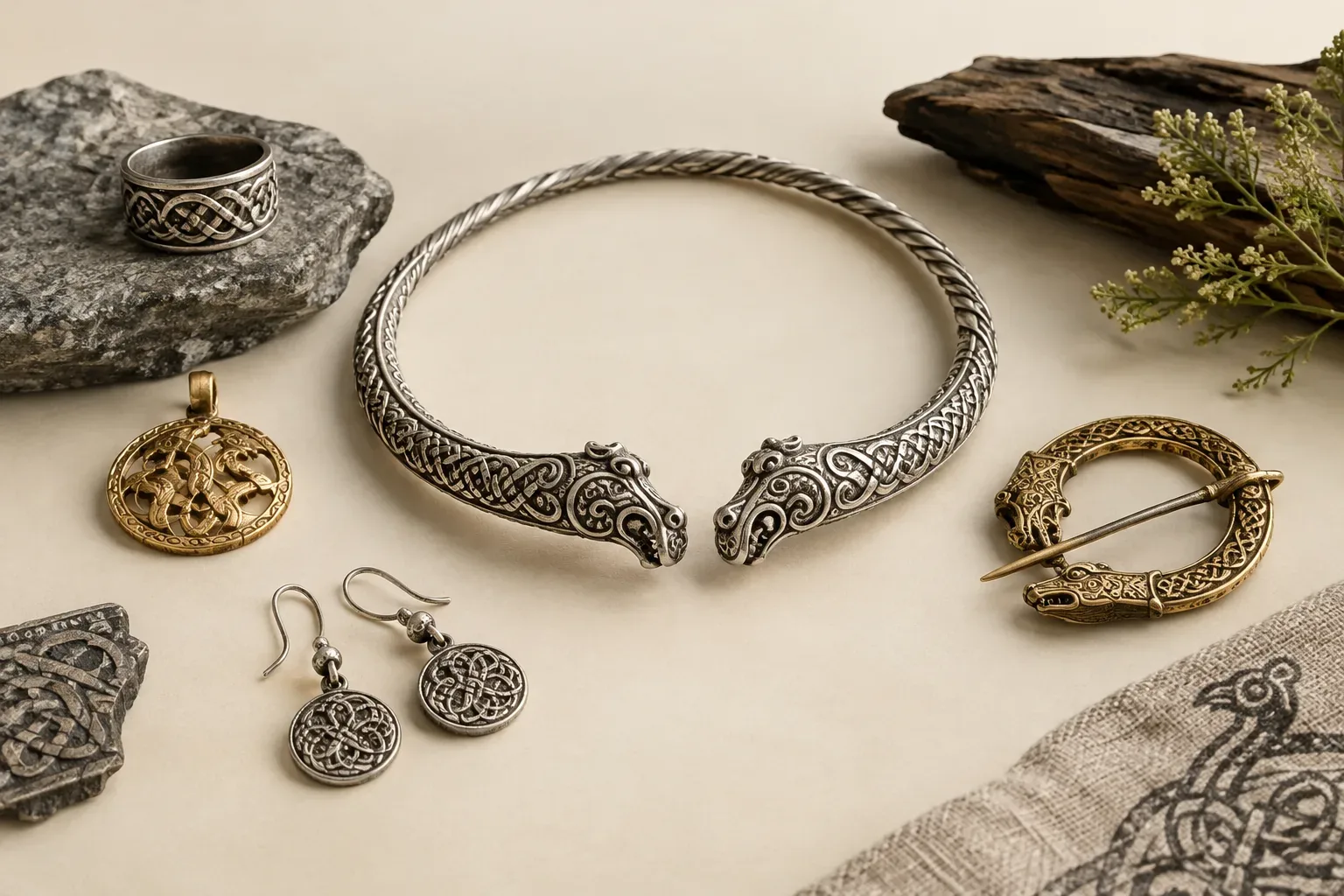
Motifs: Archaeological examples preserved in museum collections show common design elements including interlace, animal‑style decoration and stylized geometric patterns on brooches, fittings and pendants. These motifs appear as reliefs or engraved decoration on cast pieces, as openwork panels on brooches, and as applied ornament on metal surfaces. The form and placement of motifs vary by object type: pendants and amulets carry iconography visible around the neck, while brooches and arm rings display decoration on the body of the object where it could be seen at close range.
Gemstones, beads and inlays: Trade and craft techniques brought glass beads, semi‑precious stones and organic materials into Scandinavian workshops. The Victoria and Albert Museum’s A–Z of Gemstones explains how materials such as amber and various imported stones were valued and used historically; museum documentation shows beads and inlaid stones incorporated into necklaces, bracteates and other items. Glass beads and cut stones were common trade items that were strung, set in bezels, or used as inlays, and craftsmen used local and imported materials according to availability and taste.
Construction techniques: Techniques attested in museum collections include casting for basic shapes, soldering or mechanical joining for assemblies, and surface decoration methods such as chasing, engraving and the application of fine wire (filigree) or granules (granulation). Openwork and punched decoration allowed makers to create light, intricate objects that were still structurally sound for wear. These construction choices reflect both the materials available and the social uses of the objects—some pieces were durable daily wear, others were ceremonial or funerary.
Practical and respectful selection or gifting guidance
Decide what you want the piece to communicate. If you seek historical authenticity—materials, techniques and motifs close to archaeological examples—look for reputable makers or museum‑quality reproductions and ask about the construction methods used. If your priority is contemporary design inspired by Viking‑Age motifs, choose makers who credit the cultural source and are transparent about which elements are historical and which are creative reinterpretation. The Victoria and Albert Museum’s work on jewellery history highlights the importance of understanding the social context of objects; using that perspective helps avoid reducing a historical motif to a single imagined meaning.
Ask for provenance and disclosure about materials and treatments. The Federal Trade Commission provides practical guidance on buying gemstones, diamonds and pearls and emphasizes that sellers must disclose treatments, imitations, and material substitutions that affect value. When purchasing metalwork, confirm metal content or hallmarks and whether gemstones are natural, treated, or synthetic. Clear disclosure protects you as a buyer and respects the archaeological record by distinguishing genuine period objects from modern copies.
Be mindful about claiming cultural or religious authority. If gifting a piece with a symbol that has living religious significance for some people, check whether the symbol is used in that way today and consider whether the recipient will appreciate or feel comfortable with that meaning. When in doubt, frame the gift as an appreciation of historical design and craftsmanship rather than as an asserted cultural or spiritual endorsement.
Avoid purchasing unprovenanced antiquities. If a seller offers genuine Viking‑Age finds without clear archaeological provenance, exercise caution: reputable museums and dealers document an object's discovery and legal ownership history. Supporting lawful, documented collecting practices respects cultural heritage and ensures that archaeological context—which is crucial for historical interpretation—is preserved rather than lost to the illicit trade.
Wearing and caring for historically inspired pieces
For wearable pieces inspired by Viking‑Age techniques, follow standard care for mixed‑metal and gemstone goods: avoid harsh chemicals, store items separately to prevent abrasion, and consult a professional jeweler for repairs that require soldering or stone setting changes. If a piece has historical patina or is a conserved object, talk to conservators or the seller about appropriate handling, because cleaning or polishing can irreversibly alter an item’s character and value.
If you commission a maker, ask about their techniques and the stability of finishes. Makers who use traditional methods—castings, hand‑applied granulation, or beadwork—can explain how the piece will age and how to maintain it. Transparent dialogue with the maker improves your appreciation of the craft and helps maintain the integrity of the finished piece.
Frequently asked questions
How can I tell if a piece is genuinely Viking‑Age or a modern reproduction?
Ask the seller for documented provenance, laboratory reports if available, and any conservation records. Reputable museums and dealers will provide find‑context or acquisition history. Be cautious of pieces sold without documentation; many modern makers produce historically inspired work that can look very old but is not archaeological.
What common materials and techniques should I expect in authentic Viking‑Age jewelry?
Museum documentation indicates metals such as silver, gold and bronze were common, and techniques included casting, filigree, granulation and inlay. Glass beads and imported gemstones or organic materials like amber also appear in period pieces. For gemstone context, see the Victoria and Albert Museum’s A–Z of Gemstones.
Are there ethical concerns when buying Viking‑style jewelry?
Yes. Avoid unprovenanced antiquities, respect living cultures’ connections to symbols, and prefer transparent sellers. If archaeological authenticity matters to you, insist on provenance and legal ownership documentation to avoid contributing to illicit trade.
Should I be worried about treated or synthetic stones in Viking‑inspired pieces?
Treatments and synthetics are common in modern jewelry. The Federal Trade Commission advises that sellers disclose treatments and imitations. If authenticity of a natural stone is important, request written disclosure or a gemological report.
How should I gift a piece inspired by Viking‑Age designs respectfully?
Frame the gift as admiration for historical craft rather than ascribing a single cultural meaning. Ask whether the recipient is comfortable with motifs that may have contemporary religious or cultural associations, and choose makers who credit their historical sources.
Sources and further reading
- Bedazzled: A History of Jewellery — Victoria and Albert Museum
- An A-Z of Gemstones — Victoria and Albert Museum
- Buying Gemstones, Diamonds, and Pearls — Federal Trade Commission